

Living room table lamps can do more than fill an empty surface. The right one gives a corner a useful pool of light, adds shape at eye level and helps the room feel finished without making it feel staged. Start by deciding what the lamp should do, then choose its scale, shade and color around that job.
Contact us to explore a table lamp for your room
What should a living room table lamp do?
Before choosing a silhouette, name the gap you want the lamp to fill. Maybe a reading seat needs a more comfortable pool of light. Perhaps a console looks bare after sunset, or the room relies on one bright ceiling fixture. A lamp works best when it answers a real need as well as bringing personality.
Think of a living room as a set of different activities, not one uniformly lit box. A table lamp can make a reading spot feel distinct, provide a gentle glow for conversation or give a dark stretch of the room a visual anchor. It does not need to do all three at once. A clear purpose makes the rest of the decision easier.
For reading: Consider where the reader sits, which hand holds a book and where a table can sit without getting in the way. Look for light that reaches the activity area without shining directly into someone’s eyes.
For conversation: Choose a lamp that contributes a softer point of light near seating. Its shape can be expressive, while its brightness should feel comfortable in the evening setting.
For atmosphere: Treat the lamp as part of the room’s composition. Color, material and silhouette matter as much as the amount of light.
For a bare surface: Use the lamp to give a side table or console a focal point, then keep enough clear space for the objects and everyday tasks that belong there.
If the lamp’s main role is unclear, pause before shopping. A striking object may still be the wrong choice if it leaves the room’s practical lighting problem unsolved. For a broader view of how table and floor lighting differ, see our table lamp versus floor lamp guide.
How do living room table lamps fit the room?
Measure the surface and look at the whole scene, not just the lamp in isolation. A lamp that seems modest on a product page can dominate a narrow table; a very small one may disappear beside a deep sofa. The goal is visual balance, with a footprint that leaves the surface usable and a silhouette that holds its own from across the room.
Start with the table’s width and depth. Mark out the lamp’s approximate base footprint on the surface with a book or a piece of paper. Then check how much space remains for a drink, a remote or the objects you actually use. This simple test can reveal a mismatch before you commit to a particular shape.
Next, consider height from the seated view. Sit in the usual chair or on the sofa and notice where the shade will sit relative to your line of sight. If the lamp is for reading, make sure the arrangement can put light where the task happens without creating a glare point. For more on proportions, use this table lamp height and scale guide as a companion.
Check the lamp against nearby furniture, too. A low side table next to a tall sofa arm creates a different visual relationship than a narrow console behind a sofa. A lamp does not have to match the furniture’s height exactly; it should feel intentional beside it. Compare the top of the shade with nearby objects, wall art and the outline of the sofa so the lamp does not look accidentally dwarfed or oversized.
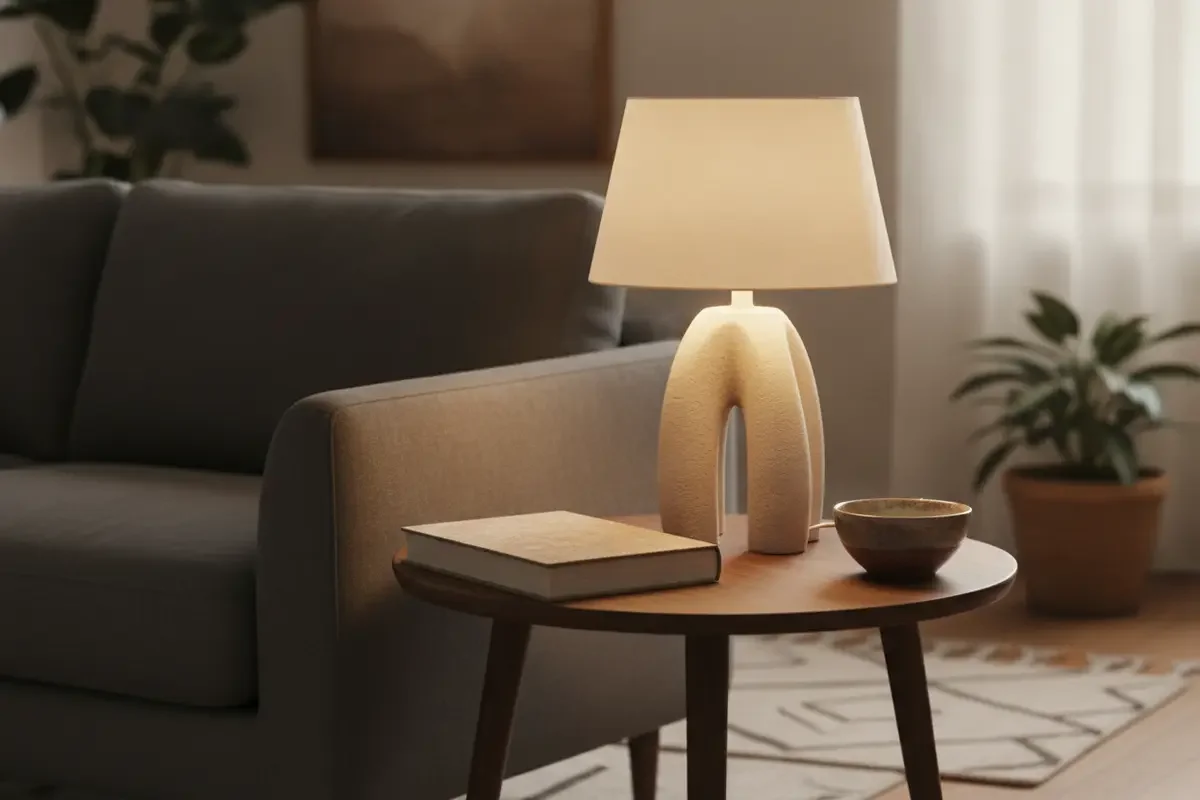
Think about sightlines as you move through the room. A large or highly sculptural shade may look wonderful from one angle and block a view from another. Walk through the space and look at the proposed spot from the doorway, from the main seat and from any adjacent dining area. Choose a placement that gives the lamp room to be seen without making it an obstacle.
Which shape and shade suit your living room?
Shape sets the lamp’s visual character and affects how it relates to the rest of the room. Rounded forms can soften a space with many straight edges. Angular or stacked shapes can echo the geometry of a modern sofa, shelving or artwork. A familiar candelabra-inspired outline can feel playful when treated with a fresh color palette and sculptural proportions.
Instead of chasing a single style label, compare the lamp with two or three visible forms already in the room. Look at the curve of a chair, the lines of a coffee table and the shape of a favorite artwork. A lamp can repeat one of those cues or deliberately contrast with them. Either approach feels more considered than selecting a shape without looking at its surroundings.
The shade matters as much as the base. Its shape helps determine the lamp’s overall presence, and its material and finish influence how it reads in daylight and after dark. Ask whether you want the lamp to blend with the room or announce itself. If you are weighing shade forms and finishes, our light shade design ideas article can help you compare them.
Keep the intended light direction in mind. A shade can shield the source from direct view and help define where the light falls. Check product information for the design’s intended use rather than assuming every decorative lamp is a reading lamp. Where a specific task needs focused illumination, plan the seating and lamp position together, then verify the details on the product page.
How should color and material work together?
Color is an easy way to make a table lamp feel connected to the room. It can repeat a tone already present in a cushion or artwork, or introduce one small note that the rest of the palette leaves room for. A vivid lamp does not require a vivid room. In a calmer setting, one carefully chosen color can bring the scene to life; in a more layered room, it can join an existing mix rather than compete with it.
Look at the room in daylight and in the evening. Colors can appear different under changing light, and a lamp that seems quiet in a bright shop image may read more strongly against your own wall or upholstery. If you can, compare the product’s finish with the colors near the intended spot. Save a photo of the room and view it alongside the product image to catch clashes and repetitions.
Material adds another layer. The Woaw Lighting Collection combines steel bodies with ceramic shades, pairing a crisp structural element with a tactile, familiar material. That contrast can make a playful silhouette feel design-led rather than novelty for novelty’s sake. Explore our guide to steel and ceramic lamp construction for a closer look at how those materials contribute to a fixture’s character.
Choose one visual priority. If the room already has patterned textiles, expressive art and several strong colors, a lamp with a clear silhouette may give the eye a place to rest. If the room feels very restrained, a bold shade or color-blocked form can provide the surprise. The aim is not to follow a rule about how many accents a room may have; it is to make each choice feel like it belongs to the same story.
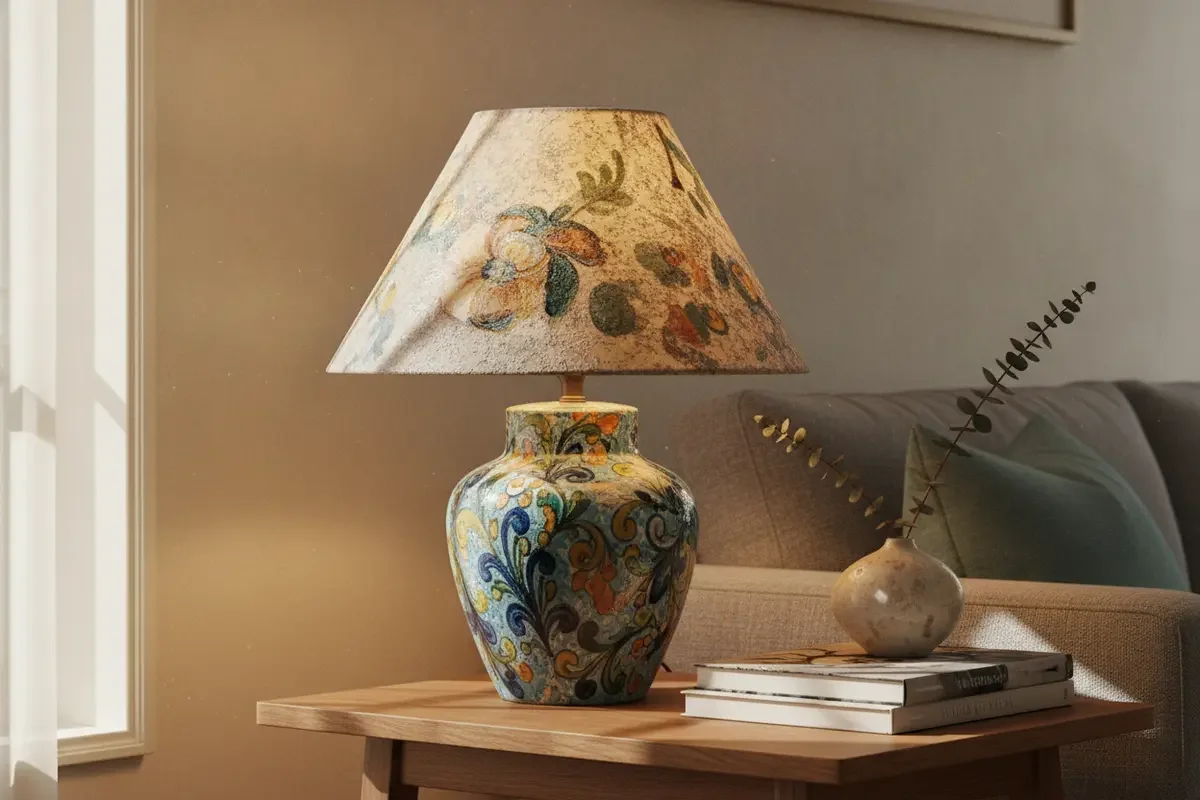
Where should you place a living room table lamp?
Begin with the task or mood you identified. For a reading nook, position the table and lamp where they support the seat without narrowing the route through the room. For conversation, place the lamp where it contributes to the surrounding seating rather than shining directly at a person. For atmosphere, try a console or side table that is visible from the main approach.
Then check the practical details. Is there a suitable power outlet nearby? Can the cord follow a discreet route without crossing a walkway or creating a trip hazard? Can someone reach the switch comfortably? These small checks are unglamorous, but they can determine whether a beautiful lamp becomes part of everyday life or a lovely object nobody wants to turn on.
Leave breathing room around the lamp. A table does not need to be covered with accessories to look styled. Try the lamp with one or two objects of different height or texture, then remove anything that crowds the base or interrupts access to the switch. If you want more examples of how lamps work together across a room, browse our room-by-room lamp styling guide.
Finally, test the placement at the time of day you expect to use it. View the lamp from your primary seat, from the entrance and from nearby spaces. If glare, a blocked view or a cord route becomes obvious, adjust the position before deciding the location is final. A few inches can change how a lamp relates to a seat, wall or tabletop.
How do you choose between a table lamp and a floor lamp?
Choose by the job and the space available, not by a general belief that one type is always better. A table lamp needs a stable surface, so it can make use of a side table, console or other furniture already in the room. A floor lamp stands independently and may suit a spot where there is no suitable tabletop. Both can contribute function and form; the room’s layout decides which arrangement is more practical.
Ask what each option would occupy. A table lamp uses part of a tabletop that may already serve other purposes. A floor lamp uses floor area and needs a stable position that does not obstruct circulation. In a busy walkway, either could be awkward if placed carelessly. In a quiet corner, a floor lamp may give the area a clear vertical presence. A table lamp may be the more natural choice beside existing seating and furniture.
Also consider the view. A floor lamp can rise above nearby furniture and become a taller focal point, while a table lamp creates a lower point of interest. Neither height is automatically right. Compare each form with the room’s ceiling, furniture outlines and sightlines, and decide which one supplies the missing shape without crowding the scene. Our guide to choosing a floor lamp offers a useful counterpoint if you are still weighing both.
Woaw includes table and floor lamps, with the verified current price ranges kept distinct: table lamps are $282–$410 and floor lamps are $356–$491. Check the relevant product page for current details before ordering. Browse the Woaw Lighting Collection to compare available forms, or review the table lamp collection if your room calls for a tabletop fixture.
What should you check before ordering?
A confident choice comes from checking the practical details as carefully as the silhouette. Start with the product description: confirm the materials, light source, voltage and included plug options listed for that design. Woaw fixtures use steel bodies, ceramic shades and integrated LEDs, with universal 120V–240V compatibility and US, UK or EU plugs. Confirm the exact options and specifications for the product you plan to order.
Next, take a final measurement of the intended surface and compare it with the product dimensions. Check the footprint and overall height, not only the product photo. A styled photograph helps you understand the design, but it cannot tell you how much space remains on your own side table or how the shade lines up with your seated view.
Understand the purchase timing. Woaw products are made to order and ship within two months; they are not ready-to-ship items. If the timing matters for a move, gift or room refresh, include that window in your decision. The pre-order information page explains the ordering path. Review the details before completing a purchase so expectations match the made-to-order model.
Look for the right source of help if a detail remains unclear. The About page shares the brand and design background, while the contact page is available for product questions. For a basic overview of household lighting and energy use, see the U.S. Department of Energy; for a purchase decision, rely on the exact product specifications and the instructions supplied with the fixture.
Keep your shortlist small. Compare two or three options against the same criteria: role, scale, silhouette, finish, placement and timing. Write down what each option does well and what compromise it asks of the room. That makes the final choice clearer than reopening a dozen product tabs and comparing them by vague feeling alone.
How can you make the final choice?
Put the lamp in context before you commit. Take a photograph of the intended corner, note the table dimensions and mark the approximate lamp footprint. Then imagine the room at the time you will use it most. Does the lamp help with a specific activity? Does its shape complement or enliven the furniture? Can you reach the switch and route the cord safely?
If the answer to those questions is yes, you have a strong candidate. If not, identify the weak point instead of starting over. A lamp might have the right color but the wrong footprint; another might fit the table but add no useful light to the corner. Naming the compromise helps you decide whether another model, another location or a different kind of lamp would make more sense.
For a further product-led comparison, use our designer table lamp guide to continue exploring. You can also look through the lighting gallery for visual inspiration. A lamp should feel like a considered part of your room, not a purchase made only because an empty surface asked to be filled.
Whatever you choose, give the lamp a clear role and enough room to do it. The best living room table lamps balance everyday usefulness with the small visual jolt that makes a space feel unmistakably yours.
Explore the Woaw table lamp collection
Frequently Asked Questions
How many table lamps should a living room have?
There is no single right number. Start with the room’s activities and existing light sources. Add a lamp where it fills a specific gap, then check whether the result feels balanced from the main viewpoints. One well-placed lamp can be more useful than several placed without a clear purpose.
Should a living room table lamp match the furniture?
It does not need to match. It can repeat a color or shape already in the room, or provide a deliberate contrast. Compare its scale, finish and outline with nearby furniture so the difference feels intentional rather than disconnected.
Can a table lamp work as a reading light?
It can, depending on the lamp’s design, shade, placement and the reader’s position. Check product details and test the arrangement from the seat. Make sure the light reaches the reading area comfortably and that the source is not unpleasantly visible from that position.
How do I make a colorful lamp feel at home in a neutral room?
Let the lamp be the intentional accent and keep the surrounding choices simple. You can echo its color in a small nearby detail, but you do not need to repeat it everywhere. Check how the finish looks against the actual wall and upholstery, both in daylight and in the evening.
A measured shortlist, a realistic placement check and a clear sense of purpose make it easier to choose a lamp that feels good in the room long after the first impression.
