

Choosing a floor lamp is not just a matter of picking a shape you like. The right one should suit the job you need it to do, feel balanced in the room, and bring a little personality to the space. If you are working out how to choose a floor lamp, start with the way you use the room, then compare scale, light direction, materials and the practical details that affect ownership.
Explore the Woaw lighting collection
What role should the floor lamp play?
Begin with a real moment in your day. Do you want a pool of light near a chair, a visual anchor beside a sofa, or a sculptural object that gives a quiet corner more presence? These goals overlap, but choosing the main role first makes the rest of the decision easier.
For a focused activity: think about where you sit, stand or work, and whether the lamp’s light can reach that area without getting in the way. Consider the direction of the light and the lamp’s position relative to the activity. A reading corner, for example, benefits from light that reaches the page and feels comfortable to use. Check the product information for the exact light characteristics rather than assuming a particular fixture is adjustable or has a specific output.
For a softer room layer: decide where you want a separate source of light in addition to the room’s other fixtures. A floor lamp can contribute to a layered scheme, but it should complement the ceiling light and any table lamps rather than being expected to solve every lighting need alone. If your main question is about combining sources, our guide to layering living-room lighting can help you think through the overall mix.
For a design statement: look at the lamp when it is switched off as well as when it is on. Its silhouette, color and materials will still shape the room during the day. A sculptural floor lamp can have a clear visual role even when it is not the brightest source in the space.
Write down the one job that matters most, then list a secondary benefit. For example: “It should bring light near the lounge chair, and it should add a strong shape to the room.” That simple brief helps keep a beautiful but impractical choice from winning by appearance alone.
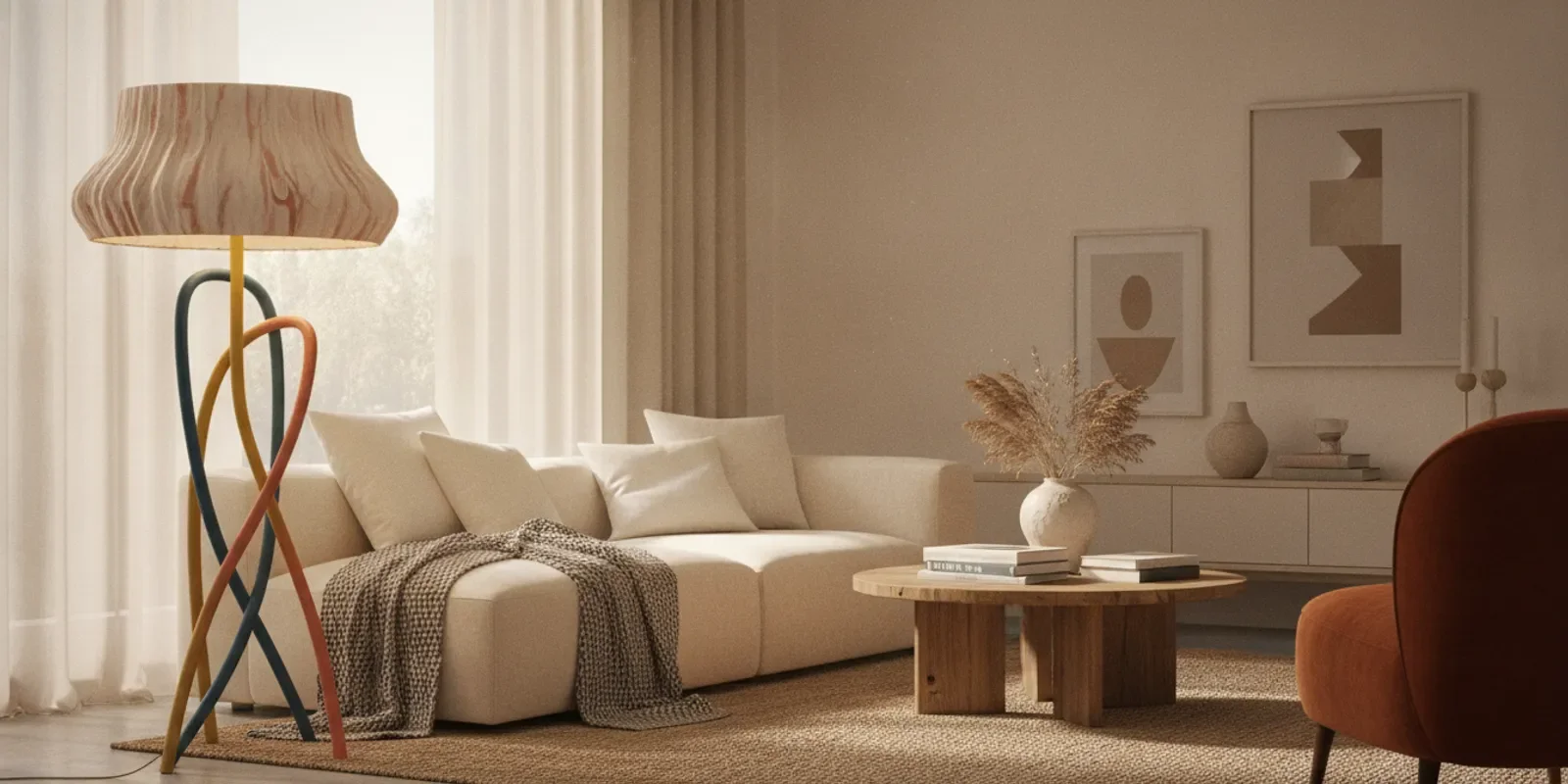
How to choose a floor lamp for your room
Once you know the lamp’s main job, assess the room around it. Floor area, furniture arrangement, sightlines and existing fixtures all affect whether a particular form will feel at home. Do not begin with a product photo alone: measure the place where the lamp could go and compare it with the dimensions on the product page.
Measure the proposed position
Use a tape measure to note the available floor width and depth. Include the clearance you want around nearby furniture and the route people take through the room. A lamp may fit inside the bare corner but still feel awkward if its base sits in a walking path or crowds a chair. Mark a proposed footprint on the floor with removable tape, or place a box of similar size there for a day. This quick test can reveal problems a screen image cannot.
Next, check the lamp’s overall height against nearby furniture and the visible lines in the room. Compare it with the sofa back, a bookcase, a doorway or a framed artwork. You are looking for a deliberate relationship, not a universal rule that every floor lamp must be taller or shorter than a certain object. A dramatic height can suit a room with open space around it; a more compact-looking outline may be easier to integrate among several pieces.
Consider what you see from the usual seats
Stand or sit where you normally spend time. Ask whether the lamp would block a view, interrupt the edge of a display, or compete with another strong shape. Then look at it from the doorway. A floor lamp is often seen in profile as people enter, so its outline matters from more than one angle.
If you are placing a lamp near a wall, consider the wall as part of the composition. A simple wall can give a sculptural silhouette room to register. If the wall already has art or a patterned finish, compare the forms and colors rather than assuming that the lamp must match everything exactly. Our guide to what makes a lamp a statement piece offers more ways to think about visual impact.
What scale and silhouette will feel balanced?
Scale is about more than height. It includes the width of the base, the spread of the arms or shades, and the visual weight of the whole object. A narrow fixture can still feel bold if it has a striking color or a distinctive outline. A larger lamp can feel calm when its shape is simple and it has enough breathing room.
Compare a lamp’s dimensions with the furniture nearby. If it will sit beside a sofa or chair, check whether the outline complements the furniture rather than appearing accidentally crowded. In a compact room, examine the full footprint and the way the lamp will share space with side tables and doors. In a more open room, consider whether the fixture needs enough presence to register against larger pieces.
Silhouette gives you a useful shortcut. A vertical, slender shape draws the eye upward; a branching or multi-arm form can occupy more visual space. Rounded shades soften a room full of hard edges, while strong geometric forms can bring definition to a softer arrangement. Those are design cues, not fixed laws. The useful question is whether the lamp’s shape creates the mood you want and sits comfortably beside the room’s existing forms.
Color deserves the same kind of thought. You can echo a color already present in a rug, artwork or cushion, or use the lamp as the room’s deliberate accent. It does not need to match every object. A playful, color-blocked lamp may bring character to restrained surroundings; in a more layered scheme, look for a relationship between its colors and the room’s broader palette. For more ideas, see our guide to coordinating color in furniture and lighting.
How should light direction fit your routine?
Think about where the light needs to go, not just where the lamp will stand. A useful choice depends on the activity and the way the fixture distributes light. Read the product description and images carefully. Do not infer a shade’s exact beam, dimming behavior or adjustability from its shape alone; check those details with the maker when they are important to you.
For reading or close work, consider the relationship between the light source, your position and the surface you use. You want the lamp to contribute light to the activity without making the fixture itself an obstacle. For a relaxed sitting area, you may value a gentler contribution to the room’s overall atmosphere. For a statement piece, you may care equally about how the lamp reads as an object and how its illumination sits within the existing layers.
Look at the rest of the room, too. If an overhead fixture already provides broad illumination, the floor lamp may have a more focused or decorative role. If the room has very few other sources, ask whether one floor fixture can realistically cover the different activities you do there. Often, the more useful plan is to combine sources at different points in the room instead of asking a single lamp to do everything.
Lighting guidance can depend on the room and task. For general background on energy use and lighting, consult the U.S. Department of Energy; then rely on the specific product information for a fixture’s verified features.
Which materials and construction details should you compare?
Materials influence how a lamp looks, feels and fits with other objects. Read the specifications rather than relying on a styled photograph. Look for the named materials, finish details, how the shade is made, and the light source information. If a detail is not stated and it matters to your decision, ask before ordering.
The Woaw Lighting Collection pairs steel bodies with ceramic shades and integrated LEDs. Its design language is sculptural and toy-inspired, with color blocking that reimagines traditional candelabra forms. That combination may suit shoppers who want a fixture that is both an everyday object and a visible design accent. It will not be the right aesthetic for every room, so compare its forms and colors with your own preferences rather than treating any material as an automatic sign of quality or suitability.
Check the care and handling information for the product you are considering. Ceramic and steel have different surfaces and require sensible handling; do not assume that every finish can be cleaned with the same product or method. If maintenance is a deciding factor, confirm the recommended care instructions on the product page or with the brand. You can also review the available spare parts information as one part of understanding ongoing ownership.
For a broader comparison of the materials used in this collection, read our steel and ceramic lamp construction guide. The useful takeaway is to compare what is actually specified, how it looks in your room and whether the design feels right to live with.
What should you compare before choosing?
A short side-by-side comparison makes the decision more concrete. Use the product pages for exact dimensions, current product details, price and availability. The table below compares decision points, not individual models, because the right answer depends on your room and intended use.
Decision pointWhat to checkGood sign for your choiceMain purposeWhere the light is needed and what activity it supportsThe lamp has a clear primary role in your roomFootprintBase area, clearance, nearby furniture and walking routesIt fits without crowding a path or useful surfaceScaleOverall height, width and visual weight against nearby objectsThe silhouette feels intentional from your usual viewpointsLight detailsVerified light source and any stated behavior or controlsThe published product information supports your needsMaterialsBody, shade, finish and care detailsThe construction and appearance suit your prioritiesPractical termsPrice, shipping region, plug choice, production and return detailsYou understand the purchase and delivery terms before paying
For examples of the Woaw floor-lamp range, compare the collection page with the individual floor lamp selection and a specific Woaw Triple Floor Lamp product page. Use those pages to confirm the current specifications and price rather than relying on a general article or an older screenshot.
What practical details matter before ordering?
Design should make you pause; practical details should make you confident. Before you commit, check how the lamp is ordered, when it is expected to ship, what plug is offered for your region, and which terms apply to the purchase.
Confirm voltage and plug information
The Woaw range is designed for universal 120V–240V compatibility and offers US, UK and EU plug options. Select the appropriate option for your destination and verify the current product and ordering information before purchase. If you are unsure which plug applies where you live, confirm it with the seller rather than guessing. Also check the electrical requirements where you plan to use the fixture; do not assume an adapter changes a product’s voltage compatibility.
Understand the pre-order timeline
Woaw lamps are made to order. Production takes about 60 days, and products ship within two months. This is different from choosing an item already packed and ready to leave a warehouse. Consider whether the timing works for your plans, especially if you are furnishing a new home or buying for a specific date.
Review the current information on the Woaw pre-order page before paying. The page is the right place to confirm the current process and product options. The made-to-order approach asks for patience, so include the production window in your decision rather than treating it as a surprise after checkout.
Check price, delivery and return information
The verified price ranges differ by category: Woaw table lamps are $282–$410, and floor lamps are $356–$491. A specific product’s current listed price is the one to use when comparing options. Check shipping and return terms on the site before placing an order, since those details can be relevant to your destination and purchase.
If you want to see the collection in person, the stockists page lists its retail partners. Availability and selection can vary by location, so contact a stockist directly to ask about the model you have in mind.
How can the Woaw collection fit your decision?
The Woaw collection is a strong candidate when your brief calls for sculptural lighting with a playful point of view, steel construction and ceramic shades. It includes floor and table lamps, with integrated LEDs and stated compatibility across 120V–240V. The forms reinterpret candelabra shapes with bold color blocking, so the range is designed to be noticed rather than disappear into the background.
It may be less suited to a shopper seeking a nearly invisible fixture or a specific technical feature that the product information does not confirm. That is not a flaw in the design; it is a reminder to match a lamp to your own brief. Compare the actual outline, color, dimensions and verified specifications with your room, and check any unanswered questions before ordering.
For context on the design approach, the About page introduces Mr. John's Goods and its design perspective. A useful final test is to imagine the lamp in the room both during the day and at night. If the design still feels right in both settings, and the practical details meet your needs, you have a much stronger basis for choosing.
Shop the Woaw Lighting Collection
Frequently Asked Questions
What should I decide first when choosing a floor lamp?
Decide what you need the lamp to do most: support a specific activity, add another layer of light, or act as a sculptural accent. Then measure the proposed position and compare the product’s stated dimensions and light details with that purpose.
How do I know if a floor lamp is too large for my room?
Measure its footprint and compare its overall height and width with the furniture, routes and sightlines around it. A taped outline or temporary box can help you judge whether the position feels crowded. Consider how the lamp looks from the doorway and from the seats you use most.
Can one floor lamp light an entire room?
That depends on the room, the lamp and what you do there. A floor lamp can be one useful source, but a room may need multiple sources for different activities and areas. Check the fixture’s published lighting information and consider how it will work with the room’s other lights.
What should I check before pre-ordering a Woaw floor lamp?
Confirm the product’s current dimensions, price, plug option and specifications, and make sure the approximately 60-day production window works for you. Read the current ordering and return information before completing your purchase.
A well-chosen floor lamp earns its place through both presence and purpose: take measurements, check the verified details, and choose a design you will be glad to see every day.
