

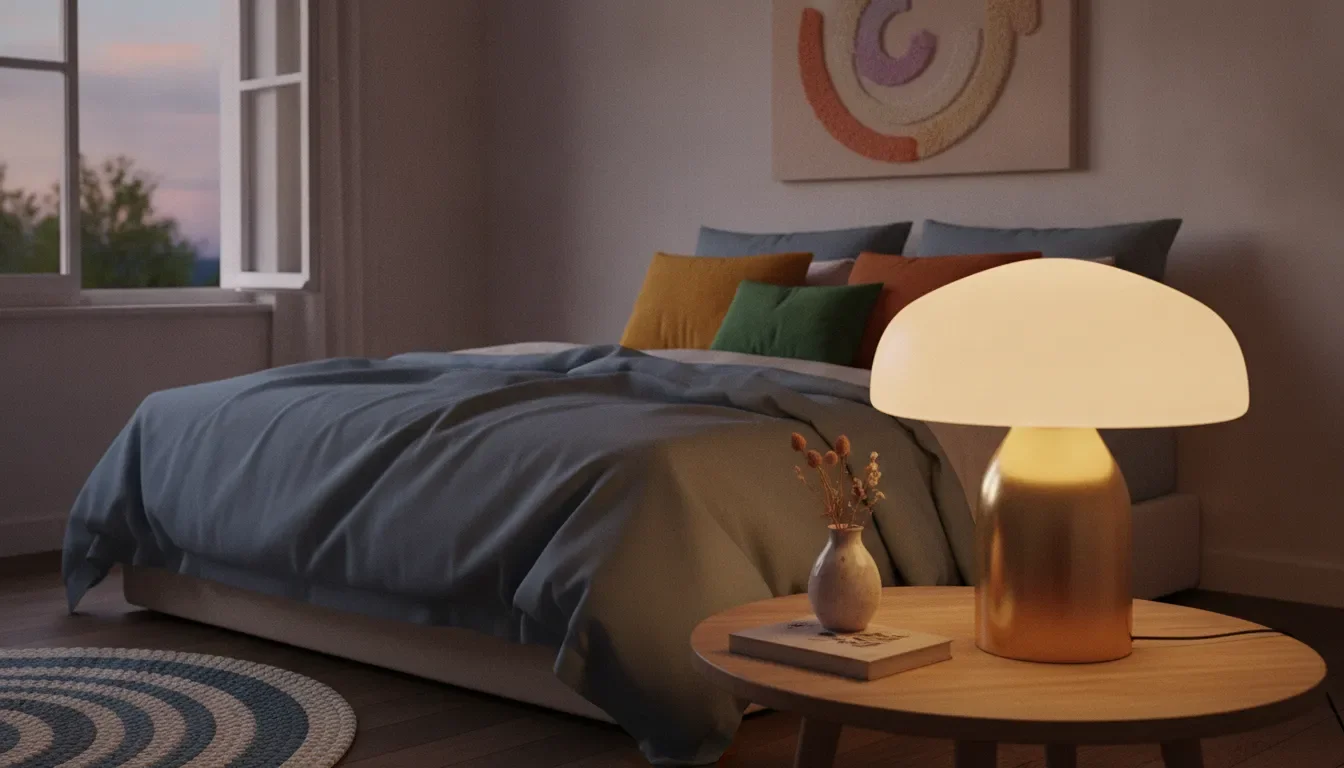
A good lamp can do more than fill an empty corner. It can soften a room, sharpen its personality, and give the eye a satisfying shape to land on. That is why the mushroom silhouette keeps turning up in thoughtful interiors: it feels familiar, playful, and unexpectedly polished.
Pre-Order sculptural lighting for your next room refresh.
A mushroom lamp is typically recognized by a rounded, cap-like shade balanced over a compact base or stem. Its job can be decorative, ambient, task-oriented, or a mix of those. So the silhouette alone does not tell you how well it will work for reading, working, or relaxing. Think of the form as a design starting point, then assess its proportions, materials, placement, and actual light distribution.
From there, the details matter. A convincing shape depends on the relationship between dome, base, and surface, while a useful placement depends on what you want the glow to do. Let us start by separating the recognizable outline from the design choices that make it feel considered rather than merely cute.
What Makes a Mushroom Lamp a Mushroom Lamp?
A mushroom lamp is recognized first by its silhouette: a broad, rounded cap or dome resting over a supporting base. The shape creates a visual pause between the shade and whatever surface holds it, giving the fixture a friendly, almost character-like presence. That recognizable outline matters more than a particular color or finish. A mushroom lamp can be quiet and monochrome, bright and playful, or richly textured while still belonging to the same design family.
The cap, base, and the space between them
The cap is usually the star. Its curved profile softens the fixture and helps the light feel contained rather than exposed. Some designs use a shallow, umbrella-like dome; others make the cap deeper, closer to a hemisphere. What matters is the relationship between the upper form and its support. A narrow stem under a wide cap creates a light, floating impression. A thicker base gives the lamp more visual weight and makes it feel grounded on a console, bedside table, or desk.
Proportion is the useful test. If the shade overwhelms the base, the lamp may look top-heavy. If the base is too tall or visually busy, the cap loses its simple graphic quality. The best examples make the two parts feel intentionally balanced, even when the geometry is delightfully exaggerated. This is also why a mushroom lamp is more specific than any lamp with a rounded shade. The complete cap-and-base relationship creates the identity.
Materials shape the personality
Material changes how the silhouette reads. Opaque ceramic can make a dome feel substantial and softly sculptural. Metal may sharpen the outline and add a more graphic, reflective note. Glass can make the cap appear lighter, especially when the light source becomes part of the visual effect. Look at the finish as well as the shape: a glossy surface emphasizes curves, while a matte surface lets the proportions do more of the talking.
A patent describing a mushroom-shaped light guide offers a useful form-analysis lens, not a universal product rule. It refers to a rounded edge, a centrally projecting ball-shaped base, and a conical end section. These features are designed around how light moves through the component. Residential lamps do not need to reproduce that technical geometry. The lesson is simply that curves, transitions, and the base can work together to create both a familiar silhouette and a deliberate distribution of visual weight. For more on how silhouette and scale create impact, explore this statement piece lamp guide.
How Does a Mushroom Lamp Use Ambient and Task Light?
A mushroom lamp can be a soft source of ambient light, a decorative accent, a practical task light, or some combination of the three. The rounded shade may suggest a particular glow, but its silhouette alone does not prove that it will illuminate a book, keyboard, or craft project comfortably. Function comes from the lamp's actual light distribution, placement, and the activity taking place nearby.
Interior lighting generally works best in layers. Ambient light gives a room usable overall illumination, task light supports a specific activity such as reading or working, and accent light adds emphasis or visual interest. One charming mushroom lamp does not have to do every job. In fact, asking it to may leave a room either gloomy or visually flat. The practical distinction is simple: judge the light, not just the cap.
Ways to use a mushroom lamp by lighting roleUseWhat it doesWhere it fitsWhat to checkAmbientAdds general-purpose illumination so people can move through and use a room.Sideboards, console tables, bedside tables, and relaxed living areas.Whether the glow spreads far enough for the room, or needs support from other fixtures.TaskDirects useful light toward a defined activity, such as reading, writing, or working.Desks, reading chairs, sewing areas, and work surfaces.Light direction, working distance, glare, and whether the product source provides enough information for that task.AccentHighlights an object or adds a decorative point of focus rather than lighting the whole room.Art walls, shelves, entry consoles, and display moments.How the lamp relates to nearby objects, colors, and sightlines when switched on or off.Multi-purposeContributes useful general or mood light while also supporting a nearby activity.A bedside table, living-room end table, or flexible reading corner.Whether its real output and placement serve both roles without forcing one compromise.
For task use, be especially honest about the work involved. Reading and writing need more concentrated illumination than casually navigating a room, while detailed activities demand even more focused light. The needed level also changes with the task, contrast, room size, and desired accuracy. A mushroom lamp beside a novel may create a lovely evening corner, but that does not automatically make it a dependable desk lamp. Pair it with dedicated task lighting when the activity requires clear, concentrated visibility.
For a practical placement check, use this room-by-room lamp styling guide and ask what the lamp should do before deciding where it should go. The most successful setup lets the sculptural form bring personality while another layer quietly handles the heavy lifting when necessary.
Room-by-Room Mushroom Lamp Styling
A mushroom lamp can shift roles from quiet ambient glow to a small design exclamation point. Its role depends on where it lands. Start with the surface, then consider the sightline. A lamp should feel intentional from the doorway, the sofa, and the chair where you will use it. The goal is not to place one in every room like a coordinated mushroom colony. It is to give each lamp a job.
Living room
On a side table, place a mushroom lamp beside the sofa or in an open corner where its rounded silhouette can be seen from multiple angles. Keep the base visually proportionate to the table, and leave enough breathing room for a book, drink, or remote. Here, the lamp will usually serve as ambient or accent lighting rather than the room's only source. Pair it with ceiling or floor lighting so the space still works after sunset. If the room already has strong artwork or patterned upholstery, a restrained finish can balance the scene. In a quieter room, a bold color can become the cheerful punctuation mark.
Bedroom
Bedroom placement rewards softness and restraint. A mushroom lamp on a nightstand can create a warm visual anchor. But avoid placing it where the shade crowds the bed, blocks a window, or competes with a headboard. If you read in bed, assess the lamp as a possible task source rather than assuming its shape guarantees useful reading light. Its actual output, shade design, and position matter. A second light source may still be needed for focused reading. On a dresser, the lamp can work more clearly as ambient lighting, especially when its glow is visible in the mirror without becoming the mirror's entire story.
Entryway
An entryway is a first-impression zone, so sightlines matter more than elaborate styling. A compact mushroom lamp on a console can welcome people as they enter and give a narrow space a sense of personality. Keep the lamp away from the edge, allow room for keys, and check that its height does not interrupt the view through the hall. General hallway and entryway lighting is often treated as a lower-light environment, but that is context for planning, not a specification for any particular lamp. Use other lighting if the route needs clearer visibility.
Dining area
Try a mushroom lamp on a sideboard, bar cabinet, or nearby console rather than placing it where it competes with the table's central sightline. Its rounded form can soften a room filled with straight chair backs and hard architectural lines. Check the seated view before committing: guests should see the lamp as part of the composition, not stare directly into an uncomfortable glare. Dining spaces benefit from layered lighting, so let the mushroom lamp provide atmosphere while another source handles broader illumination.
Desk
At a desk, function takes the lead. Position the lamp to one side so your hands and work surface do not cast distracting shadows, and keep the shade outside your direct line of sight. A decorative mushroom lamp may add ambient personality, but it should not automatically replace task lighting for writing, reading, or detailed computer work. Task needs depend on the activity, contrast, room size, and the user's comfort. If the lamp is not designed or positioned for focused work, pair it with a purpose-built desk light.
For more placement ideas across the home, explore this guide to bold layered home decor, then edit with a designer's eye: scale first, sightline second, and lighting function always.
How Do You Choose the Right Size and Material?
Start with the surface, then work outward. A mushroom lamp can look perfectly scaled in a product photo and oversized on a narrow nightstand, or disappear on a deep console. Measure the table or shelf depth, note what must share the surface, and leave enough room to reach the switch or control without moving the lamp every time. The goal is a comfortable relationship between the lamp, its furniture, and the objects around it.
Use proportion as your first test
Look at the shade and base as a pair rather than judging height alone. A broad cap needs a base with enough visual weight to keep the silhouette grounded. On a small bedside table, a compact shade and restrained base usually feel calmer than a wide, low form that crowds books, glasses, or a phone. On a larger sideboard, a more generous mushroom lamp can hold its own, especially when the surrounding decor is similarly substantial.
Depth matters as much as width. A lamp that projects toward the front edge can become a practical nuisance, while one tucked too far back may cast its glow behind the seating area. Check the likely sightline from a chair, sofa, or bed as well. You want the cap to read as an intentional object, not as a visual obstruction or an accidental traffic cone.
Let the material set the visual weight
Material changes how large a lamp feels. Glossy or pale surfaces can appear lighter and more reflective, while dark, matte, dense, or heavily textured finishes tend to carry more visual weight. Ceramic may make a shade feel substantial and tactile. Metal can provide a cleaner, more architectural presence. Neither is automatically better. Match the choice to the room's existing surfaces, then decide whether the lamp should blend into the composition or supply a deliberate contrast.
Also inspect the practical details before falling for the silhouette. Confirm where the cord exits, where controls sit, and whether the shade directs light broadly or concentrates it. A sculptural object still has a daily job. If the lamp is for reading or desk work, make sure its actual output supports that task rather than assuming a dome shape will do everything.
For an adjacent example, Woaw fixtures use steel bodies, ceramic shades, integrated LEDs, universal 120V-240V compatibility, and US, UK, and EU plugs. The collection includes table and floor formats, but it is sculptural lighting rather than a mushroom lamp. See the sculptural lamp buying guide to compare formats and materials with a more deliberate eye.
Can a Mushroom Lamp Be the Room's Statement Piece?
Absolutely, but a statement piece works best when the rest of the room gives it somewhere to land. A mushroom lamp can bring a rounded silhouette, a pool of ambient glow, or a hit of color to a space. It should not make every nearby object compete for attention. Think of it as the exclamation point, not an entire paragraph in capital letters.
Let color create a focal point
A saturated shade can anchor a quiet room, especially when the surrounding furnishings stay neutral. Cream upholstery, natural wood, soft gray walls, or a restrained stone surface give a colorful lamp enough negative space to feel intentional. You do not need to match the lamp exactly. Repeating one small color elsewhere, perhaps in a book spine, cushion, or piece of art. Is usually enough to create visual rhythm without turning the room into a coordinated set.
If the lamp is neutral, let shape do more of the talking. A domed shade beside a linear sofa or a rectangular artwork creates useful contrast. Place it where the eye naturally pauses, such as a console, side table, or open shelving, and avoid crowding it with several objects of the same height. A little breathing room makes the silhouette easier to read.
Build layers instead of a theme
The strongest arrangements combine the lamp with objects that differ in texture, height, and visual weight. Pair a smooth, rounded light with a rough ceramic vessel, a stack of books, or a leafy plant. Keep the grouping slightly asymmetrical so it feels collected rather than staged. In a maximalist room, the lamp can join a richer mix of pattern and color, but repeat its strongest visual cue only once or twice. These principles also apply to bold layered home decor, where contrast matters more than perfect matching.
Finally, separate statement value from lighting responsibility. If the lamp mainly supplies atmosphere, keep a dedicated task source nearby for reading, writing, or detailed work. That way, the mushroom lamp can be expressive without being forced to do every job in the room. Good design leaves space for personality and practicality to share the same table.
Mushroom Lamp Shopping Checklist
Start with the silhouette. Look at the relationship between the rounded shade, central base, and overall profile. A convincing mushroom lamp usually feels visually balanced from the side as well as the front. Decide whether you want a quiet dome that blends in or a more sculptural shape that gives the room a little personality.
Match the scale to the surface. Measure the table, shelf, nightstand, or floor area before you fall for the photograph. Leave enough breathing room around a table lamp for books, drinks, or bedside essentials. For a larger room, compare table and floor formats rather than treating every mushroom lamp as a small accent.
Define the job before choosing the mood. Is the lamp meant to create ambient atmosphere, add decorative interest, support reading, or do more than one of those things? Ambient and accent lighting can make a room feel finished, but focused work needs should be evaluated separately. Do not assume a charming shade automatically provides task lighting.
Inspect the material story. Consider how the shade and base will relate to nearby wood, metal, stone, or upholstery. Ceramic can add a tactile, crafted note, while steel can bring structure and visual clarity. As an adjacent example, the Woaw sculptural lighting collection pairs ceramic shades with steel bodies, but it is not a mushroom lamp.
Plan the placement. Check sightlines from the doorway, sofa, bed, or desk. A statement lamp needs a position where its silhouette can be appreciated, not a corner where furniture swallows it. Also consider whether the glow will sit comfortably within the room's existing ambient, task, and accent layers.
Verify controls and specifications. Read the product details for the actual light source, controls, dimensions, voltage, plug, and installation requirements. For Woaw, verified specifications include integrated LEDs, universal 120V-240V compatibility, and US, UK, and EU plugs. Do not infer dimming or brightness performance unless the product page states it.
Check the buying timeline. If the right piece is available by pre-order, plan around its lead time instead of expecting immediate dispatch. Woaw products are offered by pre-order with a two-month lead time, so confirm timing before ordering and make space in your room plan for the arrival.
Frequently Asked Questions
What makes a lamp a mushroom lamp?
The defining idea is a rounded shade or dome balanced over a central or visually grounded base. The exact geometry varies, so look at the shade-to-base proportion, the softness of the silhouette, and how the light escapes rather than expecting one fixed template.
Is a mushroom lamp better for ambient or task lighting?
It depends on the fixture's actual light distribution and your activity. A broad, diffused shade can create ambient glow for relaxing, while reading, writing, or detailed work usually calls for a dedicated task light aimed at the work surface. Interior lighting is commonly layered across ambient, task, and accent roles rather than asking one lamp to do everything: lighting design guidance.
Where should I place a mushroom lamp?
Use a table version on a console, bedside table, sideboard, or desk when its scale suits the surface. In a living room or bedroom, it can add a warm visual layer. In an entry or dining area, check sightlines and keep the silhouette from competing with the room's main focal point. At a desk, confirm that it supports the task instead of serving only as decoration.
What should I check before buying one?
Check the lamp's dimensions, shade-to-base balance, materials, light direction, controls, and intended placement. Confirm that the product's stated output matches your use, and do not assume a sculptural shade provides strong task illumination. If you are comparing adjacent sculptural options, Woaw uses steel bodies, ceramic shades, and integrated LEDs, with products available by pre-order rather than immediate shipment.
Ready to Explore Sculptural Lighting?
If the mushroom lamp silhouette has you thinking beyond ordinary lighting, compare the adjacent sculptural options in the Woaw collection and choose the form that suits your space. After reviewing the options, Pre-Order your favorite lighting piece. It is a simple next step for shoppers who want a playful design object with a clear point of view.
