

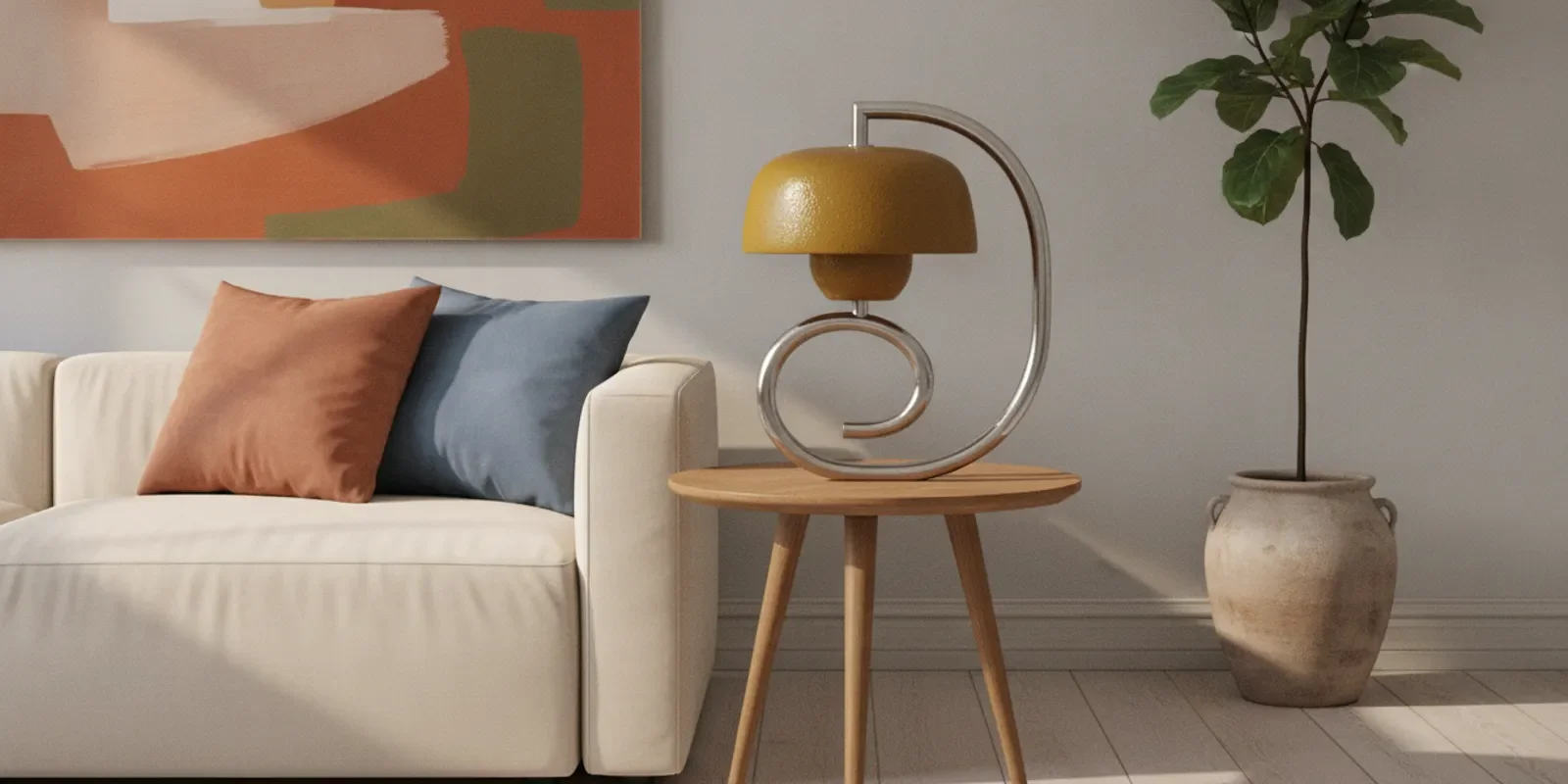
Designer table lamp styled in a warm living room with sculptural form and bold color.
Finding the best designer table lamps is less about choosing the most dramatic silhouette and more about matching useful light, lasting materials, and a design you will enjoy seeing every day. Start with how you use the room, then compare scale, construction, light source, electrical compatibility, and the terms of purchase. That process helps separate a striking object from a lamp that genuinely suits your home.
Contact us about pre-ordering a Woaw table lamp
What makes a designer table lamp worth considering?
A designer lamp should do more than look distinctive in a product photograph. It should bring a considered form into the room and serve a clear purpose, whether that is adding a pool of light near a chair, giving a console a stronger focal point, or adding character to a quieter corner. Think of it as a functional object with a point of view.
That does not mean every lamp needs to be bold. A sculptural, color-blocked piece can energize a restrained interior; a quieter shape can sit comfortably among patterned textiles and art. The useful question is whether the lamp creates the balance you want. If the room already has strong color and pattern, a simpler silhouette may be enough. If the palette is calm, a distinctive lamp can supply a deliberate accent.
Design credentials matter, but they are not a substitute for checking practical details. Ask what the lamp is made from, what light source it uses, which power range it supports, and how the order is fulfilled. For example, the Woaw Lighting Collection pairs steel bodies with ceramic shades and integrated LEDs. Its sculptural, toy-inspired forms reinterpret traditional candelabra shapes through bold color blocking. Those are concrete details to compare, not a promise that one style suits every room.
It helps to separate three things that are easy to blend together while browsing: the design idea, the physical build, and the experience of living with the lamp. The design idea is its shape, color, and character. The build is the material, finish, and way its parts meet. Daily use includes the light it provides, the space it occupies, and how it is powered. A lamp can be compelling in one category and less suitable in another. Writing a short note for each keeps the decision grounded.
How should you compare the best designer table lamps?
Build a short list around your priorities instead of trying to rank every design on the market. A lamp that wins on expressive form may not be the best match for someone who wants a restrained accent. Another shopper may care most about construction or international electrical compatibility. Use the same questions for each option so the comparison is fair.
What you are comparingExpressive sculptural lampQuiet, understated lampTask-led lampPrimary roleAdds a distinctive visual accent as well as lightBlends with the room and supports its existing palettePrioritizes light for a specific activityDesign questionsDoes the shape and color feel intentional with nearby objects?Does the finish work with the room without disappearing?Can the light be directed or positioned as needed?Material checkLook closely at body, shade, finish, and visible joinsCheck finish quality and whether the materials suit the settingCheck construction and moving parts if presentBest comparison habitJudge the full silhouette, not just one decorative detailCompare the lamp against the room's existing shapesConfirm its light source and controls meet the task
| What you are comparing | Expressive sculptural lamp | Quiet, understated lamp | Task-led lamp |
|---|---|---|---|
| Primary role | Adds a distinctive visual accent as well as light | Blends with the room and supports its existing palette | Prioritizes light for a specific activity |
| Design questions | Does the shape and color feel intentional with nearby objects? | Does the finish work with the room without disappearing? | Can the light be directed or positioned as needed? |
| Material check | Look closely at body, shade, finish, and visible joins | Check finish quality and whether the materials suit the setting | Check construction and moving parts if present |
| Best comparison habit | Judge the full silhouette, not just one decorative detail | Compare the lamp against the room's existing shapes | Confirm its light source and controls meet the task |
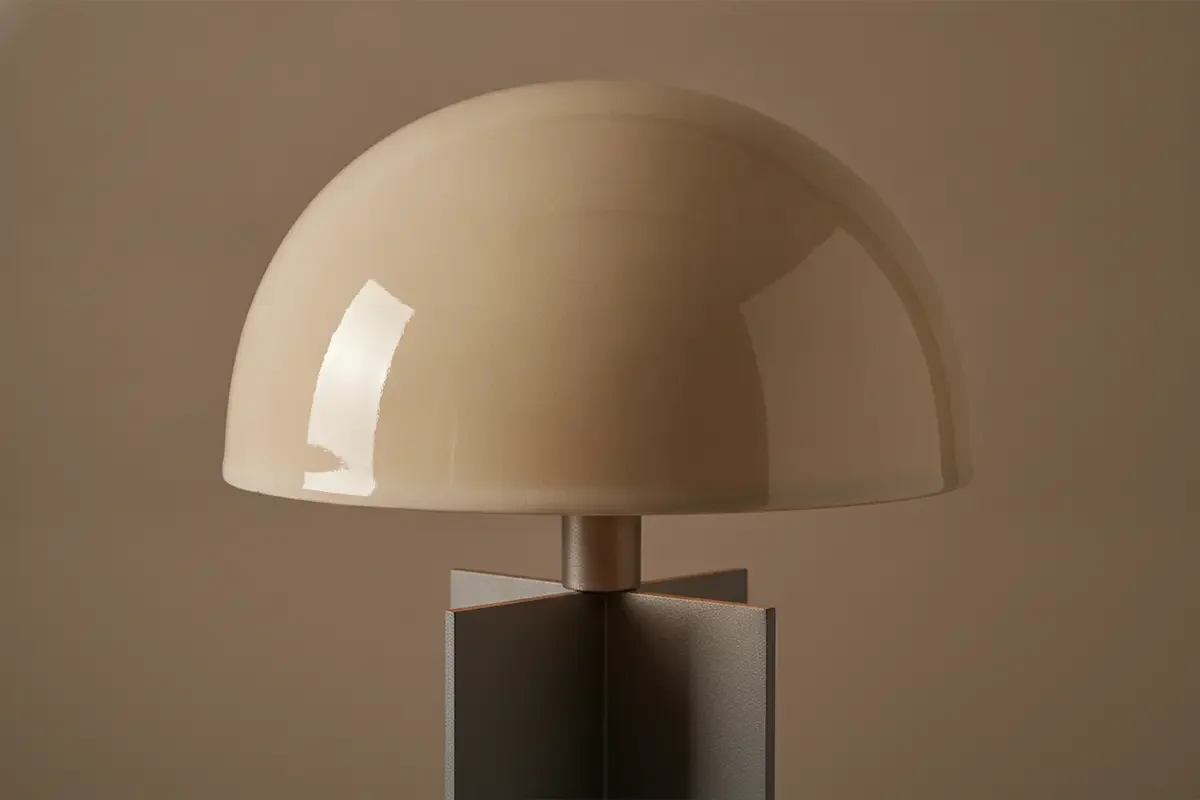
Close view of a sculptural lamp showing its ceramic shade and steel body.
The table is a starting point, not a ranking. Some lamps can serve more than one role. But identifying a primary job makes a choice easier: list your top two needs, then keep only lamps that meet both. If you are comparing a table lamp with a floor lamp, consider how much surface space is available and where light is needed; this table lamp versus floor lamp guide offers another way to frame that decision.
For a practical comparison, give each lamp a quick score from one to three for purpose, scale, materials, light details, and ordering fit. A score of one can mean a poor fit, two means acceptable, and three means a strong fit. Do not add the scores and let arithmetic choose for you; use them to spot a mismatch. If the lamp you love scores highly on appearance but poorly on the task you need it to perform, decide whether another light source will handle that task.
For example, a shopper looking for a visual accent beside a sofa may prioritize silhouette, color, and overall room balance. Someone choosing for a reading nook should first check whether the product details support the desired lighting use, then decide if its design works with the chair and surrounding palette. These are different shopping briefs, even if both begin with the same search phrase. The best option is the one that fits the actual brief rather than the broadest trend.
Which materials and construction details should you inspect?
Materials affect the look and feel of a lamp, and they help you understand what you are buying. Product pages should identify the main materials clearly. For the Woaw collection, the verified construction is steel bodies and ceramic shades. When assessing any designer lamp, check whether the material description applies to the whole fixture or only one component. A ceramic shade, for example, does not mean the base is ceramic too.
Look at the transitions between parts as well as the materials themselves. Are the shade and body visually balanced? Do the finish and edges appear considered? If you can see the lamp in person at a stockist, inspect its surface and proportions from more than one angle. If shopping online, look for clear product views and an accurate description rather than assuming that a styled photograph tells the whole story.
A useful online inspection has a few distinct passes. First, read the product description for the material of each named component. Second, check photographs for views beyond the front-facing hero image; a side or close view can reveal how the body and shade relate. Third, look for stated care guidance and note anything you need to clarify before purchase. Keep unanswered questions in a list rather than filling gaps with assumptions. The more sculptural the form, the more useful it is to understand its shape from multiple views.
Care requirements are worth checking, too. Different surfaces can call for different cleaning approaches, so follow the maker's instructions for the specific lamp rather than using a general cleaner on every finish. For a ceramic shade, see this practical guide to cleaning ceramic lamp shades. A few careful checks now can help you avoid treating a material in a way that dulls or marks its surface.
Consider how a material contributes visually as well as how it is described. A ceramic shade and steel body can create a clear contrast in surface and form; that contrast may suit a room where you want the lamp to read as an object. In a more layered setting, look at whether the finish repeats or balances materials already present, such as painted furniture, metal accents, or ceramic pieces. Matching everything is not necessary. The goal is to decide whether the combination feels deliberate.
How do proportions and color affect the choice?
Before ordering, compare the lamp's published dimensions with the surface and surrounding objects where you plan to use it. Measure the available width and height, then consider the visual weight of the lamp beside nearby furniture, books, or artwork. A useful sketch or a paper outline can help you picture the footprint without relying on memory. Do not assume a lamp will fit a particular table or setting without checking its actual measurements.
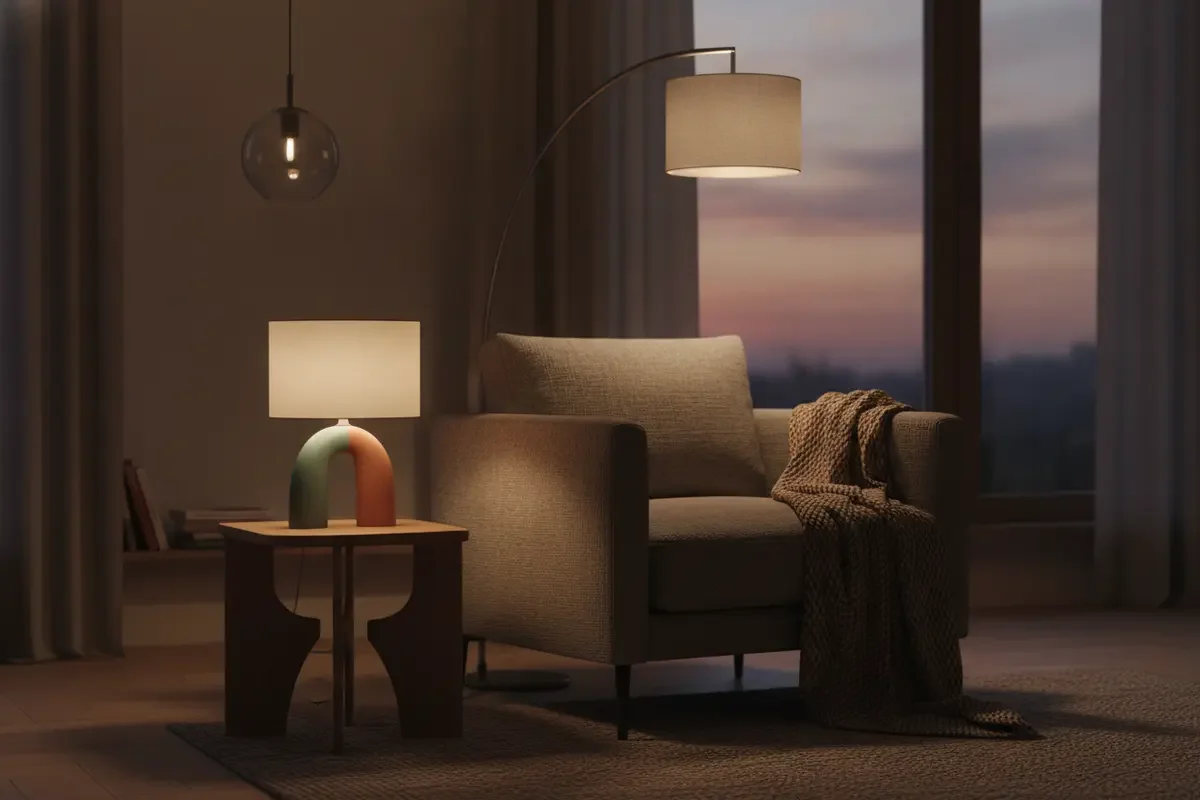
A colorful sculptural table lamp adding a focal point beside a reading chair.
Use a tape measure to note the surface width and depth, and record the height of nearby objects that might compete with the lamp visually. If a lamp will sit beside books or a framed photograph, temporarily arrange objects of a similar footprint to see how much room remains. This is not a substitute for the lamp's published dimensions; it is a way to make those dimensions easier to imagine. Keep a clear margin around the object so it does not feel crowded by the edge of the surface.
Look at the room from the main places you use it. A lamp might be viewed from a sofa, a doorway, or across a dining area, and its silhouette can read differently from each angle. Consider whether its shade and body will be visible among nearby objects. In a compact setting, a strong design can still work, but the dimensions and visual balance should be deliberate. This small-space table lamp guide explores the same kind of proportion check.
Color is another design decision, not a finishing touch. A bright lamp can echo a color already present in a print or cushion, or it can introduce a contrast that makes a quieter room feel more animated. If you prefer a composed look, repeat one color elsewhere in a small way. If you want the lamp to stand alone as an accent, keep surrounding objects simpler. For more ideas, use this guide to color blocking in interior design as a palette exercise, not a rigid formula.
One easy palette exercise is to identify the room's dominant color, its supporting colors, and one possible accent. The lamp could repeat the accent, introduce a new one, or act as a tonal bridge between two existing colors. Take a photograph of the room in ordinary daylight and compare it with product images, remembering that screens and lighting conditions can change how color appears. If you are uncertain, consider whether the lamp's form still appeals to you without relying on the exact shade of color shown online.
Scale also includes visual weight, not only height and width. A compact object with a bold silhouette may command attention, while a larger piece with a simple outline can feel quiet. Compare the lamp against the shapes near it: rounded or angular furniture, low or tall accessories, and the amount of open surface. Step back and ask whether the lamp becomes a focal point, supports another focal point, or competes with it. Each can be the right result if it is the one you intended.
What should you know about light and electrical compatibility?
First, identify the job the lamp needs to do. Ambient light can make a room feel less stark; a more focused pool of light can help with a particular activity. A table lamp may contribute to the room's overall lighting, but it should not be assumed to replace every other light source. Think about the other lights in the space and the atmosphere you want at different times of day.
Make the use case specific. Do you want a warm-looking point of light that adds atmosphere in the evening, or are you trying to support a task that needs more directed illumination? Where will you sit or stand, and what else already lights that area? Write these answers down before comparing specifications. If the intended job depends on brightness, direction, dimming, or a particular light color, verify those details in the product information rather than inferring them from the lamp's appearance.
Check the stated light source and controls before you buy. The Woaw Lighting Collection uses integrated LEDs. Do not assume that an integrated light source is user-replaceable, dimmable, or available in a particular color temperature unless the product details confirm it. If a feature is essential, look for it in the current product information or ask the seller before placing an order.
For shoppers moving between countries, verify voltage and plug type rather than relying on a broad claim that a product is international. Woaw products are specified for universal 120V–240V compatibility with US, UK, and EU plug options. Check the selection available for your order and make sure it matches the destination. The universal-voltage table lamp guide explains the questions to ask when comparing electrical details.
Before checkout, make a quick electrical checklist: confirm the destination country, read the voltage range, select the right plug option, and check any stated control or source details. If you are buying for a different country from the one where you currently live, use the product's specified destination and plug selection as the reference point. Avoid relying on an adapter as a substitute for checking product compatibility. When a technical detail is unclear, get it confirmed before you order.
Lighting design balances practical and conceptual considerations, as the New York School of Interior Design's lighting design program describes. For a home purchase, that is a useful reminder: the lamp should support the activity and contribute to the character of the room. Neither function nor appearance has to be treated as an afterthought.
How do price and ordering terms fit into the decision?
Price is meaningful only when you compare like with like. Look at materials, construction, light source, and what the product description actually includes. Avoid comparing a lamp based on a category label alone; two products called designer table lamps can differ in form, materials, and specifications. Set a budget that feels right, then assess which of your non-negotiables each option meets.
Rather than starting with a single headline price, write down what you expect the purchase to include and which details you have confirmed. Compare the materials, the listed light source, power options, and any timing terms. If two products differ in their specifications, do not treat their prices as a direct measure of design quality. A higher or lower figure cannot tell you whether the lamp meets your intended use or whether its form belongs in your room.
Check the current product page for the specific price before deciding. Compare table lamps with other table lamps, rather than treating floor-lamp prices as a direct comparison. For the wider collection and available designs, visit the Woaw table lamp selection and the Woaw Lighting Collection.
Ordering terms are part of the product decision, especially for made-to-order lighting. Woaw products are pre-ordered, with production taking about 60 days and full payment made upfront before manufacturing begins. Read the current pre-order information for the applicable terms and details. Make sure the production window works for your plans before submitting an order; a design can be the right choice and still not match an urgent timeline.
Put that lead time against your own calendar. If you are furnishing a room for a fixed date, allow for the stated production window and check the current order information for delivery details before making a commitment. If there is no deadline, the wait may be easier to accommodate, but it still belongs in the comparison. A made-to-order purchase asks for more planning than selecting an item that is already available, so consider timing alongside design rather than after you have decided.
For additional context, the about page shares the design context behind Mr. John's Goods and its playful approach to lighting. For examples of the lamps in styled settings, browse the lighting gallery. Use imagery to understand the mood and silhouette, then confirm the measurable specifications on the product page.
It can help to divide your decision into two stages. First, decide whether the lamp works for the room and the way you plan to use it. Then review purchase details: current product information, electrical option, pre-order timing, payment terms, and any applicable policies. This order prevents a beautiful image from making you overlook a practical concern, while also keeping technical checks from crowding out the design question.
What is a simple checklist before you choose?
Before you place an order, answer these questions in plain language:
Purpose: What role should the lamp play: an expressive accent, a quieter supporting piece, or a focused source for a specific activity?
Measurements: Have you checked the product dimensions against the space and surface available?
Materials: Are the body and shade materials clearly described, and do they fit your preferences?
Light source: Do you understand the stated source and controls, without assuming features that are not listed?
Power: Does the voltage and plug option match where you will use the lamp?
Timing: Does the production and delivery information work with your schedule?
Budget: Have you compared current prices for the product category and the specific design?
Turn the checklist into a final decision by marking each answer as confirmed, undecided, or not relevant. A confirmed answer is supported by the product information or your own room measurements. An undecided answer is a question to resolve before purchase. This small distinction is useful: it prevents assumptions from quietly turning into facts, and it makes it easier to ask a seller one clear question instead of sending several vague ones.
When those answers line up, aesthetics become easier to judge. Choose the lamp whose shape and color you will enjoy living with, not only the one that looks compelling in a single photograph. A quick check of the product page and order details makes that decision more grounded.
As a last test, picture the lamp on an ordinary day, not only during a styled photo moment. Imagine seeing it from the doorway, using the room in the evening, and keeping the surrounding surface tidy. If the design still feels right and the practical details are confirmed, you have a reasoned choice. If one important answer remains unknown, pause long enough to verify it instead of hoping it will work out.
Explore the Woaw table lamp collection
Frequently asked questions
What should I prioritize when choosing a designer table lamp?
Start with the lamp's purpose and the space available, then compare materials, light-source details, power compatibility, and order timing. A strong design should make sense for both the room and the way you intend to use it.
Are designer table lamps only decorative?
No. A table lamp can contribute useful light while also adding shape, color, or visual interest. Check the product details and consider how it will work alongside the room's other light sources.
What is the difference between a ceramic shade and a ceramic lamp?
A ceramic shade describes the shade material, not necessarily the whole fixture. Read the product description for the body and other components too. Woaw table lamps have steel bodies and ceramic shades.
Can I use a Woaw lamp outside the United States?
Woaw products are specified for universal 120V–240V compatibility with US, UK, and EU plug options. Confirm the plug selection and destination details for the specific order before buying.
How long does a Woaw pre-order take?
Production takes about 60 days, and full payment is made upfront before manufacturing begins. Review the current pre-order details so the timing and terms fit your plans.
The best choice is the lamp that brings together a clear purpose, considered materials, verified practical details, and a design that feels like you.
