Table Lamp Height: Get the Scale Right in Any Room
A lamp can be beautiful on its own and still look completely wrong on a table. The fix is rarely a magic measurement. It is the relationship between the shade, the furniture beneath it, your sightline, and the job the light needs to do.
Pre-order a Woaw lamp and choose a scale that works for your space.
The best table lamp height keeps the shade low enough to avoid glare, high enough to spread useful light, and visually balanced with the table and nearby furniture. For reading, start by checking that the bottom of the shade sits close to eye level, then adjust for your seated position and the lamp's intended role.
Think of sizing as a small design investigation, not a pass-or-fail formula. Measure the table, sit where the lamp will be used, and judge the whole silhouette from that viewpoint. These practical checks build on the ideas in our room-by-room lamp styling guide, then take them further by starting where proportion matters most: the bedside table.
What Is the Right Table Lamp Height for a Bedside Table?
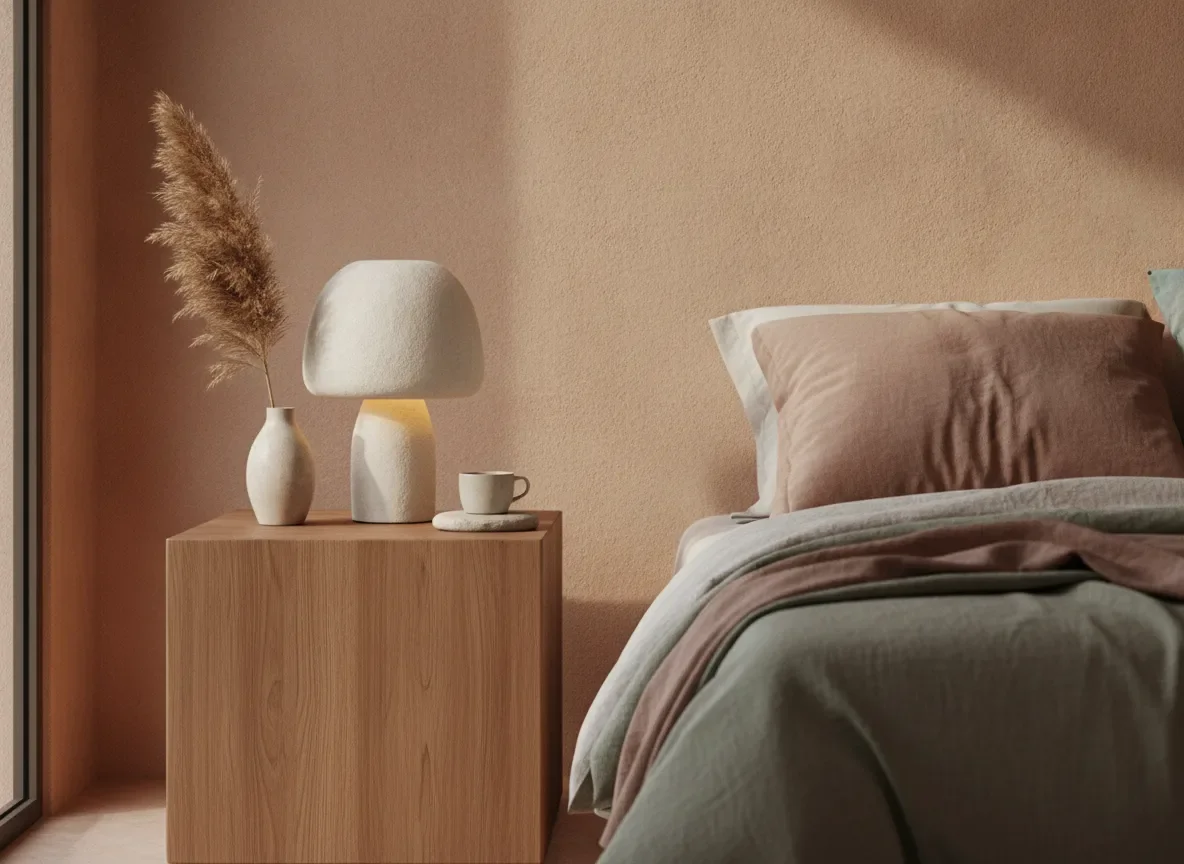
For a bedside lamp, start with the position of the shade rather than chasing a magic total height. When you are sitting upright in bed, the bottom of the shade should sit around chin height. That keeps the light useful for reading while helping the bulb stay out of your direct line of sight. It is a practical starting point, not a law of bedroom design.
To test it, sit on the bed in your usual reading position and measure from the top of the nightstand to your chin. A commonly cited guide places the bottom of the shade roughly 55 to 65 cm above the nightstand, depending on the furniture height. You may land above or below that range if your mattress, posture, shade shape, or reading habits are different. The useful question is simple: can you see the page comfortably without seeing the bright source?
The relationship between the nightstand and the bed matters just as much. One proportional guideline assumes that the nightstand is level with the mattress, or within a couple of inches. It then suggests a lamp around 2 or 3 inches taller than the nightstand. Under that example, a 24-inch nightstand pairs with a lamp around 27 inches tall. Treat this as a visual starting point, not a shopping mandate. If your nightstand is noticeably lower than the mattress, measure from the surface to your seated chin instead of copying a catalog number.
Height is only half the bedside equation. Check the shade width against the tabletop so the lamp does not crowd your book, phone, or morning coffee. A general guide keeps the shade no wider than about two-thirds of the nightstand width, while leaving enough usable surface around the base. A narrow table may need a visually lighter lamp, even when a taller silhouette suits the bed.
How should you adjust the lamp for reading?
Start with the way you actually use the room. Lamp height should respond to the intended activity, whether that is reading, winding down, or adding a soft glow. A lamp that is too short can confine light to a small area, while one that is too high may create glare. Move the lamp a few inches, change the shade angle if possible, and test it after dark. The goal is an even, comfortable pool of light, not a spotlight aimed at your face.
For more visual ideas once your measurements are clear, explore our bedside table lamp styling guide. The best choice balances sightlines, surface space, and personality, because a bedside lamp should be useful before it becomes the room's little bit of theater.
How Do You Match Lamp Scale to Room Size and Ceiling Height?
The right table lamp height is less about chasing a magic number and more about keeping the lamp, its furniture, and the room in proportion. Start with the surface it sits on, then step back and consider the ceiling, nearby seating, and what you want the light to do. A compact lamp can disappear on a deep console beneath a tall ceiling, while an oversized sculptural lamp can make a small side table feel crowded.
Use the table as your first visual anchor. One sizing guideline places a lamp at no more than about one and a half times the table's height. But treat that as a starting point rather than a law. A low table may suit a lamp with more vertical presence, especially beside a substantial sofa. On a delicate table, a heavy or very tall base can look top-heavy before it ever gets switched on. Compare the lamp's visual weight with the furniture's legs, tabletop thickness, and surrounding objects. A slim table usually benefits from breathing room; a broad, sturdy table can carry more presence.
Ceiling height changes the conversation. In a room with high ceilings, a taller lamp or a stronger silhouette can help connect the tabletop to the vertical space above it. This does not mean choosing the tallest option available. Look for a form that holds its ground without competing with artwork, shelving, or a pendant. In a lower room, a lower-profile lamp may preserve an open sightline and keep the ceiling from feeling visually compressed. The goal is balance, not a lamp that tries to become architecture.
Then check the light pool. A lamp that is too short can confine light to a small area. While one that is too high may introduce glare, according to guidance from the University of Nebraska-Lincoln Extension. Read the source guidance on lamp placement and comfort. Sit in the chair or stand where the lamp will actually be used. Look toward the shade, the tabletop, and the nearby wall. If the bulb is exposed to your usual sightline, lower the lamp, adjust its position, or choose a shade that controls the view. If the light barely reaches the book, drink, or work surface, the lamp may be undersized for the job.
Finally, judge the whole room rather than one isolated corner. Moderate background lighting can make a room feel more attractive, while sharp contrasts between bright pools and deep shadows can tire the eyes. In a small apartment, a lamp that performs more than one visual job matters even more, so explore these ideas for table lamps for small spaces. Measure, sit, switch the light on, and view the arrangement from the doorway. Good scale should feel intentional from every angle, with enough personality to make the room smile and enough restraint to let the room breathe.
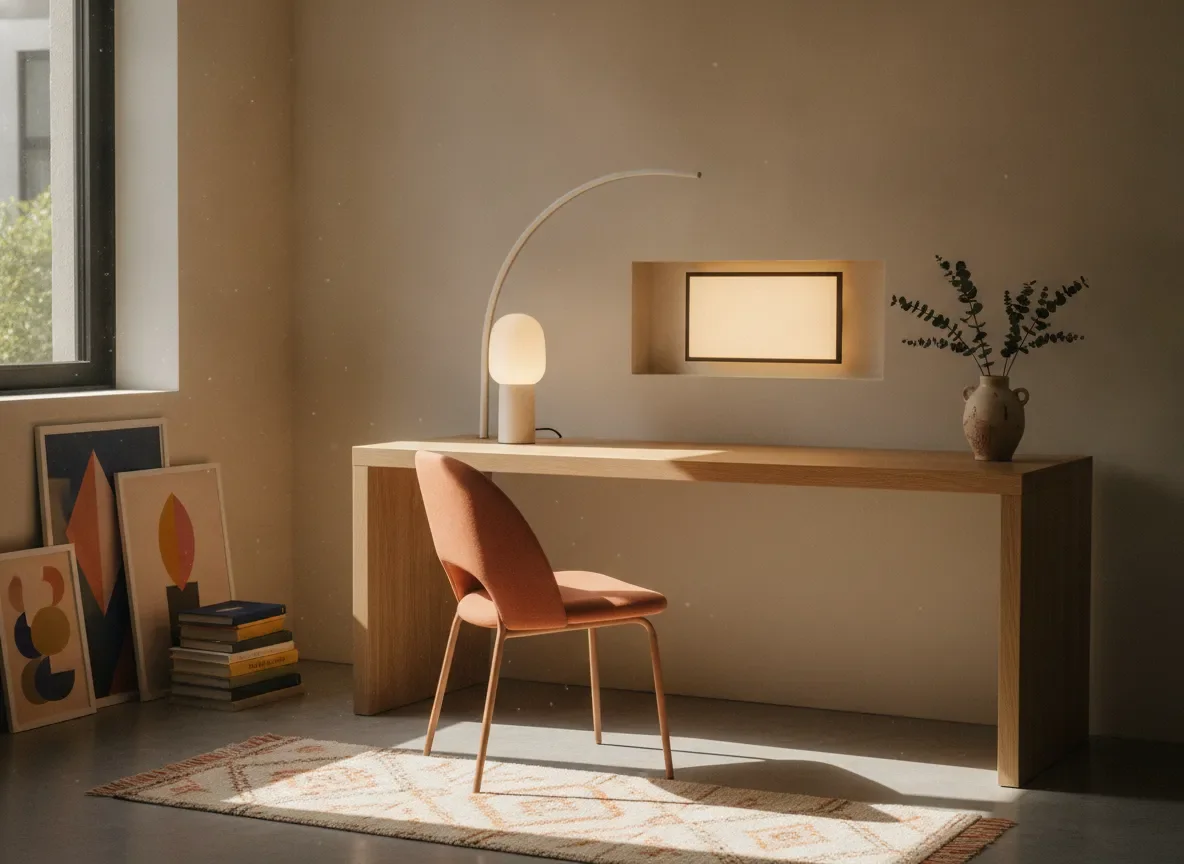
In a workspace, judge lamp scale alongside the desk and your seated sightline.
The Proportional Rule: How Wide Should a Lamp Shade Be?
Shade width is less about finding one magic measurement and more about making three pieces agree: the shade, the lamp base, and the furniture beneath them. A shade that is too narrow can make a substantial base look top-heavy. One that is too wide may crowd the table, compete with nearby objects, or feel visually louder than the room intended. Start with the table's usable surface, then check the base and the sightline from the seat or bed.
The familiar two-thirds guideline is useful for a nightstand: one sourced rule suggests keeping the shade no wider than two-thirds of the nightstand. Treat that as a starting point, not a law. A deep, uncluttered nightstand can tolerate more visual weight, while a narrow table or a busy vignette usually needs breathing room. The shade should also remain in proportion to the base. Another sizing guideline pairs a six-inch-wide base with a shade about 12 inches wide, give or take an inch or two. The principle matters more than the arithmetic: let the shade feel stable above the base, not like it has wandered in from another lamp.
Starting points for lamp shade width by placement
Bedside table: Keep the shade no wider than roughly two-thirds of the nightstand. What to check before buying: Measure the usable tabletop, allow room for a book or glass, and confirm the shade will not block the reading sightline.
Sofa or end table: Choose a shade that fits comfortably within the tabletop, with enough margin to avoid a precarious edge. What to check before buying: View it from the sofa. Check that the base and shade balance the arm of the sofa rather than disappearing beside it.
Desk: Scale the shade to the desk depth and the task area, not just the lamp's overall height. What to check before buying: Keep the work surface usable, position light to reduce screen or task glare, and check the shade does not sit in your direct line of sight.
Console: Use the console length and surrounding wall as the frame. A broader shade can work when the surface and setting have visual space. What to check before buying: Step back to assess the whole entry or wall. Nearby artwork, mirrors, and decor should complement the lamp rather than form a traffic jam.
For any placement, measure the shade's widest point, not only the base or the top opening. Then photograph the setup from the actual viewing position. A lamp can look perfectly proportioned from across the room and oversized from the chair beside it. That practical sightline check is especially helpful when choosing statement lamp proportions, where sculptural form is part of the appeal. The best result is balanced enough to feel intentional, with enough personality to avoid looking timid.
How Do Candelabra-Form Lamps Handle Table Lamp Height Differently?
A candelabra-inspired lamp can occupy more visual territory than a simple-base lamp, even when both sit on the same table. That is because your eye reads the entire silhouette, not just the distance from tabletop to shade. Multiple arms, branching lines, and a wider upper profile create a sense of lift and presence. The result can feel taller, more dramatic, or pleasantly theatrical without requiring a larger physical footprint.
Why does the silhouette change the sense of height?
A simple-base lamp usually presents one clear vertical column. Its visual weight is concentrated around the base and shade, so the eye can judge its table lamp height quickly. A candelabra form breaks that single line into several visual paths. Arms rise, spread, and redirect attention, making the lamp feel active above the tabletop. Negative space between those arms can add airiness, while clustered forms can make the upper half feel denser.
This is why a candelabra-form piece deserves a sightline check rather than a ruler-only decision. Sit where you normally will, then look toward the lamp. Does the shade or an arm interrupt your view across the room? Does the silhouette compete with a nearby artwork, mirror, or shelf? On a side table, the right choice may be the lamp that feels generous and sculptural from across the room. Not the one that wins a narrow height calculation.
How should the table and lamp share visual weight?
Start with the furniture beneath it. A delicate table may be overwhelmed by a dense, branching silhouette, while a broad end table can make a simple-base lamp look lost. Consider the table's width, the thickness of its top, and the objects already nearby. The goal isn't symmetry for its own sake. It is a conversation between surfaces and shapes, with enough breathing room for the lamp to look intentional.
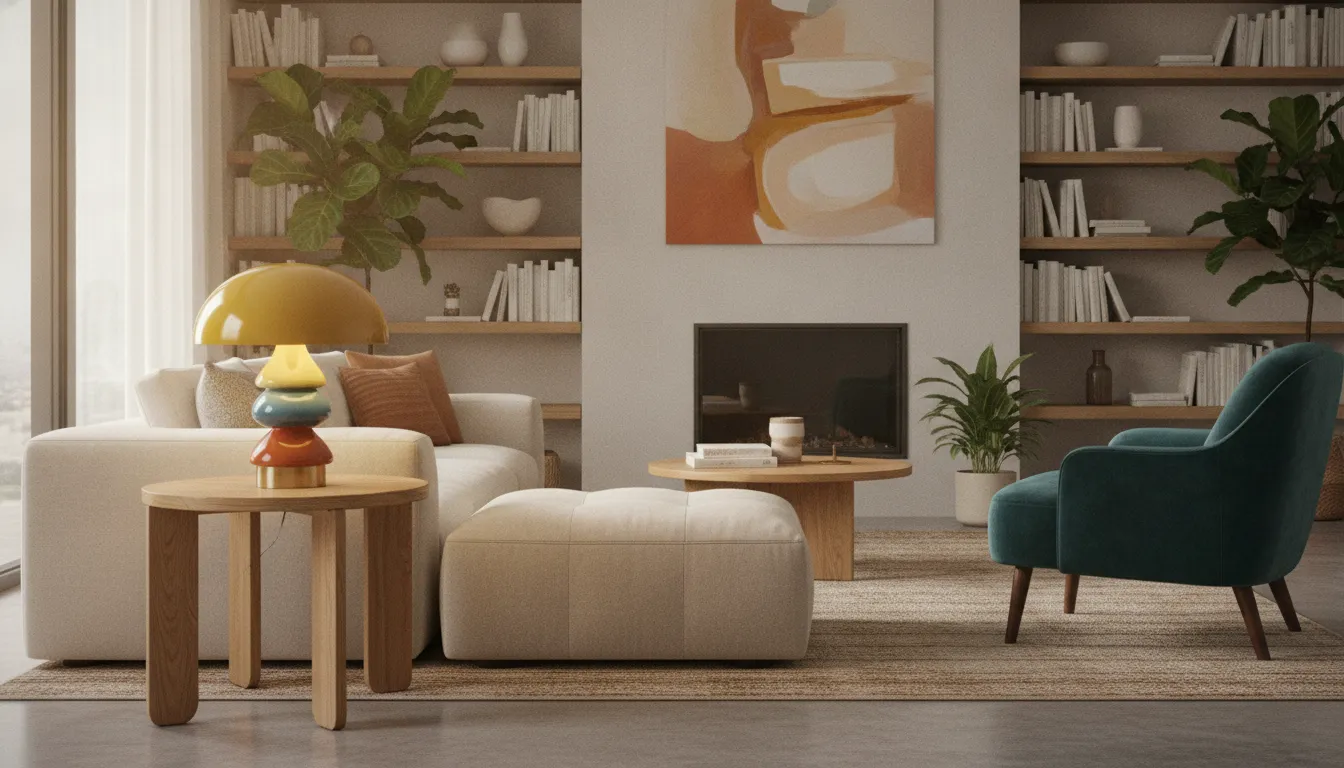
Woaw approaches this effect through traditional candelabra inspiration, playful color blocking, and a sculptural construction of steel bodies with ceramic shades. Those materials and forms give the collection a more substantial visual character than a lightweight novelty accent. So judge the lamp from multiple angles before deciding where it belongs. Its integrated LED design also keeps the lighting concept cohesive, rather than adding a separate visible bulb to the silhouette.
For a closer look at how an expressive fixture earns its place in a room, explore this guide to statement lamp proportions. The same principle applies here: let the whole profile guide the decision, then use table height, seating position, shade placement, and glare control to refine it.
Woaw lamps are designed for broad compatibility, with universal 120V-240V voltage and US, UK, and EU plugs. They are available by pre-order and ship within two months, so plan the piece around your room's finished composition rather than treating it as an impulse replacement.
A Quick Visual Checklist for Getting Lamp Scale Right the First Time
Before you commit to a lamp, give the setup a five-minute reality check. A tape measure catches proportion problems, but your eyes catch the things a number cannot: glare, blocked sightlines, and a silhouette that feels oddly tiny or theatrically enormous.
Check a bedside lamp from the position where you will actually use it.
Measure the furniture first. Record the table, console, nightstand, or desk height from the floor to the top surface. Then measure its width and depth. Include nearby furniture in your notes, especially a sofa arm, headboard, monitor, or artwork. Lamp scale should harmonize with the furnishings around it in scale, finish, and character, not exist in a lonely little bubble. A useful starting point is to compare the proposed total lamp height with the table height. While remembering that the intended use and surrounding objects can justify a different proportion.
Check the shade width against the surface. Place a paper outline or painter's-tape rectangle where the shade will sit. Leave enough usable surface for a book, drink, alarm clock, or keyboard. A shade can be technically attractive yet functionally rude if it crowds every other object. For a bedside setup, use the two-thirds-of-nightstand-width guideline as a starting point, not a commandment. The shade should also look harmonious with the base, since height alone does not determine visual balance.
Test the seated sightline. Sit where the lamp will actually be used: in bed, on the sofa, or at the desk. Look toward the shade from your normal posture. For reading, the lower edge of the shade should sit near eye level. And at a bedside table it is often helpful for that edge to land roughly near chin height when you sit upright. If the bulb is exposed to your direct view, the lamp is asking for an adjustment.
Check task comfort and ergonomics. At a home office, place your hands on the keyboard or book and notice whether the lamp lights the work without forcing you to twist. Hunch, or lean around it. Choose height according to the activity, since reading, sewing, study, and general computer work do not create identical lighting needs. Keep the lamp clear of the monitor's viewing path and avoid a shade position that creates reflections.
Walk around and look for glare. Stand, sit, and move to the room's usual entry points. A lamp that is too high can create glare, while one that is too short may confine light to a small area. You want useful illumination without direct bulb glare or harsh reflected glare on a screen, tabletop, or glossy artwork. Moderate background lighting can make a room feel more inviting, while sharp contrasts between bright pools and deep shadow can tire the eyes. See the lighting guidance for the underlying principles.
Review the result from the doorway. Turn on the lamp at the time of day you will use it, then step back. Does it support the room's visual rhythm, or does it look like a tiny hat on a large table? Check the silhouette against the wall, the balance with nearby pieces, and the spread of light. If the answer is almost right, adjust placement before replacing the lamp. Sometimes one small shift delivers the big vibe.
Frequently Asked Questions
How tall should your end table lamp be?
Start by comparing the lamp with the table, sofa, and nearby seating rather than choosing a height in isolation. The lamp should feel stable in the composition, provide a useful pool of light, and keep the shade low enough to control glare. A common sizing guideline places the lamp at no more than about one and a half times the table height. But treat that as a starting point, not a law. Furniture-scale guidance supports choosing lamps that harmonize with their surroundings.
How tall should a table lamp be beside a sofa?
Choose a lamp that sits comfortably below the sofa's sightline when you are seated, while still casting light across the table surface. Check the position from the seat you will actually use, not just from a standing viewpoint. If the lamp is too short, its light may stay confined to a small area; if it is too high, it may create glare. Shade placement and your intended use matter more than a universal number.
What is the standard size of a table lamp?
There is no single standard size. Table lamps vary with the furniture they serve, the room's scale, the shade diameter, and whether they provide reading, work, or ambient light. A compact lamp can be right for a narrow console, while a broader sculptural base may suit a generous side table. Judge the complete silhouette, including the shade, rather than shopping by base height alone.
How do you decide lamp height?
Measure the table, note the seated eye line, and identify the lamp's job before comparing options. For reading, the bottom of the shade should sit near the reader's eye level to make the task comfortable. Then check shade width, clearance from the table edge, and the lamp's visual weight against nearby furniture. If the proportions look balanced from every important seat, you have likely found the right height.
Ready to choose your lamp scale?
Once you have checked the table, shade, and sightline, the right lamp should feel intentional without making the room work too hard. Explore the Woaw collection to compare sculptural forms and choose the scale that suits your space. When you have found your fit, pre-order your Woaw lamp through the ordering page.