

Color Blocked Desk Setup Ceramic Lamp Styling Guide
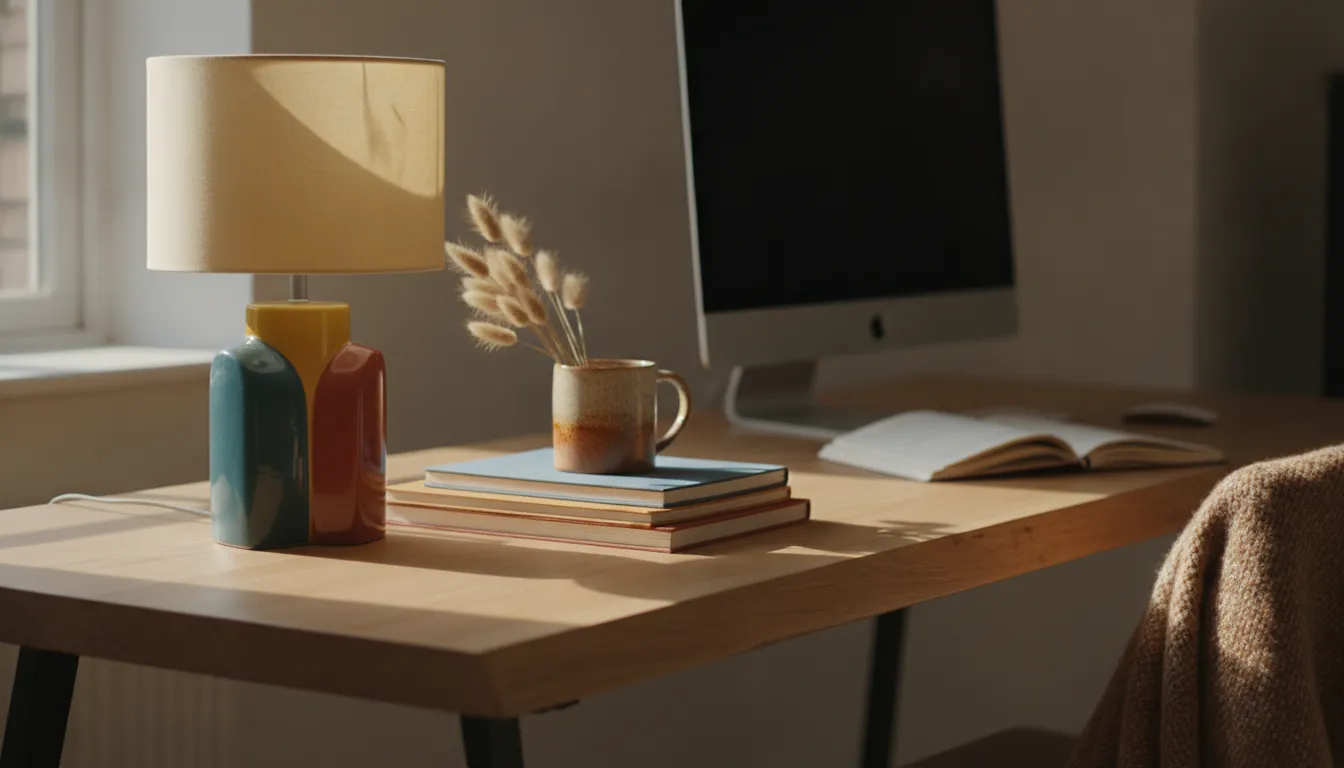
A desk can be functional without looking like it was assembled from the office-supply aisle. The trick is to treat your workspace as a small composition: choose one confident color relationship, repeat it with restraint, and let one sculptural object take the lead.
Pre-Order a sculptural lamp for your color-blocked desk.
A color blocked desk setup ceramic lamp works best when the lamp anchors the palette, while smaller accents echo one or two of its colors without competing for attention. Choose a ceramic shade with a silhouette you enjoy seeing every day. Then balance it with a calm desk surface, useful light, and only the accessories you actually use.
That approach leaves room for personality without turning your monitor, notebook, and mug into a color-code emergency. Before choosing shades and accents, start with what color blocking means in a desk setting and why this cheerful design language has become so popular. For more placement ideas beyond the office, explore our room-by-room lamp styling guide.
How Does a Color Blocked Desk Setup Ceramic Lamp Work?
A color-blocked desk setup treats the workspace as one visual composition rather than a desk, a lamp, and a handful of accessories that happened to meet there. The idea is simple: choose a small group of deliberate color fields, then repeat or contrast them across the wall, desktop, lighting, monitor stand, notebook, and smaller objects. The result can be bold without looking chaotic because every bright note has a job.
That distinction matters for expressive home offices. A colorful workspace should still leave room to work, think, and move. Color blocking gives maximalists a way to turn up the personality while giving minimalists a clear editing rule: fewer colors, repeated with intention. It is less about chasing a specific trend and more about making the desk feel like it belongs to the person using it.
Think in blocks, not scattered accents
Start with two or three dominant colors. One can come from the wall or desk surface, another from the lamp, and a third from accessories. Then repeat each color at least once, but not everywhere. A cobalt lamp might meet a blue notebook and a small object on the opposite side of the desk. A warm shade could echo a chair cushion or artwork in the background. Repetition creates rhythm; restraint keeps the setup from becoming visual confetti.
Also consider shape. A color block is stronger when it belongs to a distinct form, such as a rounded ceramic shade, a rectangular monitor stand, or a stack of books. Leave some neutral space between those forms so the eye can identify each one. The desk should feel edited, not empty or overstuffed.
Let the lamp be the visual anchor
A statement lamp works best when it establishes the setup's center of gravity. Place it where its silhouette can be seen clearly, rather than hiding it behind a monitor or crowding it with stationery. Keep the tallest surrounding objects lower if possible, and give the lamp enough breathing room to read as a deliberate feature.
A ceramic shade is useful because it contributes color, texture, and shape even when the light is off. Woaw takes that approach further by reimagining traditional candelabra forms with childhood-toy inspiration and bold color blocking. Its steel bodies and ceramic shades make the fixture part of the desk's visual language. Integrated LEDs keep the lighting element built into the design. The goal is to let the lamp set the palette, then make the rest of the workspace answer back in quieter ways.
How Do You Pick a Ceramic Lamp That Anchors Your Desk Palette?
Start with the desk, not the lamp. A ceramic statement piece should give the composition a clear focal point while leaving enough room for the work that actually happens there. Before shopping, note the usable surface around your monitor, keyboard, notebook, and everyday accessories. Then decide where the lamp can sit without turning your best writing space into a decorative obstacle course.
Match the lamp's scale to the visual weight of the desk
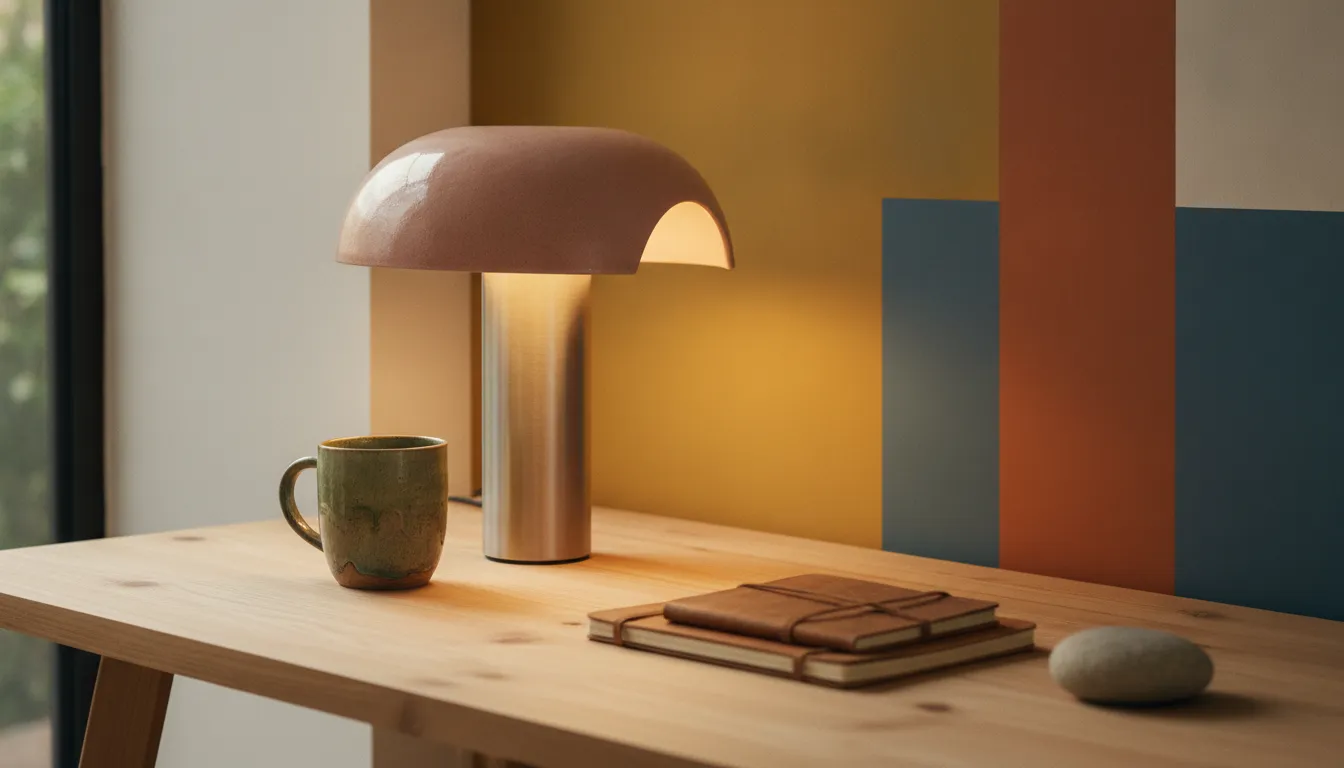
Look at the relationship between the lamp, monitor, shelving, and wall behind them. A small desk with a large monitor may need a compact lamp that adds color without competing with the screen. A broad, open surface can support more sculptural volume. The goal is balance: the lamp should be noticeable from the room, but not so dominant that every other object looks accidental.
Placement matters just as much as size. A corner position can create an intentional anchor and keep the center clear. Placing the lamp beside the monitor can build a strong vertical line, provided it does not block the display or create distracting reflections. If your desk faces a window, position the screen perpendicular to it or adjust the blinds to reduce glare, as recommended by the CDC. The display and lamp should work together, not compete for the same visual territory.
Use material contrast to make color feel considered
Color blocking becomes more convincing when the surfaces have distinct character. A ceramic shade can bring a tactile, grounded quality against a smooth desk, glass monitor stand, or metal accessory. In the Woaw collection, ceramic shades are paired with steel bodies, creating a material contrast that supports the playful, sculptural forms. Repeat one or two of the lamp's colors in smaller objects, then let the rest of the desk stay quiet. That keeps the palette lively without making it look like the stationery aisle staged a coup.
Check the shade, light behavior, and cable before committing
Study where the shade directs light and whether the glow suits your desk's role. You want useful illumination across the working area without placing a bright source directly in your sightline. Consider the lamp's switch or control, the route from the base to the nearest outlet, and whether the cable can run neatly behind the desk. A beautiful object with a cable stretched across your notebook is still a desk problem.
For a closer look at ceramic construction, shade height, craftsmanship, and integrated lighting, use this ceramic table lamp buying guide. The strongest choice fits your actual surface. It gives the palette a confident anchor and leaves the desk pleasant to use after the photograph is taken.
Which Colors Work With Your Monitor Stand, Notebook, and Accessories?
Think of the desk as a small composition, not a clearance bin for every color you love. Start with the monitor stand and lamp as the two largest visual anchors, then let notebooks, keyboard details, art, and cable accessories echo those tones in smaller doses. The result feels intentional without making the screen compete with a dozen equally loud objects.
A useful rule is to choose one dominant color, one supporting color, and a neutral. The dominant shade can live on the lamp or desk accessory. The supporting shade can appear in a notebook, artwork, or pen cup. Keep the neutral on larger surfaces, such as the desk, monitor, or keyboard, so the color blocks have room to breathe. For broader guidance on building a workspace palette, see this guide to color in a home office, then adapt the idea to the objects in front of you.
| Palette | How to use it | Best for |
|---|---|---|
| Restrained 2-color | Pair one statement color with a neutral. Repeat the statement shade in two or three small accessories. | Minimal desks and calm, edited compositions |
| Balanced 3-color | Use a dominant shade, a companion shade, and a neutral. Give each color a clear job rather than scattering them evenly. | Desks with art, stationery, and a sculptural lamp |
| High-contrast | Set a saturated lamp or accessory against deep and light neutrals. Repeat the strongest shade sparingly. | Maximalist corners that still need a visual anchor |
Repeat color, but change the scale
If the monitor stand is blue, a blue notebook does not need to match it perfectly. A nearby tint, darker tone, or patterned cover can create a more collected look. The same applies to the keyboard, mouse, and desk mat: select one or two supporting details, then stop. Color repetition works best when it feels like a visual rhyme rather than copy and paste.
Art can bridge the palette. Look for a print that contains the lamp color alongside a neutral already present on the desk. Keep the monitor area comparatively quiet, especially if the lamp has a bold, sculptural silhouette. The Woaw collection is designed around bold color blocking and playful candelabra-inspired forms. So its color can act as the focal note while notebooks and accessories provide the quieter echoes.
How Can a Woaw Candelabra Table Lamp Become the Desk Hero?
A desk hero is the piece that gives the whole setup its point of view. It is not necessarily the largest object, and it does not need a desk covered in accessories. Place one distinctive lamp where it can be seen from the room. Then let the rest of the workspace support its shape and color instead of competing with it.
The Woaw candelabra-inspired table lamp is designed for exactly that kind of visual role. The collection reimagines traditional candelabra forms through childhood-toy inspiration and bold color blocking. On a desk, that playful reference can make a practical corner feel more like a considered composition. It brings personality without asking you to turn every object around it into a statement.
Let the lamp set the visual hierarchy
Start with the lamp, then edit around it. Keep the monitor, keyboard, and primary work area visually calm. Repeat one or two of the lamp's colors in smaller details, such as a notebook, pen cup, cable tie, or artwork in the background. The repetition creates cohesion, while the difference in scale keeps the lamp in charge. If the desk already has several bright objects, remove a few rather than adding another layer. Color blocking works best when the blocks feel intentional.
Material contrast helps the focal point read clearly, too. Woaw fixtures pair steel bodies with ceramic shades, giving the candelabra-inspired silhouette a tactile, design-focused presence. Let the ceramic shade sit against a quieter wall, monitor backdrop, or wood-toned surface so its form remains easy to read. For more context on the collection's sculptural approach, explore this Woaw sculptural lighting collection guide.
Keep the practical details visible before you order
Woaw lamps use integrated LEDs, so there is no separate bulb choice to coordinate with the look. They support universal 120V-240V compatibility and come with US, UK, and EU plug options, which is useful when a desk setup moves between regions or homes. The collection also includes table and floor lamps, allowing you to echo the desk's color story elsewhere without making the workspace feel like a matching set.
These pieces are available for pre-order and ship within two months. Plan the desk refresh around that timing rather than expecting immediate delivery. See the full Woaw Lighting Collection. Choose the lamp that deserves hero status, then build the rest of the desk with a lighter touch.
Step by Step: How to Build a Color-Blocked Home Office Setup
A strong desk composition is less about collecting bright objects and more about giving each color a job. Start with the practical pieces, then let the lamp become the personality move. This keeps the setup usable while making it feel intentional rather than accidentally rainbow.
- Clear the desk completely. Move every object off the surface, including the items you think you need. Wipe the desk, check the available depth, and note where the monitor, keyboard, and power cables naturally want to go. You are creating a visual baseline before adding the fun stuff.
- Choose a base palette. Pick one quiet foundation color from the desk, wall, or largest background surface. Add one dominant accent and one supporting accent. For example, a pale wood desk can carry cobalt as the main color and warm red as the smaller repeat. Three intentional tones usually feel more composed than seven unrelated ones.
- Place the ceramic lamp as the focal point. Set the lamp where it has breathing room and does not compete with the monitor. A corner can work well, but leave enough clearance for the shade and controls. If you are still comparing task-lighting priorities, use this best table lamp for home office guide for lamp-selection context. This article's focus is the whole-desk composition, so placement and color relationships matter just as much as the fixture itself.
- Repeat the lamp colors in small doses. Echo one or two lamp tones through a notebook, pen cup, mouse pad, cable clip, or small print. Keep the repetitions separated across the desk instead of making a matching pile beside the lamp. The eye should travel through the setup, not stop at one overdecorated corner.
- Add function before decoration. Return the monitor, keyboard, task notebook, and daily tools first. Place accessories only where they support a real action. Keep the display about an arm's length away, with its top at or below eye level, and position it perpendicular to a window when possible to reduce glare. These practical checks help the composition serve the person using it.
- Edit visual noise. Remove anything that introduces a color with no partner, hides the lamp's shape, or turns useful workspace into a display shelf. Tuck cables together, limit duplicate containers, and leave one calm area on the desk. Color blocking needs contrast, but it also needs somewhere for the eye to rest.
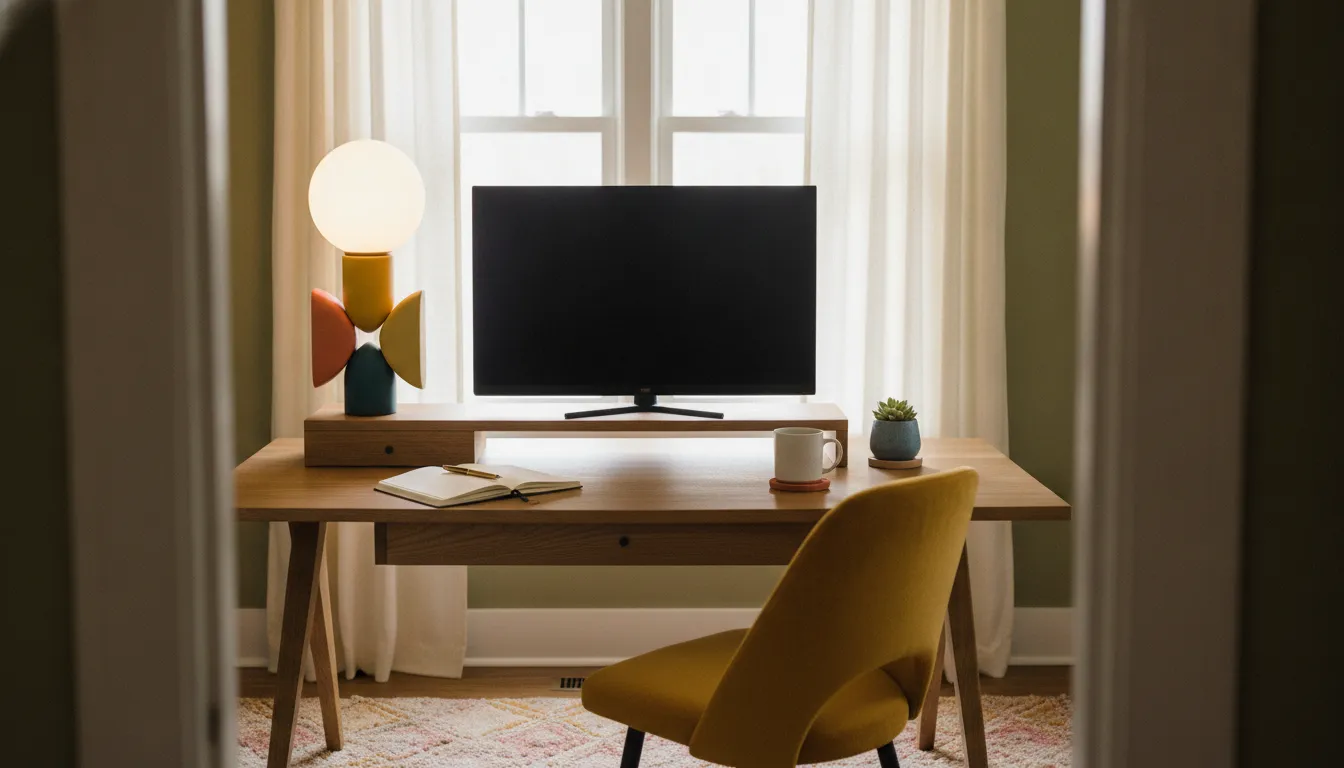
- Test the composition from the room. Step back and view the desk from the doorway, not just from the chair. Check whether the lamp reads as a clear focal point, whether the repeated colors feel balanced, and whether the setup still looks inviting when the chair is empty. Adjust one item at a time until the desk feels lively, functional, and unmistakably yours.
Pre-Order a colorful ceramic statement lamp for your desk.
Frequently Asked Questions
How many colors should a color-blocked desk setup use?
Start with two or three intentional colors, then let neutrals handle the breathing room. Choose one dominant desk or wall tone, one supporting color for the lamp or monitor stand, and a smaller accent for notebooks or accessories. Repeat an accent once or twice so the setup feels composed rather than randomly colorful.
Where should a ceramic statement lamp sit on a desk?
Place it where the shade or sculptural form can be seen without blocking your monitor, camera, or primary work area. A back corner usually creates a strong focal point, while a side position can balance a monitor that visually dominates the desk. Keep cords tidy and check the lamp from your normal seated viewpoint before finalizing the arrangement.
Is a ceramic lamp practical for a home office?
Yes, when its scale, stability, and light direction suit the desk. Ceramic can add visual weight and texture to a color-blocked composition, while an integrated LED fixture reduces the need to shop for a separate bulb. Woaw combines ceramic shades with steel bodies and integrated LEDs, according to the Woaw Lighting Collection.
How can I reduce glare while styling my desk lighting?
Keep the lamp out of the direct reflection path of your display and adjust its position after turning on the screen. The CDC recommends placing a display perpendicular to windows or adjusting blinds to help reduce screen glare: CDC home-workspace guidance. Use ambient light to prevent a starkly bright screen against a dark room, but do not treat decorative lighting as a substitute for task-specific illumination.
How long does a Woaw lamp take to ship after ordering?
Woaw lamps are available for pre-order and ship within two months, rather than being presented as ready-to-ship items. Check the current details on the Pre-Order page before placing your order.
Ready to Pre-Order Your Statement Lamp?
A thoughtfully chosen lamp can give your color-blocked desk setup a clear focal point and a little more personality. If the Woaw approach fits your space, Pre-Order the Woaw Lighting Collection and explore the available sculptural options for your desk.