

How to Become a Lighting Stockist for a Designer Brand

A good lighting range does more than fill a shelf. It gives a showroom a point of view, a story for the sales team, and a reason for design-conscious customers to pause. That matters even more when the pieces are bold enough to become part of the room's personality.
Send a trade or wholesale inquiry if you are ready to explore becoming a lighting stockist.
Becoming a lighting stockist usually means showing that your retail business, audience, channels, and merchandising approach fit the designer brand. Then confirming practical details such as specifications, pricing, lead times, and electrical requirements before committing.
For Mr. John's Goods, the Woaw Lighting Collection brings toy-inspired forms, bold color, steel bodies, and ceramic shades into an accessible designer range. Products are made to order, so pre-order timing belongs in the commercial conversation from the start. You can send wholesale and stockist inquiries through the ordering page. For a broader view of the wholesale opportunity, begin with our Wholesale Ceramic Lamps for Design Showrooms and Independent Retailers guide. First, it helps to define what this retail partnership actually involves, and why the right fit is more than simply finding a space for another lamp.
What Is a Lighting Stockist for a Designer Brand?
A lighting stockist is a retailer or trade partner that presents a designer lighting brand to customers and helps them buy the right pieces for their homes, projects, or spaces. That can mean a physical lighting showroom, a furniture or giftware shop, an interior design practice, an electrical wholesaler, or an online and mail-order business. The common thread is not simply carrying products. It is giving the collection a considered context, clear information, and a route from visual interest to a confident purchase. For the wider wholesale context, the Wholesale Ceramic Lamps for Design Showrooms and Independent Retailers guide is a useful companion to this stockist-onboarding article.
For a designer brand, the relationship is usually more selective than a mass-market distribution arrangement. Mr. John's Goods sells directly while also working through selective wholesale partnerships, so a prospective lighting stockist should think about brand fit as well as shelf space. Does the collection suit your audience? Can your team explain its materials and design story? Will your website or showroom give sculptural pieces enough room to make an impression?
Stockist means retailer, not store locator
There are two related uses of the word stockist, and keeping them separate prevents a very common bit of website confusion. In a trade and wholesale context, a stockist is a prospective or current retail partner. They are considering whether to represent a collection, how to present it, and what customers need to know before ordering.
In a consumer context, a stockists page is a location resource. It helps shoppers find stores that already carry or represent the brand. Mr. John's Goods has a separate current retail stockists page for that purpose. It is not an application form, a wholesale catalogue, or a promise that every listed product is sitting on a store floor. A retailer interested in joining the network should use the brand's ordering page for the active inquiry path instead.
That distinction matters particularly for Woaw, whose identity is built around bright, sculptural forms inspired by childhood toys and bold color blocking. The range brings personality to a category that can easily become technically correct but visually forgettable. Its steel bodies and ceramic shades support an accessible luxury position between budget lighting and premium European designer brands. In other words, this is lighting with a little more mischief, without asking the customer to choose between design credibility and approachability.
A useful first step is to review the Woaw collection buying guide alongside the range itself, then consider how the pieces would appear in your own assortment. If the audience, aesthetic, and retail experience align, send wholesale and stockist inquiries through the ordering page. Keep the conversation focused on the range, your sales channels, and the practical information needed to represent it well. Specific wholesale terms should be confirmed directly rather than assumed from consumer-facing product pages.
Who Can Become a Lighting Stockist?
A lighting stockist can be more than a traditional lighting showroom. The right partner may be an independent lighting retailer, furniture store, giftware shop, online retailer, interior designer, electrical wholesaler, contractor, or internet and mail-order business. These profiles are relevant because each can connect distinctive lighting with customers already thinking about homes, hospitality, renovation, or design. The opportunity is less about fitting one rigid retail mould and more about having a credible route to the people who will appreciate the collection.
Does your business fit the collection?
Start with audience and presentation. Woaw is playful, sculptural lighting with bold colour, toy-inspired forms, steel bodies, ceramic shades, and integrated LEDs. It is a natural fit for businesses that sell design-led furniture, expressive home accessories, architectural products, or statement interiors. A minimalist showroom with a sense of humour may be just as relevant as a colourful concept store. The key question is whether your customers respond to accessible designer pieces with a strong visual point of view.
Use this practical checklist before making an enquiry:
- Customer fit: You serve design-conscious homeowners, decorators, hospitality buyers, or clients looking for lighting with personality.
- Product context: You can show how a sculptural lamp works within a room, furniture vignette, project, or curated product edit.
- Sales channel: You have a physical showroom, an established online shop, a design practice, a trade counter, or another clear route to qualified buyers.
- Product confidence: Your team can explain materials, integrated LEDs, dimensions, electrical details, and the difference between decorative impact and practical illumination.
- Planning discipline: You can communicate that the collection is made to order and available for pre-order, rather than presenting it as finished inventory ready for immediate dispatch.
International businesses may also find the range easier to discuss with customers because Woaw products support universal 120V-240V voltage and are offered with US, UK, and EU plugs. That does not remove the need to confirm delivery arrangements, local requirements, or commercial terms, but it gives a useful starting point for cross-border retail conversations.
Confirmed brand policy: Mr. John's Goods sells directly and through selective wholesale partnerships, and the Woaw Lighting Collection is the relevant range to review. The available brand information does not promise approval for every applicant, formal minimums, exclusivity, margins, or sell-through support. Those details should be confirmed directly rather than assumed from general trade practice.
If the fit looks right, prepare a concise introduction covering your business type, showroom or online presence, customer audience, and the range you want to explore. Then use the brand's wholesale and stockist inquiries route to ask the practical questions before planning a launch.
How Does the Stockist Application Process Work?
There is no confirmed formal Mr. John's Goods stockist application form, so treat the process as a focused trade inquiry rather than a checklist with guaranteed approval. The goal is to give the brand enough context to understand your business, customer, sales channels, and interest in the Woaw Lighting Collection. A clear inquiry also helps you ask the commercial and operational questions that matter before you present a made-to-order range.
A practical five-step inquiry workflow
- Research the fit. Start by reviewing the Woaw Lighting Collection and the brand story. Consider whether bold color, toy-inspired sculptural forms, steel bodies, and ceramic shades suit your assortment and audience. Independent lighting, furniture, giftware, and online retailers, along with designers and electrical wholesalers, are all relevant trade profiles. Look at the existing current retail stockists for a sense of the brand's retail network, but do not assume that a similar business will receive the same terms.
- Prepare your business details. Common trade applications ask for a company name, contact information, business type, website, and a short description of the business. They may also ask whether you operate a physical showroom, sell online, or work through other channels. These are common practice, not confirmed requirements for a Mr. John's Goods form. Have accurate links and concise answers ready so the inquiry is easy to review.
- Explain your channels and showroom. Describe where customers would discover the collection: a lighting showroom, furniture floor, design studio, ecommerce site, marketplace, or a combination. If you have a showroom, explain its location, customer profile, and how statement lighting is displayed. Online retailers can share the relevant category or landing-page experience. Focus on the audience and merchandising context, not promises about future sales.
- Ask focused questions. Request the information needed to evaluate the opportunity responsibly, including wholesale pricing, payment expectations, minimum order requirements, availability, delivery planning, and any territory or channel considerations. Confirm product specifications and electrical details as well. The brand's products are made to order in UAE workshops, and pre-orders ship within two months, so ask how that timing should be communicated to your customers. Do not infer margins, exclusivity, rush options, or sell-through support where no policy has been confirmed.
- Submit the inquiry and follow up. Use the brand's ordering page for wholesale and stockist inquiries, which is the confirmed next step for trade conversations. State whether you are exploring a showroom placement, online assortment, or another route, then include your prepared details and questions. If you do not receive a response, follow up courteously with the original context and a clear request for the next step. Keep the conversation specific, transparent, and easy to act on.
A strong application is not the longest one. It is the one that makes the partnership fit, customer reach, sales environment, and practical requirements clear without dressing assumptions up as brand policy.
What Should You Ask About Wholesale Pricing and Margins?
A promising lighting range still needs a commercial model that works for your shop. Before you commit, separate what the brand has documented from what must be agreed directly. That distinction protects your margin, your buying plan, and the customer experience at the till.
Build the commercial picture before placing an order
Start by asking for the complete wholesale price list, then map each product against your intended retail positioning, landed cost, payment obligations, and expected margin. Do not reverse-engineer a trade deal from public consumer pricing. The public product pages describe the consumer range for the Woaw Lighting Collection, but that is retail-facing information, not a wholesale price list or a guaranteed margin. It cannot tell you what discount, markup, or profit structure would apply to your business.
The same care applies to order size. A minimum order quantity may affect how much cash you tie up and how much display space you need, while payment timing can change your working-capital forecast. Territory or exclusivity terms can affect whether the range is differentiated in your market. None of these details should be assumed from the brand's accessible luxury positioning or from the appearance of its online store.
| Topic | Confirmed | Ask before committing |
|---|---|---|
| Public pricing | Consumer pricing is shown on the collection's product pages. | Which wholesale prices apply to each SKU, and what is the recommended retail price? |
| Discounts and margins | No formal wholesale discount or margin is documented. | What discount structure, target margin, and pricing policy should a retailer use? |
| Minimum order | No minimum order quantity is documented. | Is there an MOQ by product, color, order, or opening account? |
| Payment | No payment terms are documented. | When is payment due, and which payment methods and currencies are accepted? |
| Exclusivity | No territory or exclusivity terms are documented. | Are any geographic, channel, or product exclusivity arrangements available? |
| Sell-through | No sell-through guarantee is documented. | What merchandising assets, product education, or reorder support are available, if any? |
Keep the answers in writing, including the currency, tax treatment, freight responsibility, damages process, and reorder procedure. These practical details can change the real cost of a fixture even when the headline wholesale price looks attractive. Because Woaw is made to order, also confirm how production timing affects your cash-flow and customer promise. The documented consumer expectation is pre-order shipping within two months, but trade-specific timing and commercial terms still need direct confirmation.
For the current route into trade discussions, use the wholesale and stockist inquiries page. Ask the questions above before treating the collection as a confirmed fit for your buying plan.
How Does the Pre-Order Wholesale Model Affect Planning?
A pre-order model changes the stockist conversation. The question is no longer only, "What is on the shelf today?" It becomes, "What should we plan, present, and communicate next?" That shift matters for design-led lighting. A distinctive fixture may be chosen for a future room scheme, seasonal edit, or carefully timed showroom story.
Woaw products are made to order in UAE workshops using batch manufacturing. The collection does not operate on a finished-goods inventory model, so a retailer should not present the range as ready to ship or promise immediate customer delivery. The documented expectation is that pre-orders ship within two months. Treat that as the planning window, not as a reason to invent a guaranteed date, rush option, or additional delivery service.
Build the lead time into the retail calendar
For a lighting stockist, the practical move is to work backward from the moment a customer needs the fixture. If a project has a handover date, a showroom refresh has a launch date, or a seasonal campaign begins on a known week, allow room for the pre-order process and the stated two-month shipping expectation. Confirm the latest timing for the specific order before making a customer-facing promise, because no rush-delivery option is documented.
This also affects buying decisions. Instead of ordering a broad assortment on the assumption that every style will be available immediately, curate a focused edit that your audience can understand. Consider which silhouettes anchor a display, which colors create contrast, and which pieces demonstrate the collection's sculptural personality. Then use product imagery, specifications, and clear availability language to show what customers can order and when they should expect it.
The model can support a more intentional showroom story. Made-to-order production means your team can discuss the collection as considered designer lighting rather than as anonymous inventory waiting in a warehouse. That story still needs precision: explain that the fixtures use steel bodies, ceramic shades, and integrated LEDs, and distinguish product appeal from confirmed delivery information.
International retailers should also review electrical fit before selecting a range. Woaw products use universal 120V-240V voltage and are offered with US, UK, and EU plugs. Those details can make the initial product conversation more straightforward across markets, but they do not replace checking local requirements or confirming order-specific information. Shipping costs, post-production delivery timing, and tracking details are not specified in the available brand information, so ask before building them into a retail price or customer promise.
For product details and the current range, explore the Woaw Lighting Collection. When you are ready to discuss a pre-order or trade question, use the brand's ordering page and describe your market, sales channel, intended assortment, and timing. Clear planning gives bold lighting the runway it deserves, with no warehouse fiction required.
How Can a Showroom Present Designer Lighting for Sell-Through?
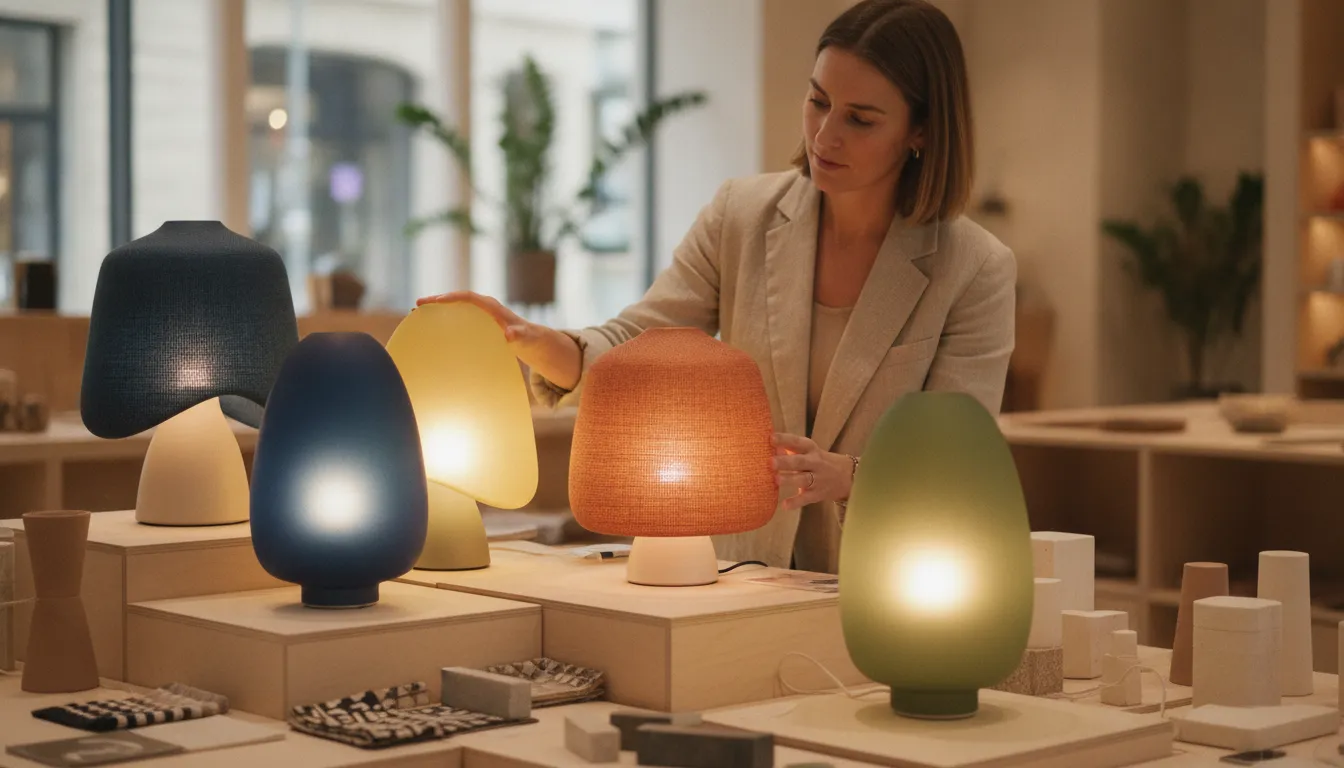
A showroom gives sculptural lighting a chance to do what a product thumbnail cannot: show scale, glow, material, and personality together. The goal is not to promise a sale. It is to make the buying decision easier by creating a clear scene, answering practical questions, and giving shoppers a reason to pause.

Build a scene, then make the product easy to understand
Start with one staged vignette rather than scattering every fixture across the floor. Pair a table lamp with a considered surface, nearby art, and enough visual breathing room for the silhouette to read. A second vignette can show how a bolder floor lamp changes the mood of a seating area. The Virginia Tech research summary on retail lighting describes rooms and vignettes that present products in a home setting, a useful model for helping shoppers imagine ownership: read the study abstract.
Use the display to tell a short visual story. The Woaw Lighting Collection combines toy-inspired forms, bold color blocking, steel bodies, and ceramic shades. Let those details lead the conversation. A small card or nearby verbal prompt can explain the inspiration, the designer story, and the intended feeling without turning the fixture into a museum object. Retail teams can also direct design-conscious visitors to the brand's designer story or show the collection in context through the lighting gallery.
Education should be practical as well as visual. Make the key specifications easy to find: steel body, ceramic shade, integrated LED, universal 120V-240V voltage, and available US, UK, and EU plugs. Explain that the collection is made to order in UAE workshops rather than held as finished-goods inventory. Products are available for pre-order and ship within two months, so the showroom conversation should set that expectation before a customer commits.
Give staff a simple, accurate story to use on the floor. They might begin with the customer's room. Ask whether the shopper wants a quiet accent or a more expressive focal point, then discuss size, materials, electrical compatibility, and timing. The Virginia Tech abstract identifies communication with store personnel, interaction with displays, and time in the store as behaviors linked to increased sales. That is not a sell-through guarantee, but it supports a useful principle: invite questions. Encourage a closer look, and allow the product to be experienced rather than merely shelved.
Finally, keep the presentation flexible. Retail spaces and displays change frequently, according to the UC Davis retail lighting guide. Refresh the vignette seasonally, rotate color stories, and use clear product discovery cues online or in-store. A lighting stockist does not need theatrical excess. It needs a thoughtful setting, honest product information, and a path from visual spark to informed inquiry.
Frequently Asked Questions
What should I include when applying to become a lighting stockist?
Share your company and contact details, business type, website, showroom status, online sales channels, existing trade suppliers, and the kind of partnership you are seeking. Add a short note about your customer, design point of view, and how you would present sculptural lighting. These details help a designer brand understand fit without forcing your application into a generic template.
What wholesale terms should a new lighting stockist confirm?
Ask for the current wholesale price list, minimum order expectations, payment terms, delivery responsibilities, availability, territory or exclusivity rules, and any approved product imagery or merchandising guidance. Do not assume a consumer price is a wholesale price, or that a margin, credit arrangement, or sell-through guarantee exists. Confirm each point directly before listing products or committing showroom space.
How far ahead should a lighting stockist plan a Woaw order?
Plan around production rather than an in-stock replenishment cycle. Woaw products are made to order in UAE workshops, and the documented pre-order expectation is shipping within two months. The brand does not document a rush-delivery option, so show customers an honest lead-time window and coordinate campaigns, room installations, and stockist promotions accordingly. Source: Mr. John's Goods ordering page.
How can a lighting stockist improve showroom sell-through?
Give each fixture a clear visual setting and a concise story about its form, materials, light, and intended customer. Use strong imagery, product groupings, visible specifications, and simple comparisons to help shoppers move from curiosity to confidence. For Woaw, explain the steel bodies, ceramic shades, integrated LEDs, universal 120V-240V voltage, and available US, UK, and EU plugs accurately. Pair the display with realistic pre-order expectations rather than promising immediate availability.
Ready to Explore a Stockist Partnership?
If the Woaw Lighting Collection feels like a strong fit for your showroom or retail audience, the next step is to share your trade questions and business context. That helps clarify the right product range, pre-order timing, and information to consider as you plan your display. Send a trade or wholesale inquiry through the ordering page, and start a practical conversation about bringing sculptural lighting to your customers.