How to Use Color in a Home Office to Boost Focus and Mood
A home office can be beautifully quiet and still leave your brain feeling stuck in neutral. The wall behind your desk, the shade of your lamp, and the objects in your sightline all contribute to the room's visual rhythm. Color will not rescue a chaotic schedule, but it can make the space feel calmer, more inviting, or more creatively charged.
Pre-order a colorful Woaw lamp for your home office
The best use of color in a home office is intentional rather than prescriptive. Choose a calm base for sustained work, then add focused bursts of hue where you want energy or creative momentum. Research suggests blue can facilitate creativity, while colorful accent lighting may improve creative performance indirectly through approach motivation. Color supports your habits, but it cannot guarantee productivity.
That leaves plenty of room for personality. Start with the way color changes your attention and output, then build a palette that makes your work zone feel focused and unmistakably yours. For broader placement ideas, explore this room-by-room lamp styling guide. This article takes a narrower route, looking at how wall color, lamp color, and accent hues work together in a home office.
How Color in a Home Office Shapes Concentration and Output
Answer: Color can influence how a home office feels and how readily you approach the work inside it. A quiet backdrop may make sustained attention feel easier, while a vivid accent can give an open-ended creative task more welcome energy. Your workload, sleep, ergonomics, notifications, and habits still matter more than any single hue.
Think of color as environmental support, not a productivity switch. A restrained palette can reduce visual competition around a monitor. A saturated object can give the eye a deliberate place to land. The right choice depends on whether your day is spent reviewing spreadsheets, writing, sketching, taking calls, or moving between several kinds of work.
Research on color and accent lighting points to a useful distinction between mood and performance. One PubMed-indexed study found that blue could facilitate creativity, while red in achievement contexts could evoke avoidance motivation that hinders it. The same research reported that colorful accent light indirectly improved creative performance through heightened approach motivation. That does not mean every blue wall creates brilliant ideas or every red object derails focus. It suggests that the visual character of a workspace can shape motivation, which may affect how readily you begin and persist with open-ended work. Read the color and accent-lighting research for the study context.
Light matters as much as paint
A color scheme can still struggle in a dim, visually flat room. A Mayo Clinic report on a Well Living Lab study described improved cognitive performance among office workers when windows provided access to daylight and a view. See the Mayo Clinic summary. Treat daylight as part of the palette. Notice how your wall changes in the morning, at midday, and after sunset, then choose a lamp that keeps the desk usable without creating glare.
Design for your actual nervous system, too. If a bright accent makes you feel alert and happy, it may be useful. If it pulls your attention away from the task, reduce its scale or move it outside your direct sightline. Color is personal, and a small experiment is more useful than a universal rule.
Which Colors Work Best for Color in a Home Office?
Answer: Blue and green are useful starting points for a calmer office, while yellow, orange, and saturated primary colors can add energy in smaller doses. Neutrals create a flexible base. None is universally best, so test the hue beside your desk and under the light you actually use.
Choosing color in a home office is less about finding one magical productivity shade and more about matching visual intensity to the work you do. A quiet palette can make deep work feel easier to begin, while a small hit of saturation can give brainstorming more momentum. These are tendencies, not guarantees. Daylight, layout, clutter, screen glare, and your own associations with color all matter.
Research on colored accent lighting found that blue can facilitate creativity, while red may trigger avoidance motivation in some achievement-focused contexts. The useful takeaway is not that red is bad or blue always wins. It is to test how a hue behaves in your room and use it with intention.
Home office color guide for focus, creativity, and energy.ColorLikely moodBest useWatch forBlueCalm, steady, creatively openDeep work zones, wall color, or a focused desk accentVery cool or dark blues can feel flat without warm texture or daylightGreenRestorative, grounded, attentiveLong work sessions, reading corners, and offices with plants or woodStrong greens may dominate a small roomNeutralsCalm, cohesive, visually quietA flexible base that lets art, furniture, and a sculptural lamp leadWhite can feel clinical without warm accessoriesYellowSunny, energetic, optimisticA small accent object, artwork detail, or lamp elementToo much brightness can become visually loudRed or orangeDynamic, warm, high-energySmall accents in a restrained paletteUse sparingly if the room already feels busyPurpleImaginative, expressive, slightly luxuriousBrainstorming spaces or one memorable accentSaturated purple needs quiet surfaces around it
For a practical starting point, keep the largest surfaces calmer and place stronger color where you want the eye to land. Green can feel restorative around plants and wood. Yellow can work as a small creative spark. Pale walls reflect plenty of light but may feel clinical without warm accessories, while cool grey gives furniture shapes and accent hues a clean backdrop.
Judge the palette under the light you will actually use. Warm bulbs can make a cool wall appear greener, and intensity changes how saturated a color feels. If you are unsure, begin with one removable accent, such as a colorful sculptural lamp, rather than repainting the entire room.
How Can One Color-Blocked Lamp Change a Neutral Office?
Answer: One color-blocked lamp can add a visual focal point, useful illumination, and a clear boundary around a work zone without requiring a full room makeover. On a neutral desk, its hue and silhouette provide personality. In a multipurpose room, switching it on can also become a simple signal that work has begun.
A neutral office gives you a clean starting point, but clean can slide into forgettable. One sculptural lamp can add personality without asking you to repaint the walls, replace the desk, or turn the room into a rainbow-themed coworking space. It can do two jobs at once: provide useful light for the work surface and create a deliberate visual accent.
That combination matters when the desk sits in a corner of a living room or bedroom. A colorful lamp can help signal that this is where work happens. Research on color and lighting suggests that colorful accent light can support creative performance indirectly through approach motivation, although no single hue guarantees productivity. Think of the lamp as a cue and a tool, not a magic focus button.
Give the desk a visual center
In an all-white, beige, or soft-grey room, a saturated lamp becomes an anchor. Place it toward the back corner of the desk, where its silhouette remains visible but the light can still spread across your notebook or keyboard. The goal is not to make the lamp compete with your monitor. It is to give the eye somewhere intentional to land.
A color-blocked form is especially useful here. Instead of reading as a purely practical object, it brings shape, contrast, and a little theatrical energy to the work zone. Woaw lighting pairs steel bodies with ceramic shades, so the material contrast can add depth even when the rest of the palette stays restrained. For more product-selection context, explore this design-led home office table lamp guide.
Mark the boundary between work and everything else
Repeating the lamp's strongest color in one small object, such as a tray, artwork detail, or pencil cup, creates a compact visual territory around the desk. Keep the surrounding surfaces comparatively calm so the lamp has room to work. A natural wood desktop, woven textile, or plant can soften a bold hue and balance a smooth steel body.
If the lamp includes an integrated LED, check how its brightness and color temperature interact with the wall before judging the paint. The same neutral backdrop can feel warmer, cooler, or more dramatic as the light changes. For a deeper look at the collection's forms and materials, browse the sculptural lighting buying guide.
Anchor Color Versus Accent Color: A Practical Formula
Answer: Use an anchor color on the largest surfaces, a secondary color through furniture or textiles, and a smaller accent hue on lighting or objects. The familiar 60-30-10 proportion is a helpful starting point, not a law. Let the room's size, daylight, and your tolerance for visual energy decide how far to push it.
Think of your office palette as a small cast, not a strict rulebook. Your anchor is usually the wall, floor, or largest upholstered surface. Soft beige, cream, pale grey, or muted green can settle the room without competing with the work in front of you. A deeper navy or emerald can create an immersive cocoon, but it needs enough light and texture to avoid feeling heavy.
Let the wall do the anchoring
An accent wall behind the desk is a lower-commitment way to introduce drama and create a composed background for video calls. If you choose a bold wall, balance its visual weight with natural texture. A wood shelf, woven rug, cane basket, or leafy plant can soften a saturated hue and keep the room from feeling flat.
Texture matters even when colors stay restrained. A smooth steel lamp beside a nubby textile or warm timber surface adds depth without requiring another loud color. Sample paint near the desk, then check it in morning daylight, afternoon shade, and evening lamp light before committing.
Choose the lamp as the punctuation mark
The lamp can echo the wall or deliberately play against it. A related hue creates a quiet, pulled-together effect, such as a muted blue lamp against blue-grey paint. For more energy, use a complementary accent, such as a blue lamp with a small orange detail. Repeat the accent once or twice in artwork or a desk object rather than scattering every color across the room.
One edited palette might use warm cream as the anchor, walnut and woven tan as the support, and cobalt blue as the accent. A blue ceramic-shaded lamp then becomes both a useful light source and a sculptural punctuation point, while greenery and natural wood keep the scene grounded.
How to Refresh Your Home Office with One Design Change
Answer: Start by observing the room's light, decide what mood you need, test one small color move, and assess it during real work sessions. A lamp is an especially useful test piece because it adds color, illumination, and personality without committing you to a painted wall.
You do not need a full makeover to make your workspace feel more intentional. One well-chosen change can shift the room's visual balance and give a practical setup more personality. Treat color as something you test in context, not a permanent personality test in paint form.
Observe the room's current light. Look at the office in the morning, during your main work hours, and after sunset. Notice where daylight lands, which corners feel flat, and whether your desk lamp makes the wall look warmer or cooler.
Choose the mood before the hue. Decide whether the room should feel calm, energetic, creative, or mixed. A softened neutral or green may suit steady work, while a bright accent can give a creative studio more momentum.
Test a small color move. Try a swatch, desk accessory, artwork, or fabric panel where you will actually see it. Live with it for several days before committing to a painted wall or larger purchase.
Add or relocate one sculptural lamp. Move it into the visual field, beside the monitor, or just outside the desk's working footprint. Choose a hue that complements the wall, and use texture to keep the palette rich rather than noisy.
Assess the room across real work times. Use the updated office for a focus block, a creative session, and an evening task. Ask whether the lamp creates glare, whether the accent disappears after dark, and whether the room feels welcoming without becoming busy.
The best reset is not the loudest one. It is the small intervention that makes the room work better for your actual routines while giving you one more reason to enjoy sitting down at the desk.
Explore pre-order options for a colorful home office lamp
Frequently Asked Questions
What colors are best for a home office to support productivity?
Blue and green are useful starting points for focused work, while beige, cream, or soft grey can create a calm background. Add yellow, coral, or another lively hue in a lamp or desk object when you want more energy without turning the entire room into a highlighter. Treat these as design cues, not guarantees.
Does wall color really affect work focus?
It can influence how the room feels and how visually demanding it is, but wall color is only one part of a productive setup. Test the shade beside your desk, especially if the wall receives strong daylight or warm lamp light. A comfortable chair, clear desk, and manageable notification load matter too.
Should a home office be a neutral color?
Not necessarily. A neutral wall gives colorful furniture, artwork, and lighting room to perform. A saturated navy or deep green can also create an immersive feel in a small office. Choose the backdrop that supports your work style, then balance it with natural texture or a restrained accent.
How do I choose the right color palette for my home office?
Start with the mood you need most, then observe the natural light and identify one dominant wall color. Add a secondary furniture tone and a smaller accent hue. A lamp is an easy test piece because it adds color, illumination, and personality without requiring a full repaint.
Can colorful accent objects improve my workspace?
They can make a workspace feel more personal and help distinguish the work zone from the rest of the room. Try one meaningful object, such as a sculptural lamp, rather than scattering small accents everywhere. Pairing a colorful shade with a complementary wall or accessory hue creates a lively connection while keeping the palette edited.
Explore pre-order options for a colorful home office lamp
Bring More Color Into Your Home Office
A sculptural lamp can give your workspace a focused glow while adding the playful color and form that make the room feel distinctly yours. If you have found a hue that deserves a stronger presence, pre-order a Woaw lamp for your color-conscious home office. Woaw lamps are made to order and ship within two months, so your next design move can be intentional from the start.
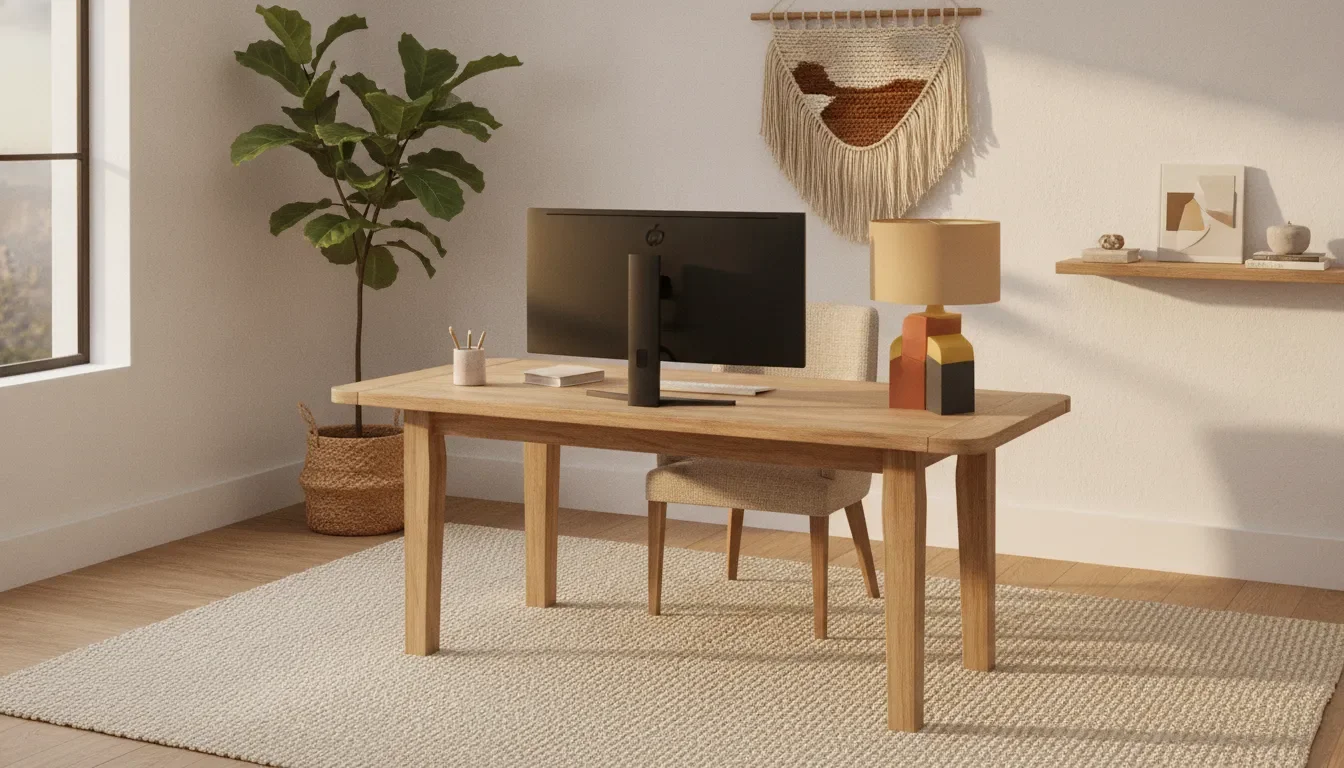
Color-blocked sculptural lamp adding warmth to a neutral home office
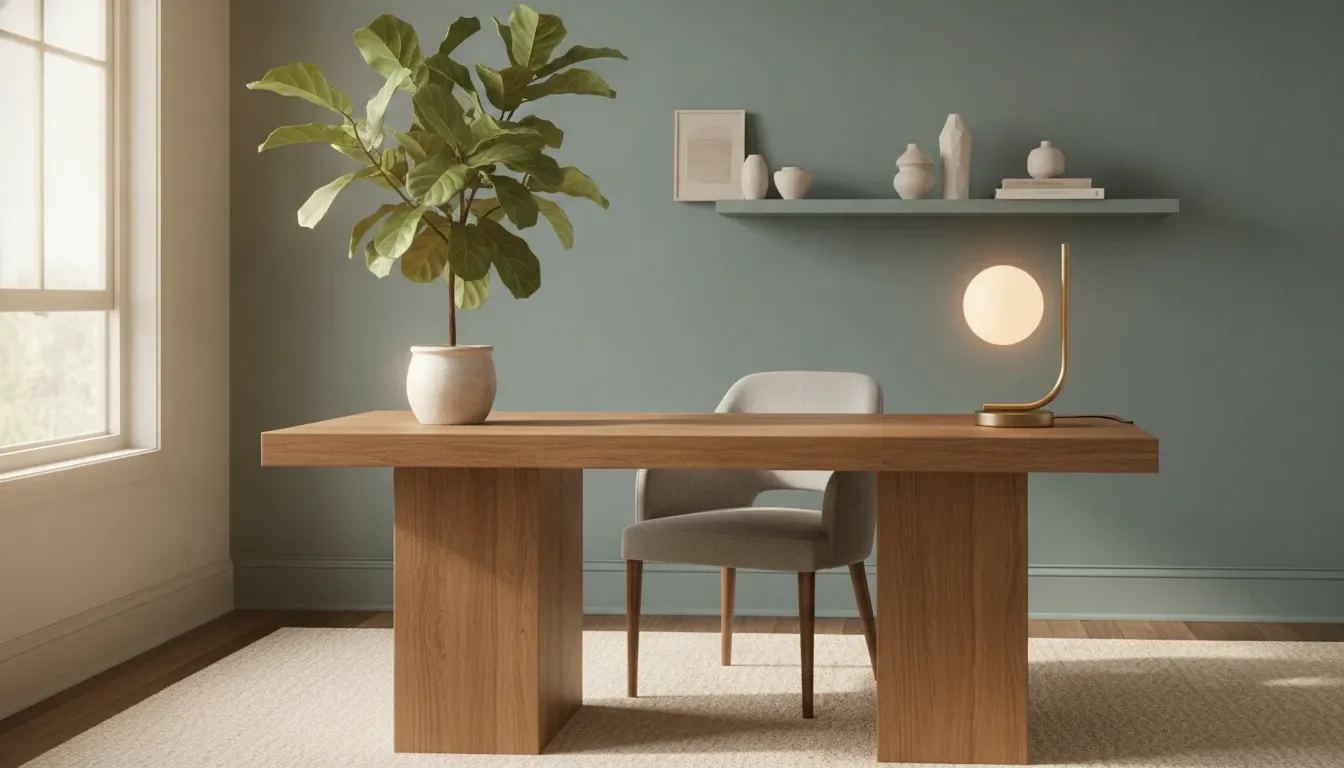
Muted green wall and warm lamp in a color-conscious home office