

Recessed can lights are ceiling fixtures set into a cut opening, so the housing sits above the drywall and only a trim ring shows in the room. People also call them can lights, pot lights, or downlights. The useful question for a renter is not which trim looks sleekest. It is whether cutting the ceiling is even allowed, and whether a lamp you can unplug would do the job better.
Call (646) 334-4918 to ask about a lamp you can take with you
Want the longer version of the portable route first? Read recessed lighting alternatives before you spend a weekend on a ceiling you do not own.
A can is a renovation decision. A portable lamp is a furniture decision. Mr. John's Goods makes the second kind: the Woaw Lighting Collection is steel-bodied, ceramic-shaded, and built to pre-order, with integrated LEDs and plugs for the US, UK, and EU. Nothing in that collection mounts in a ceiling. If you are weighing a can because the rental feels flat, start by knowing what the fixture actually is, then decide if you want to leave it behind.
What are recessed can lights, really?
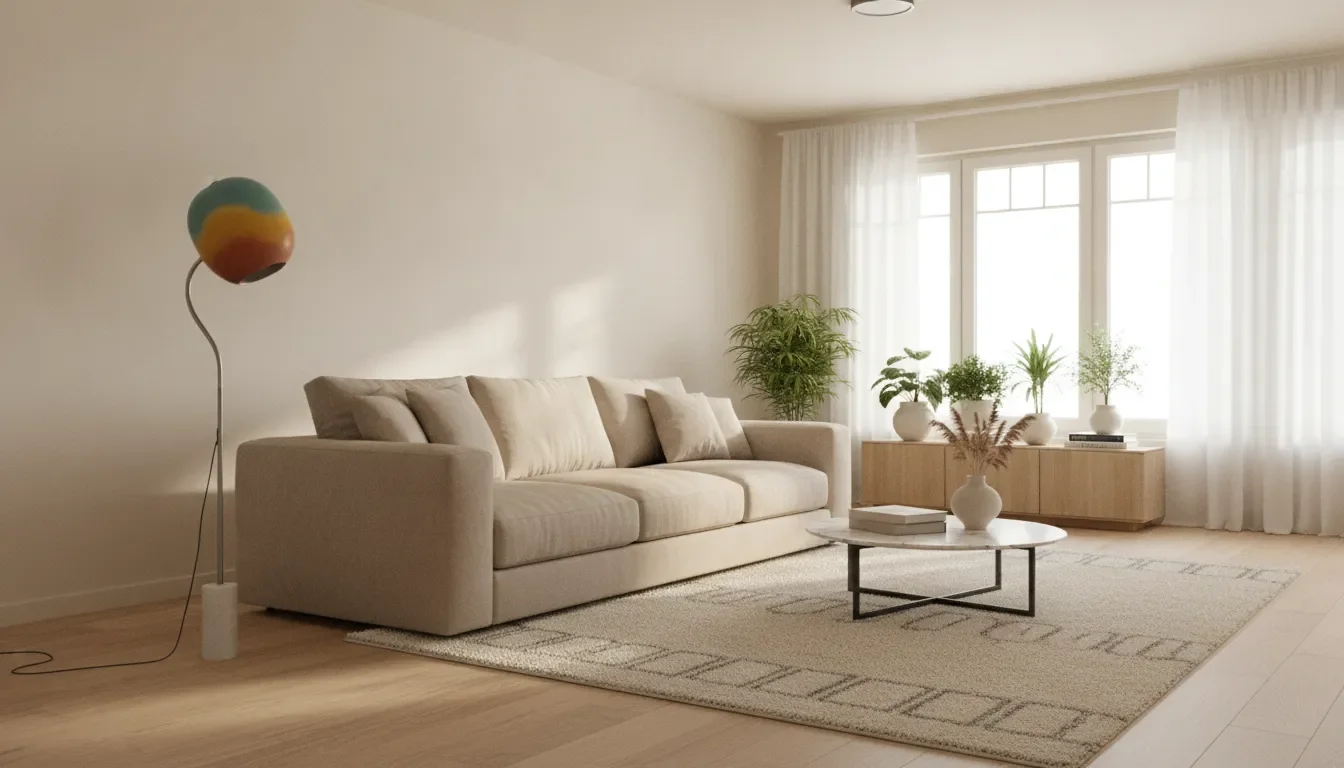
A recessed can light is a downlight installed in a hollow opening in the ceiling. The can, or housing, holds the electrical parts above the finished surface. The trim is the visible ring or baffle around the opening. The light source is either a bulb that twists into a socket or an LED module built into the housing.
That three-part stack is why the fixture looks so quiet. The lamp disappears into the ceiling plane, and the room keeps its lines. It is also why the fixture is hard to undo. The housing needs space above the drywall, a safe connection to the home's wiring, and a hole that stays after you move out.
The names on the box
Retail pages mix the names on purpose. "Recessed," "can," and "downlight" often point at the same family of fixture. A canless, or wafer, light skips the deep metal housing and uses a thin LED that clamps into a smaller opening. It is still a ceiling alteration. It is not a lamp you pack in a box.
Older cans were built around a replaceable bulb. Newer ones are often integrated LED, which means the light source and the housing are one unit. That changes the repair story. A burned-out bulb is a hardware-store errand. A failed integrated module is a fixture replacement, and in a rental that replacement belongs to the person who owns the ceiling.
If a listing says "retrofit," it usually means the new light drops into an existing can. Retrofit is useful when the hole is already there. It is not a reason to cut a new one.
Which parts of recessed can lights should you recognize?
You do not need to specify a fixture to understand one. Four labels cover most of what a renter or a remodeler will see on a product page.
Part What it is Why it matters in a rental
Housing The can above the ceiling that holds the wiring and the light source It needs clearance and a permanent opening. You cannot take it with you.
Trim The visible ring, baffle, or gimbal around the hole It sets the look, but it does not make the install reversible.
Light source A replaceable bulb or a built-in LED module Integrated LEDs fail as a unit. You may not be allowed to swap them.
Rating Marks such as IC (insulation contact) or airtight The wrong housing near insulation is a fire and energy issue, not a style choice.
IC means the housing is rated to sit against insulation. Airtight means it is built to limit air leaking into an attic or a joist bay. Neither label is something to guess at from a photo. If the ceiling is already open for a permitted remodel, those ratings belong in the conversation with the electrician and the building owner. If you rent, they are usually a reason to stop.
Size is a ceiling decision, not a decor decision
Common apertures are about 4, 5, and 6 inches, with larger cans still sold for broad wash light. A smaller opening looks quieter. It also aims a tighter pool of light, so a room often needs more of them to feel evenly lit. Spacing is planned from ceiling height and from how wide each beam spreads, not from a single rule that fits every room.
That planning is the part a product photo hides. One can over a sofa looks tidy and leaves the corners dim. A grid of cans can flatten a room into one brightness, with no place to rest your eyes. Either way, the layout is cut into the ceiling before you know how you will actually sit in the room.
Why do recessed can lights tempt renters?
The appeal is easy to see. A can stays out of the way of art, shelves, and low ceilings. It does not compete with a pendant you are not allowed to hang. In a room with one harsh central fixture, a few downlights feel like the grown-up fix.
The cost is less obvious. Cutting a ceiling is a change to someone else's building. Most leases treat wiring, fixtures, and the ceiling surface as off limits, even when the change would raise the apartment's value. A "small" hole is still a hole, and patching it so a future tenant cannot see it is skilled work.
There is a second cost that has nothing to do with the lease. Cans put light in one place forever. If you turn the sofa, add a desk, or move to a unit with different windows, the holes stay where the last layout wanted them. A lamp moves with the furniture. A can does not.
When a can is already there
If the rental came with cans, use them. Swap a failed bulb only if the lease and the fixture both allow it, and keep the old bulb in case the landlord wants the original type back. Do not upgrade housings, change trims, or add a dimmer without written permission. A dimmer that does not match an LED module can buzz, flicker, or fail, and that failure looks like damage.
Existing cans are also a clue about the room's weak spots. If the grid misses the reading chair, do not cut a new hole beside it. Add a lamp there. The ceiling can keep doing general light. The lamp can do the job the can was never aimed at.
What should you ask before anyone cuts a ceiling?
Remodelers, and renters who have been told a change might be allowed, should get answers in writing before a saw comes out. These are the questions that separate a safe install from an expensive surprise.
Who owns the ceiling, and who approves the work? In a rental, that is the landlord or property manager. Verbal permission is not enough. Ask what must be restored at move-out.
What is above the drywall? Insulation, a duct, a joist, or another unit's floor changes which housing is legal and whether a can fits at all.
Who pulls the permit and does the wiring? A licensed electrician should make that call. A new hole tied into old wiring is not a weekend project.
Is the housing rated for this ceiling? IC and airtight marks exist because the wrong can near insulation is a safety problem. Do not shop by trim finish first.
How will the light be switched and dimmed? The switch location, the dimmer type, and the LED driver have to match. Pretty trim will not fix a flicker.
What happens when the LED fails? Integrated modules are replaced as a fixture. Ask who pays, and whether a future occupant can still buy the same part.
If any answer is "we'll figure it out on site," pause. Recessed can lights are ordinary hardware. The risk is the ceiling around them, not the ring you see from the sofa.
Downlights that earn the ENERGY STAR label are tested for long-term performance and, on that program's current fixture page, use about 90% less energy than older incandescent models. That is a real reason to care which light goes into a ceiling you own. It is not a reason to install one in a ceiling you do not. Efficiency does not make a hole reversible. The ENERGY STAR downlight overview is the right reference when a permitted remodel is actually on the table.
How do recessed can lights compare with a lamp you can move?
This is the fork in the road. A can is general light fixed in the ceiling. A lamp is local light you can point, move, and take to the next address. Renters usually need the second one long before they need the first.
Think about the room you have, not the room in a listing photo.
One sad overhead bulb. A floor lamp in the corner and a table lamp by the seat you use will layer the room without touching the ceiling. Our guide to layering a living room walks through ambient, task, and accent light with pieces that unplug.
A dark corner the cans miss. That is a placement problem, not a housing problem. A floor lamp for a dark corner puts light where you sit instead of where a joist happened to allow a hole.
A small rental with no extra floor to spare. Scale matters more than another ceiling ring. The studio apartment table-lamp guide covers footprints that fit a tight room.
A lease that ends before you are done with the look. Anything cut into the building stays in the building. The room-by-room lamp styling guide is the longer map for pieces that leave with you.
The sibling question, how a can compares with canless wafers and other recessed formats, is a different article. If you already know you are choosing among ceiling fixtures, wait for that comparison. If you are choosing between a ceiling fixture and a lamp, you are in the right place.
What Woaw can and cannot do
The Woaw Lighting Collection is table and floor lighting. Steel bodies, ceramic shades, integrated LEDs, and universal 120V-240V power with US, UK, and EU plugs. Pieces are made to order and ship within about two months, so they are not a same-week fix for a dark apartment. They are also not ceiling lights, and we will not pretend a floor lamp replaces a grid of cans in a kitchen you are remodeling with permits.
What they replace is the urge to customize a rental so it looks finished. On the product pages today, the Woaw Single Floor Lamp is $356. The Woaw Triple Floor Lamp is $477. Table lamps run from the Woaw Single Table Lamp at $282 to the Single Double Table Lamp at $410. The Woaw buying guide matches silhouettes to rooms if you want the longer version. Color blocking does the visual work a ceiling grid never will: the lamp is still a presence when it is switched off.
Where should the light go if you cannot touch the ceiling?
Start with the seat you use at night, not with the center of the ceiling. A can puts the brightest spot overhead, which is fine for walking through a room and poor for reading, cooking at a counter you do not own, or making a corner feel intentional.
Put a floor lamp just behind or beside the main seat so the shade clears your shoulder and the cord reaches an outlet without crossing the walkway. The Woaw Single Floor Lamp is the compact one in the range, one oversized shade on a small footprint, and it is available to pre-order. If the corner needs more than one pool of light, the Woaw Triple Floor Lamp stacks three shades on one steel body, also a pre-order that ships within two months.
Use a table lamp where the surface already exists: a console, a desk, a nightstand. The Woaw Single Table Lamp keeps a 22 by 22 cm footprint, about 8.5 inches square, with one ceramic shade. Measure the table before you fall for the shape. A sculptural shade still needs a surface that can hold it, and a cord route that does not trip anyone.
A simple test before you pre-order
Turn off the ceiling light after dark and live with one lamp in the spot you care about for an evening. If that corner finally works, you did not need a new hole. If the whole room stays gloomy, add a second lamp at the other end rather than asking one fixture to imitate a grid of cans.
Then check the lease one more time, even for a plug-in piece, if the building restricts what can sit in a window or a shared hallway. A lamp inside your unit, on an existing outlet, is the change most renters can actually make. Pre-order lead time is about two months. Plan the wait the way you would plan a move, not the way you would plan a hardware-store run.
Call (646) 334-4918 or pre-order a lamp you can take with you.
Frequently asked questions
Are recessed can lights the same as can lights?
Yes. Can light, pot light, and recessed downlight are everyday names for a fixture set into a ceiling opening. The housing sits above the drywall, and the trim is the part you see. Canless wafers are a thinner cousin. They still require a hole and a wiring connection.
Can a renter install recessed can lights?
Usually no. Installing one means cutting the ceiling and tying into the building's wiring. That is an alteration, and most leases forbid it. If a landlord agrees in writing, the work still belongs with a licensed electrician, not with a weekend DIY plan. For everyone else, a plug-in lamp is the change you can reverse.
Do I need a can if the apartment already has one?
No. Use the cans that came with the unit. Replace a bulb only when the fixture and the lease allow it, and leave housings, trims, and dimmers alone. Add a portable lamp wherever the existing grid leaves you in the dark.
What is the difference between a recessed can and a portable lamp?
A recessed can is fixed general light. It stays in the building when you leave. A portable lamp is local light you own: you place it, move it, and pack it. Woaw lamps are the portable kind, with steel bodies, ceramic shades, and integrated LEDs, made to order rather than stocked for immediate shipment.
Are recessed LEDs more efficient than old bulb cans?
A certified LED downlight uses far less electricity than an old incandescent can. ENERGY STAR's downlight page puts that gap near 90% versus traditional incandescent models. Efficiency is worth caring about in a home you own. It does not make an unapproved ceiling cut a good idea in a rental.
