

Floor Lamp for a Dark Corner: Finding the Right Fit
A floor lamp for a dark corner can do more than fill an empty patch of floor. It can bring light into a neglected part of a room, add a clear visual anchor, and give the space a little personality. The right choice starts with the corner itself: what makes it feel dark, what the lamp needs to do, and how much room there is to work with.
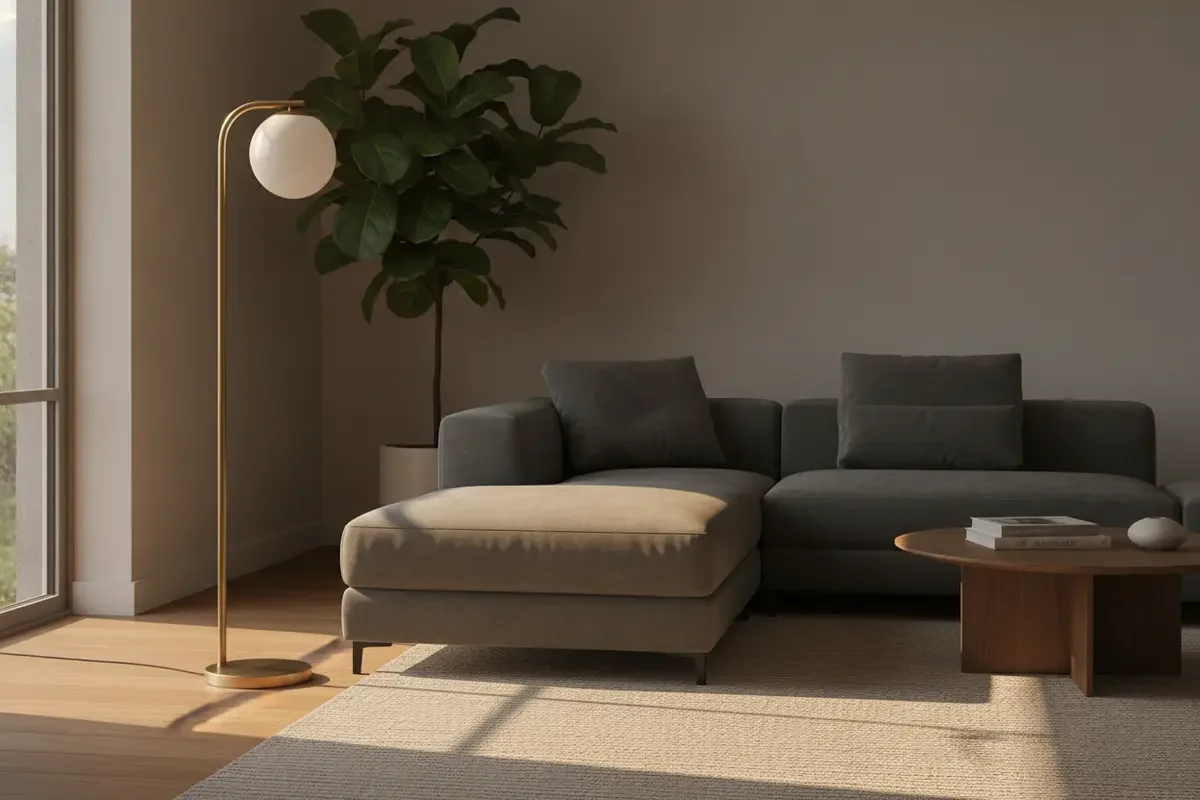
A floor lamp positioned beside seating with a clear walking path and room for the shade
What makes a corner feel dark?
Before comparing lamp shapes, take a moment to identify the problem. A corner may seem dark because it sits far from a window, because a nearby sofa or bookcase blocks light, or simply because the room has one bright ceiling fixture and little else. The answer is not always a more powerful lamp. Sometimes the room needs another source of light, a lighter visual composition, or a better angle.
Look at the corner at the time of day you use the room. Notice whether daylight reaches it, whether the ceiling light leaves a sharp contrast, and whether the dark patch is visible from the doorway or the main seating area. Then decide what you want the lamp to contribute. Is it there to make a reading spot more usable, soften the room after sunset, or act as a sculptural accent? One fixture may help with more than one purpose, but naming the main job makes selection easier.
Also check what is already in the area. A dark wall, deep upholstery, or a tall piece of furniture can absorb or block visual light. A mirror or a lighter surface nearby may help the corner feel more open, but do not rely on reflection alone if the area needs a dedicated light source. Think about the whole view, not only the spot where the lamp will stand.
It also helps to separate a permanent lighting issue from a temporary one. If the corner is dark only when curtains are drawn, you may want a lamp that works well as part of the evening scene. If it looks dim even during the day, consider whether a large object is blocking daylight or whether the wall and nearby furnishings create a strong contrast. These observations help you set a realistic goal: a more welcoming corner, a clearly marked reading zone, or a stronger visual focal point. Write down one primary goal and one secondary preference before shopping, such as âkeep the walkway clearâ or âadd one vivid accent.â This keeps attractive product photos from pulling you away from what the room actually needs.
How do you choose a floor lamp for a dark corner?
Start with the job, then assess the footprint and silhouette. Measure the available floor area and note the path people take through the room. Make a quick sketch or mark the approximate base position with painter's tape. This simple step helps you see whether the lamp would interrupt a walkway, compete with a door swing, or crowd a side table.
Next, consider where the light should go. A shade or head that directs light downward can make the area below it feel more intentional. A design that sends some light upward may contribute to a softer overall impression, depending on its construction and the room. These are design considerations, not promises about a particular lamp's brightness; check the product details for verified light-source information before deciding.
Then consider the lamp as an object in the room. A slender profile can keep a tight corner from feeling crowded. A more sculptural shape can make the corner read as a deliberate feature rather than an afterthought. Neither is automatically right. Compare the lamp's visual weight with the nearby furniture, wall art, and other forms. A playful silhouette can work in a pared-back space, while a quieter shape may sit more comfortably among several bold objects.
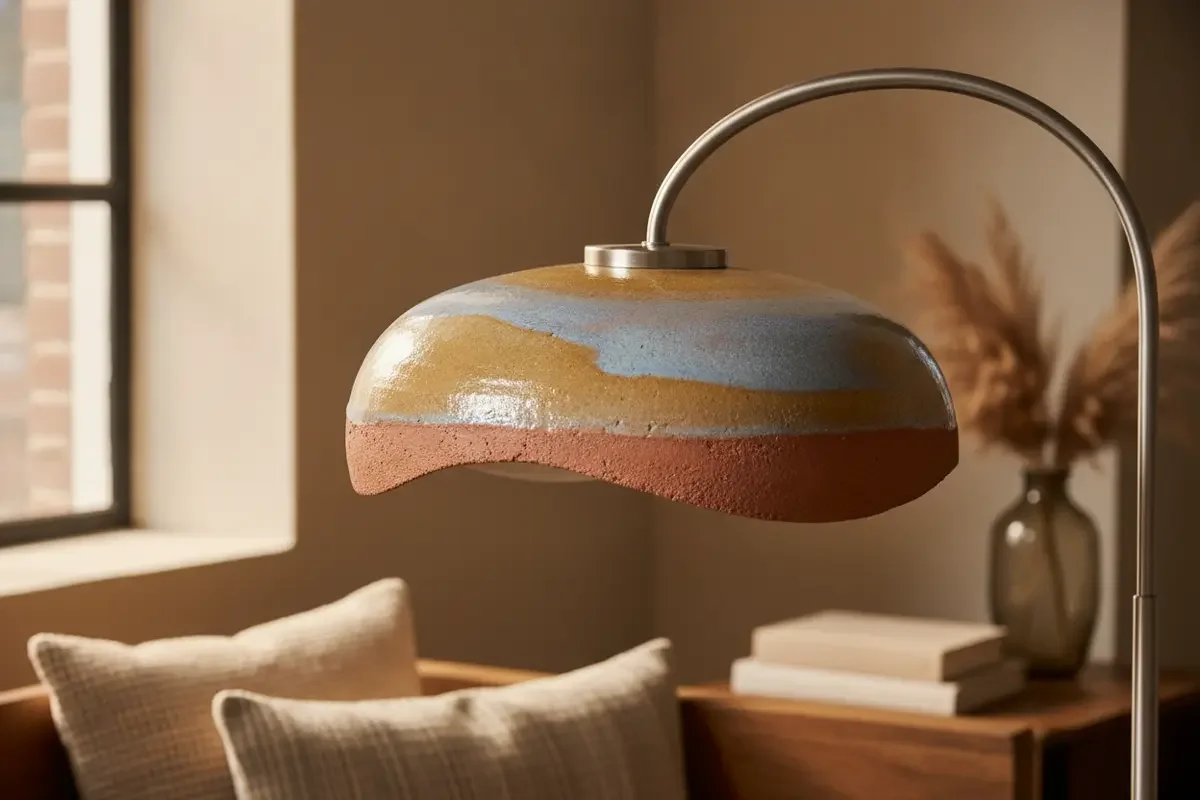
For a design-led option, the Woaw Lighting Collection brings together sculptural fixtures with steel bodies, ceramic shades, and integrated LEDs. Review the product information closely, and base your choice on the actual dimensions and verified details rather than assuming a fixture will suit a particular corner.
Which lamp shape and shade suit the space?
Shape changes how a lamp occupies a corner, even before it is switched on. A vertical, compact design can emphasize height without spreading across the floor. A lamp with multiple branches or a wider shade arrangement can make a stronger statement, but needs enough visual breathing room. Compare the full outline of the fixture with nearby objects instead of judging only the base.
Shade form matters too. Look at its size in proportion to the body, the direction its opening faces, and whether the material reads as a focal point. A ceramic shade can add a substantial, tactile presence; a more open shade can show more of the light source or structure. The effect depends on the specific design, so inspect product photographs from more than one angle and confirm dimensions where available.
A Washington State University library-hosted reference on lamp positioning describes minimum shade dimensions for a particular tall floor lamp. It is a useful reminder that shade proportions and position are part of evaluating a lamp, not an afterthought; its measurements apply to that example, not to every floor lamp. Read the lamp-positioning reference.
When in doubt, compare a lamp's height and shade outline with a nearby sofa arm, table, or artwork. The goal is not to match every line. It is to make sure the lamp has a clear relationship to the objects around it and does not feel accidentally oversized or visually lost.
How should you plan placement and light layers?
A lamp can be beautiful and still feel awkward if its position is an afterthought. Trace a practical route through the room: from the doorway to the sofa, around a coffee table, or past the corner to another space. Keep the lamp out of the natural path, and think about whether someone might brush against it when sitting down or standing up. Check that the base has stable, level space and that the cord can reach an appropriate outlet without crossing a walkway.
Consider the sightline from the places where you spend time. If the shade sits directly in your line of view, the lamp may distract from conversation or television. If it is hidden behind a tall chair, the corner may still look unlit. Try viewing the proposed position from the entry and from the main seat. A temporary floor marker or a cardboard outline can help you picture the footprint before you order.
Use that mock-up to test more than the base. Stand or sit where you normally would and imagine the whole fixture in place, including its shade and any extended arms. Check whether a nearby cabinet door or window can still open, and whether the lamp would sit too close to curtains or other items that need clearance. If the corner serves more than one purpose, walk through each use: sitting down, passing through, or reaching for a nearby shelf. A floor plan does not need to be precise to be useful; the point is to catch obvious conflicts before choosing a particular model.
Think in layers rather than asking one lamp to solve every lighting need. The ceiling fixture can provide broad room light; a floor lamp can add a local point of interest or support a particular zone; and a table lamp may add another pool of light elsewhere. The layers should relate to one another in scale and mood. They do not have to match as a set. Repeating a color, material, or shape can make the room feel connected without making it look uniform.
Pay attention to contrast after dark. If the corner is very dim while the center of the room is bright, adding a lamp may help the room feel more balanced. If several fixtures are already on, another visually strong lamp could make the space busy. Try switching on the lights you normally use and assess the entire room before settling on the final position.
Think about how the lamp will be controlled as part of that routine. If the switch is hard to reach once the lamp is placed, the fixture may be less convenient than its appearance suggests. Note the location of outlets and the path a cord would take, and keep cables away from the route people walk. Do not stretch a cord across a doorway or hide it under a rug. If the best-looking position creates a cord problem, try a nearby alternative and compare both the function and the view. These small practical details are part of making the corner comfortable, not merely tidy.
What should you compare before choosing?
Use this table as a starting point. It compares common approaches by the job they may serve and the details to check. The actual result depends on the lamp design and your room, so verify the product's specifications instead of treating a style label as a performance guarantee.
ApproachMay suitCheck before choosingCompact, upright silhouetteA corner with limited floor area or a busy walking routeBase footprint, total height, and clearance from nearby furnitureShade directed toward a local areaA corner used for a focused activity or a defined seating zoneShade position, the direction of the opening, and product light detailsSculptural, statement silhouetteA visible corner that needs a distinct design featureVisual scale, the view from several angles, and room around the outlineLayered approach with another lampA room where one corner should relate to a wider lighting planHow the fixtures look together, switching needs, and available outlets
Use the comparison to narrow the question, not to pick a lamp by category alone. Two fixtures with a similar outline can differ in dimensions, shade arrangement, material, and light source. If a detail matters to your decision, look for it in the individual product information or ask before ordering.
One useful way to make the comparison personal is to rank your priorities. Put the practical requirement first, such as a smaller base or a particular plug option, then list the design preference that would make you happiest, such as a sculptural outline or a specific color. Mark anything that is a true deal-breaker separately from features that are simply nice to have. That distinction can help you compare products fairly and avoid treating a single attractive image as proof that a lamp meets every requirement. If the available information does not answer an important question, pause and confirm it before making a commitment.
How do color and material change the corner?
Color can make a lamp blend in or stand apart. A lamp close in tone to the wall may feel quieter. A contrasting color can turn it into a focal point. In a neutral room, one bright object can bring energy without requiring a full room makeover. In a room already full of strong colors and patterns, repeating one existing shade may help the lamp feel connected to the rest.
Material also affects the visual character. Steel can read as crisp and defined; ceramic brings a different surface and sense of weight. Mr. John's Goods' Woaw collection combines steel bodies with ceramic shades and uses bold color blocking in its sculptural designs. For the brand's point of view and design background, visit the About page. Choose based on what you want to see every day, not only on whether a color is currently popular.
One practical exercise is to take a photo of the corner in daylight and another in the evening. Compare the lamp's proposed color with the wall, textiles, and furniture in both. A color that looks subtle in daylight may stand out more after sunset, while a dramatic silhouette may dominate a small corner from every angle. If you cannot see the lamp in person, use available product views and measurements to make a more informed judgment.
When you are choosing a bold shade, look for a relationship rather than a perfect match. You could repeat a color already present in a cushion, artwork, or book spine, or use a contrasting hue to give the corner its own identity. Keep the number of competing accents in mind: a single strong lamp can be enough to shift the mood, while several unrelated colors may make the corner feel disconnected. Material and shape can provide continuity even when the color is different. For example, echoing a curved line or a warm-toned surface elsewhere in the room can make a distinct lamp feel considered rather than random.
What should you know about product details and ordering?
Check the dimensions first: overall height, shade size, and base footprint are especially useful for a corner. Confirm the light source and any electrical details that matter in your home. Woaw fixtures use integrated LEDs and are designed for universal 120Vâ240V compatibility, with US, UK, and EU plug options. Confirm the appropriate plug option and the details for the individual product and destination before placing an order.
Also plan for timing. Woaw lighting is made to order, with products shipping within two months; it is not ready-to-ship inventory. The Pre-Order page explains the ordering path and links to the collection's product pages. If you are comparing a specific silhouette, review its individual details, such as the Woaw Single Floor Lamp, rather than assuming every model has the same dimensions or appearance.
Before checkout, make a short list of anything still unclear: size, plug option, delivery timing, or a detail about the finish. The brand's stockist information can also help you see whether there is a listed location relevant to you. Confirm availability directly; do not assume every design can be viewed at every location.
Before you commit, take one final look at the room with your planned placement in mind. Does the lamp leave enough space to move around? Is its form visible without blocking something you use every day? Does it add a useful layer alongside the lights you already have? If you have measured the footprint, checked product details, and considered timing, you can make the decision with a clearer sense of what the lamp will contribute. If any essential detail is still uncertain, resolve that first rather than filling the gap with an assumption.
A considered purchase is about more than finding a lamp that looks good in a photograph. Match the proportions to the room, confirm the verified product facts, and make sure the ordering timeline works for you. That small amount of planning can spare a lot of second-guessing once the lamp arrives.
Explore the Woaw lighting collection
Frequently asked questions
Can a floor lamp make a dark corner feel brighter?
It can add another source of light and make the corner feel more intentional, but the result depends on the lamp, its placement, and the rest of the room. Check the product's light details and consider how it works with existing ceiling and table lamps.
Should the floor lamp go right in the corner?
Not necessarily. Place it where the base fits safely, the shade is visible from the room, and the cord does not cross a walking route. A small shift away from the wall or furniture may make the lamp easier to see and use.
How do I know if a floor lamp is too large?
Compare the lamp's full height and outline with nearby furniture, then view the proposed placement from the doorway and the main seating area. Check the base footprint as well as the shade. If the lamp crowds a walkway or overwhelms the other objects, consider a more compact silhouette.
What should I check when ordering a made-to-order lamp?
Review the product dimensions, materials, integrated light details, plug option, and stated shipping timeline. Woaw products are made to order and ship within two months, so confirm that timing suits your plans before you place an order.
A dark corner does not need to be filled just because it is empty. Choose a lamp that answers a real need, fits the space, and feels like it belongs in the room, and let that thoughtful detail bring the corner into the bigger picture.
