

Modern floor lamp lighting can give a room a useful pool of light and a little personality without making the floor feel crowded. Start with what the room needs, then choose a silhouette that earns its place: calm does not have to mean bland, and a statement lamp does not have to take over.
Explore sculptural floor lighting
What makes modern floor lamp lighting feel considered?
A well-planned room gives each object a job and enough breathing room to do it. A floor lamp can serve as a reading light, soften a dim corner, add a vertical line beside low furniture, or provide a sculptural focal point. The most useful first step is to choose one primary role. Trying to make a single lamp solve every lighting need can lead to a poor location or a shape that feels too dominant.
Think of visual simplicity as clarity, not a ban on color or character. A clean outline, a deliberate material choice, and a clear relationship to nearby furniture can make even a vivid lamp feel at home. Conversely, a plain fixture can still look cluttered if its base interrupts circulation or its cord crosses a busy route.
Make a short note before shopping: “light for the reading chair,” “give the empty corner a focal point,” or “add a softer source near the sofa.” This specific purpose gives you a way to compare options later. If you are also weighing pared-back forms, our guide to minimalist floor lamps offers another lens for thinking about restraint and shape.
How do you plan modern floor lamp lighting for the room?
Begin with a real view of the space, not a product photograph. Stand at the doorway and look at the seating, open floor, artwork, and existing light sources. Then sit where you expect to use the lamp. These views show different things: a lamp that seems modest from across the room may feel imposing beside a chair, while a striking shape could disappear against a crowded wall.
Name the main activity. Reading, conversation, and general evening ambience call for different positions and light directions. Write down the activity you want to support most often.
Mark the constraints. Note the chair or sofa, outlets, door swings, drawers, and the paths people take across the room. Keep the base out of the route wherever possible.
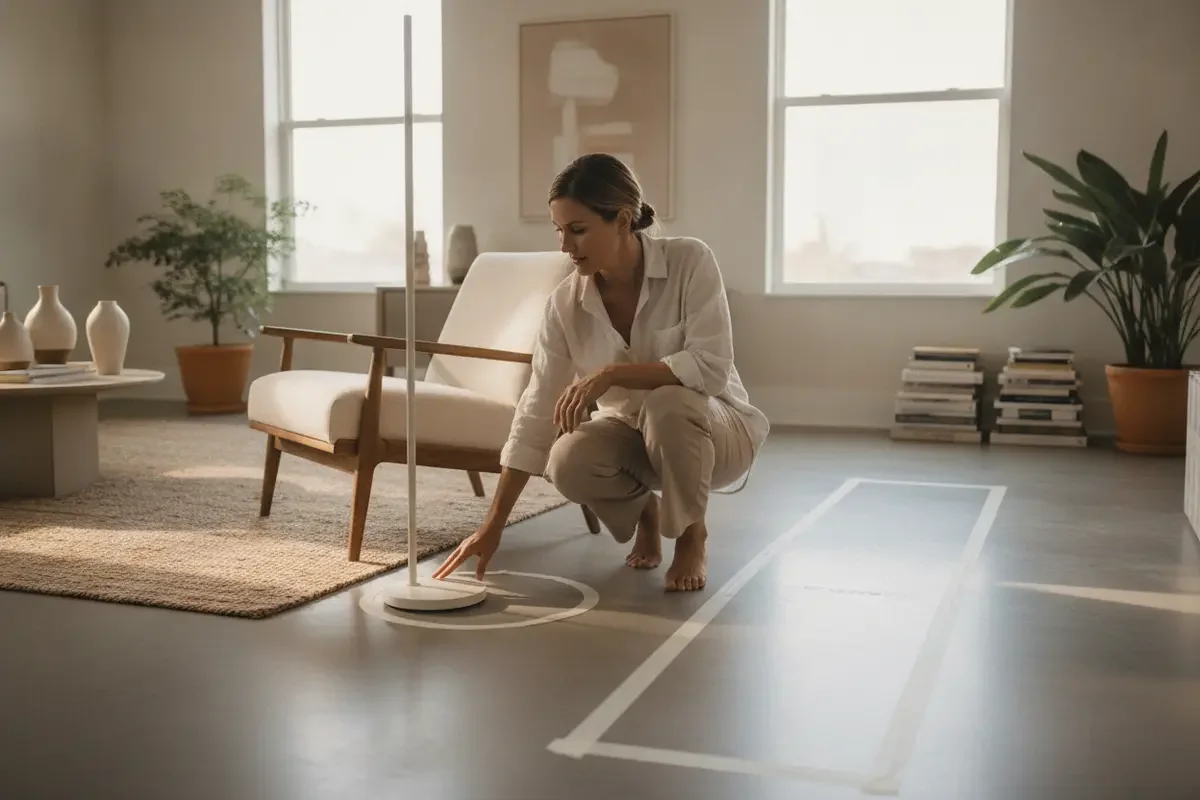
Measure the footprint. Use removable tape to outline a possible base area. Include the space needed to walk around it, rather than measuring only the lamp itself.
Test the height visually. Hold a paper outline or use a vertical mark on the wall to estimate how the lamp relates to the seat, wall art, and nearby vertical forms.
Compare two positions. Look at each location from the main seat and doorway. Check whether the lamp serves its task and remains legible in the room’s composition.
A rough sketch can make this easier. Before committing, do a mock evening test: put a chair where the lamp would go and use a portable light source nearby to see where you want illumination to fall. The temporary setup will not reproduce the final fixture exactly, but it can answer practical questions. Is the source beside or behind the seat? Does the table still have room for the things you use? Does the proposed position leave a clear path to the doorway? Write down what works and what feels awkward, then adjust the taped footprint. Consider three common room situations. In a long living room, a lamp near the far end of the seating group can help the arrangement feel connected rather than leaving the sofa floating in a large space. In a small apartment, keeping the base close to a chair can establish a reading zone while preserving the middle of the floor for circulation. In an open-plan room, placing a lamp near the boundary of the sitting area can help signal a change of use without blocking sightlines. These are starting points, not fixed rules: test the layout from the actual routes and seats in your home. Draw the room’s perimeter, then add the main seat, walking route, outlet, and existing fixtures. It does not need to be a measured floor plan. Its purpose is to expose conflicts before you settle on a shape. For example, a corner may look empty in a photograph but be the natural route from the entrance to the sofa. Another spot may have less open wall but place the light exactly where it is useful.
Once a location looks promising, compare its taped outline with the product dimensions. Styled photographs can disguise scale, and a lamp’s overall height tells you little about how much floor its base occupies. Check both. A multi-part form may also have a larger visual reach than a straight stem, even if the base measurement is similar.
Where can a floor lamp work without adding clutter?
Placement should follow the room’s routine. Beside a reading chair, a floor lamp can make a small activity zone feel complete. At the end of a sofa, it can give the seating group a visual edge without adding another table. In an open-plan room, it can help distinguish a sitting area from a dining or work area without building a physical divider.
In each case, check the cord route as carefully as the base position. A nearby outlet may seem convenient, but the cable should not become a trip hazard or cut across a doorway. If the only route is awkward, try another position before deciding that the room needs a different fixture. Never assume a lamp can be safely placed wherever it fits visually; use the product’s instructions and normal electrical safety practices.
Consider the backdrop, too. A clear section of wall lets a sculptural outline read cleanly. A busy shelf or gallery wall already has plenty of visual detail, so a simpler silhouette may sit more easily nearby. If the room feels flat, a more expressive lamp can add a focal point. The aim is not to hide a statement piece but to give it a context.
Lighting works best as a group of sources rather than a one-fixture rescue mission. Ceiling light can serve broad needs, while a table or floor lamp creates a more local pool. You can also leave some parts of the room quieter instead of trying to brighten every corner equally. See the Woaw floor lamp range to compare the collection’s floor forms and consider which scale suits the plan.
How does light direction affect comfort and atmosphere?
Look at where the light goes, not only at the fixture’s silhouette. An upward-facing source can put light on a ceiling and contribute to a more spread-out feeling. A downward-facing shade can create a more concentrated pool near a chair or side table. Some designs distribute light across more than one direction. Those effects depend on the actual fixture, its light source, and the room, so product details matter more than broad assumptions about a category.
For reading, consider the relationship between the source, the page, and your seated position. You want useful illumination on the task without a bright source sitting directly in your line of sight. If possible, test the arrangement at the time of day you expect to use it. A position that seems perfect in daylight may create glare or an awkward shadow after dark.
For a room used in different ways, avoid forcing one lamp to perform every task. A floor lamp beside the sofa might support a relaxed evening, while a desk or table lamp can bring light closer to detailed work. Layers let you switch on only the sources that match the moment. The U.S. Department of Energy’s site is a starting point for general government information on energy and lighting; check fixture documentation for the product-specific details that affect your choice.
Which materials, colors, and shapes suit a modern room?
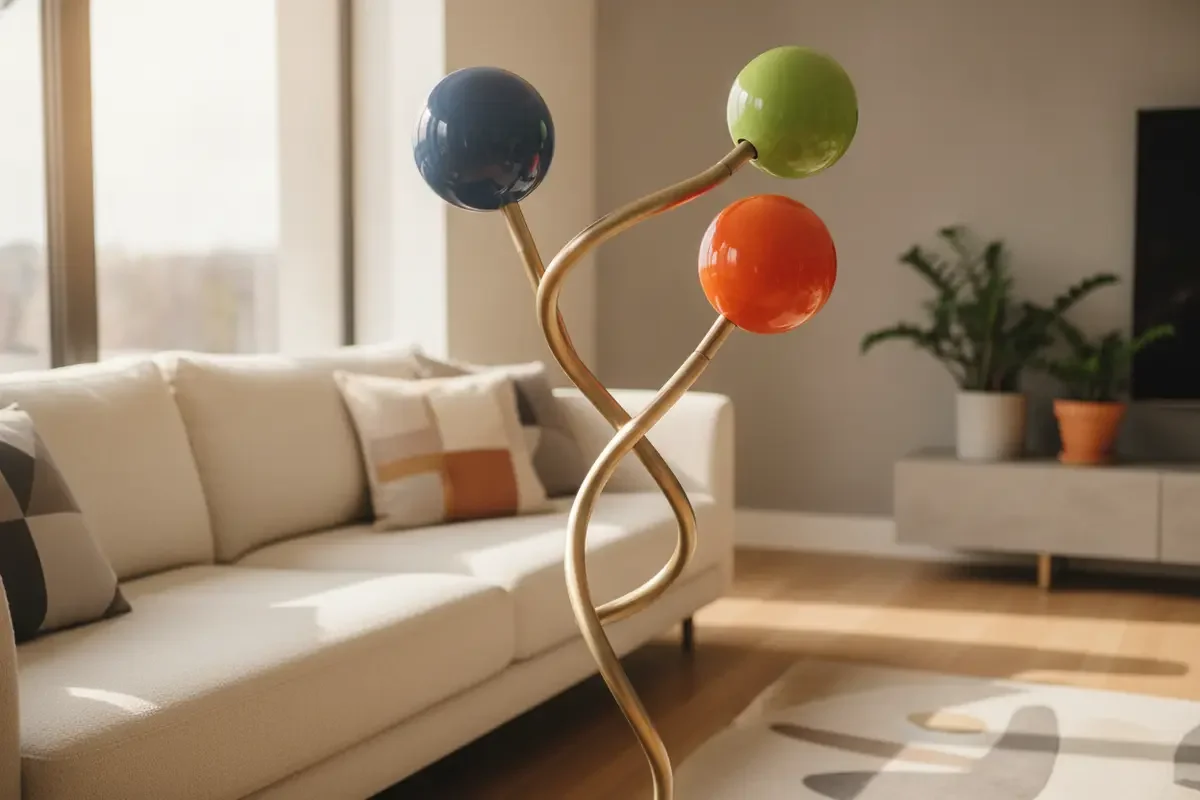
Materials influence how a lamp reads, even when its outline is straightforward. Steel can give a form a crisp, defined edge. Ceramic brings a more tactile, solid note. The Woaw Lighting Collection pairs steel bodies with ceramic shades and uses bold color blocking to reinterpret traditional candelabra forms. The result is playful and sculptural, but it can still work in a pared-back room when the rest of the composition has breathing room.
Start with the room’s existing palette in both daylight and evening light. Look for one detail to echo: a dark frame, a warm wood tone, or a color already present in a textile or artwork. Repeating one feature helps the lamp connect with the space without making every finish match. Exact coordination can look overly planned; a small visual rhyme often feels more natural.
Alternatively, let the lamp be the accent. In a quiet room, one confident color can add energy without requiring a full redesign. If the room already has vivid art and patterned textiles, choose whether the lamp should join that conversation or provide a calmer pause. The test is whether you can identify a clear focal point when you look at the room as a whole.
Shape deserves the same attention as finish. A slender stem can feel discreet, while an arrangement of several forms may have more visual weight. Compare the silhouette against the furniture and wall around it, not against an empty studio background. The lighting gallery can help you look at sculptural fixtures as part of a visual composition rather than as isolated objects.
Should you choose floor lighting or a table lamp?
The decision is about where the light needs to sit and which surface or floor area you can spare. A floor lamp places a source beside a seat without taking up a tabletop. A table lamp needs a stable surface but can sit close to a task or display. Neither type automatically provides better light; the particular design and its position determine how useful it is.
Choose a floor lamp when the light should sit beside a chair or sofa, or when you want to keep a side table available for other use.
Choose a table lamp when a suitable surface is already in place and you want the source nearer a desk, bedside, or tabletop activity.
Consider both when the room has separate uses or you want independent pools of light for different times of day.
Work through a specific example. Imagine a compact reading corner with a chair and a small side table already occupied by books and a drink. A floor lamp could keep that surface free, provided its base fits outside the walking route and the light reaches the chair comfortably. If the corner has no clear floor area but does have a stable table, a table lamp may make more sense. The right answer follows the room, not a rule that every chair needs a floor fixture.
Compare the collection’s table lamp options with the floor designs if you are deciding between those formats. The comparison is most useful when you check the actual dimensions, light-source information, and intended position for each candidate.
How can you keep a statement lamp from overwhelming the room?
Give the lamp space around its outline. A clear patch of floor helps the base look intentional, and a little visual distance from shelves or other objects lets the shape read. This does not mean removing every nearby item. Instead, avoid placing several small decorative objects around the base unless they have a real purpose. The lamp can be expressive without needing a crowd of accessories to explain it.
Look for balance, not mandatory symmetry. If the lamp stands at one end of a sofa, the other side does not need an identical fixture. A low table, artwork, a plant, or simply open space may balance the composition. Use the view from the main seat to decide whether the room feels anchored or lopsided. The answer may change when you shift one object a few inches.
In a small room, check how the lamp changes movement as well as appearance. If a base narrows the path between the seat and doorway, the lamp may make the room feel more crowded even when its design is visually light. Consider a different position or a table lamp if the floor area is genuinely needed. A good fit is one you can live around every day, not merely one that looks good in a single photograph.
Try a simple edit before adding more. Remove one object from the proposed area, step back, and see whether the lamp now has a clearer role. If the room feels unfinished, add back only what improves function or balance. That small exercise often distinguishes a deliberate focal point from visual noise.
What should you check before ordering a floor lamp?
Confirm practical details on the specific product page before placing an order. Check the fixture type and dimensions, construction materials, light-source information, and power details. Woaw lamps have integrated LEDs and universal 120V–240V compatibility, with US, UK, and EU plug options. Verify that the option selected is appropriate for your destination and that the product information matches your needs. Do not infer a feature such as dimming or a particular brightness unless it is stated for that fixture.
Also plan around production timing. Woaw lighting is produced to order and ships within two months, so it is not a ready-to-ship purchase. If you are furnishing for a move, event, or other date, take that timing into account before deciding. The pre-order information explains the ordering route; review it alongside the product details so the delivery expectation is clear.
Make a shortlist of no more than a few options and compare them against the room plan. For each one, write down the intended location, base footprint, height, light direction, material, color, and production timing. A quick comparison like this makes trade-offs visible. One shape may be the strongest focal point but require more visual space; another may be less emphatic yet work better beside a narrow route. Neither is inherently right for every room.
If you want to understand the design point of view behind the collection, read the brand story. Keep the final decision grounded in the specific product page, dimensions, and practical constraints of your own room.
How do you make the final choice?
Bring the decision back to three questions: What should the lamp do? Where can it sit without interrupting movement? Which silhouette will feel connected to the room? If you can answer those clearly, you are choosing a fixture for a reason rather than buying a shape in search of a place.
Before ordering, revisit the room at night, check the measurements, and think through the cord route. Verify the product’s power and light-source details, plus the made-to-order timing. A modern room can be calm and still have a sense of humor. The right lamp brings practical light and a point of view, without asking the rest of the room to compete.
Explore the Woaw floor lamp collection
Frequently Asked Questions
Can one floor lamp light an entire living room?
That depends on the room, fixture, and activities. A floor lamp can provide a useful local pool or contribute to broader ambience, but a mix of ceiling, table, and floor sources often gives more flexibility. Check the fixture’s information and consider how light reaches the areas you use.
How do I choose a lamp for a small room?
Start by measuring the available floor area and protecting the main walking route. Compare the base footprint and overall height, then consider a table lamp if the floor is needed for movement. A simple outline taped on the floor can reveal a space conflict before purchase.
How can a colorful lamp fit a calm interior?
Give it a clear role and enough open space. You can repeat one color elsewhere for a subtle connection, or let the lamp be the room’s single bright accent. Keep nearby shapes or finishes quieter if the lamp is already visually expressive.
Are Woaw floor lamps ready to ship?
No. Woaw lighting is produced to order and ships within two months. Review the product and pre-order information before purchasing, especially if you are planning around a particular date.
Choose a floor lamp that fits your routines as well as your visual rhythm, and let one thoughtful form bring useful light without adding noise.
