

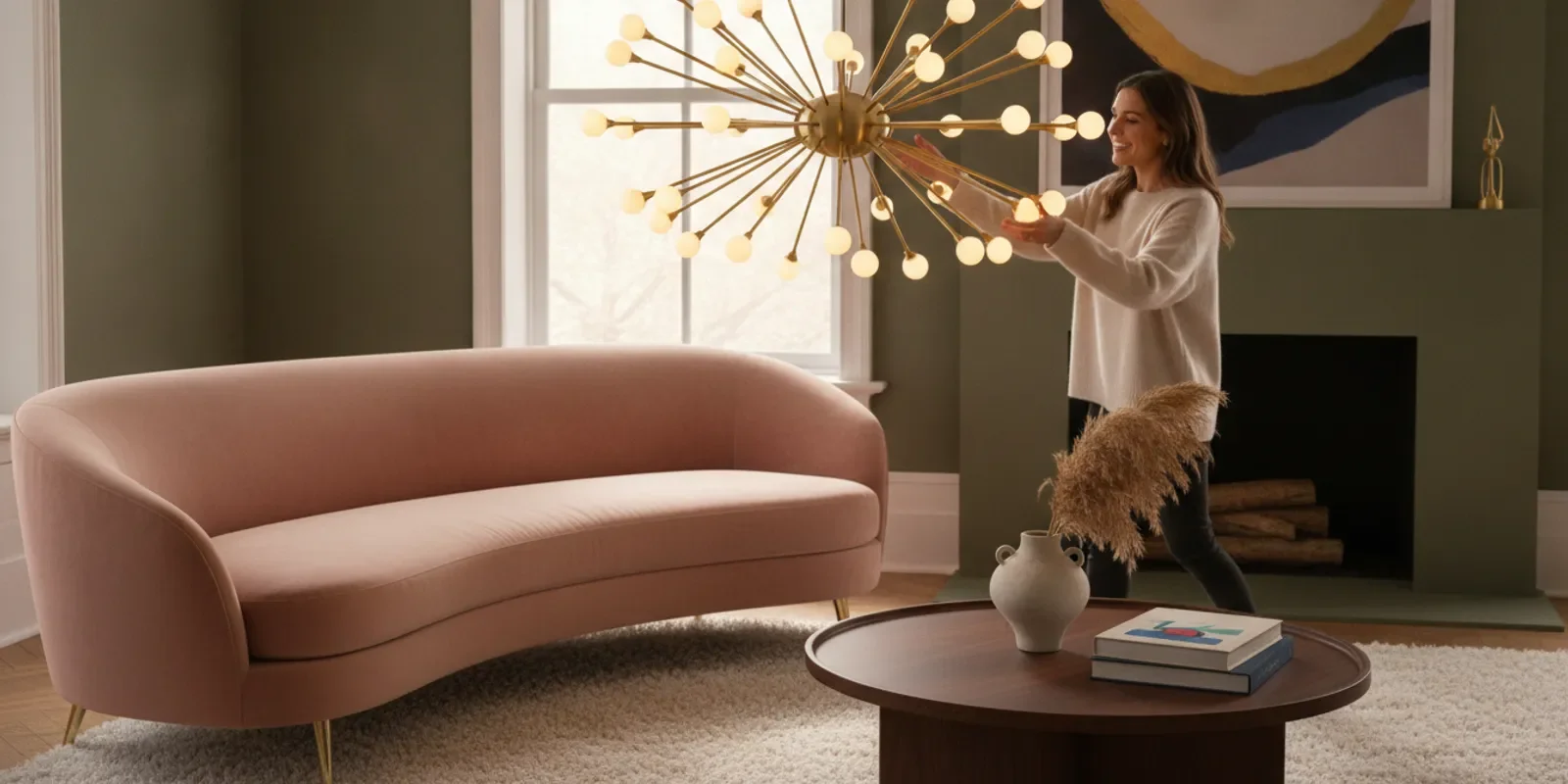
A dandelion light sculpture turns a familiar botanical shape into a focal point: a central form with fine lines radiating outward. If you are comparing a dandelion light sculpture with Art Deco or other sculptural lighting, look beyond the name. Silhouette, scale, finish, light source, and ordering details determine whether the piece works in your room and routine.
What gives a dandelion light sculpture its character?
The starting point is a seed head: a compact center and a burst of delicate forms. A lighting designer can translate that into fine spokes, clustered arms, or a precise geometric outline. Each version has a different visual weight. A spare design may feel airy against a wall, while a dense one can read as a bold object even when the lamp is off.
Look at the whole outline before focusing on individual details. Are the rays evenly spaced, or do they create a deliberate rhythm? Does the central shade feel connected to the outer structure? A compelling fixture feels considered from the center to its furthest point. More elements do not automatically make a better design; proportion and clarity matter more than sheer complexity.
Art Deco is a useful reference, but it is not a synonym for dandelion-inspired. Deco often uses repeated geometry, symmetry, and confident contrast. A botanical radial silhouette begins with a natural form and may feel looser or more organic. A fixture can borrow Deco's disciplined balance and strong color while retaining a playful, plant-like outline.
That distinction helps when searching for the right mood. If you want crisp lines and formal symmetry, look for a design whose radial elements align cleanly. If you prefer a livelier, less rigid impression, a varied cluster may be more appealing. Either approach can be a statement, as long as the shape suits the room rather than merely matching a label.
How do you choose a dandelion light sculpture?
Start with the role the fixture needs to play. It might be the visual accent in a quiet corner, one layer in a larger lighting plan, or a sculptural object that also contributes useful illumination. Naming the job first makes it easier to compare footprint, brightness, position, and visual complexity. For a wider view of product forms, browse the Woaw Lighting Collection.
Read the silhouette from more than one angle
Radial forms change as you move. A head-on view can look balanced while the side view appears crowded, flat, or unexpectedly wide. Study product photographs from several angles when available. Notice whether the center remains visually clear and whether the outward elements keep a coherent shape instead of collapsing into a tangle.
Think about the background, too. Fine lines can disappear against patterned wallpaper, book spines, or a busy gallery wall. A simpler backdrop can help the shape read without requiring the rest of the room to become bare. If you are choosing between a highly detailed outline and a graphic one, imagine each against the actual wall or furniture behind it.
Test the full scale in the room
Measure the complete width and height, not only the central shade or base. A radial fixture can extend much farther than its core suggests. Mark the approximate footprint with painter's tape, or cut a paper outline and hold it at the intended height. Then check it from the doorway, the main seating position, and the path people take through the room.
For example, a compact table may support a smaller form without crowding books, a drink, or other everyday items. A taller floor fixture can command more attention and needs enough clearance around its widest point. These are general planning checks, not guarantees of product fit: compare the actual product dimensions with the room measurements before ordering. The table lamp and floor lamp comparison can help clarify which format suits the role you have in mind.
Decide what kind of light you need
Ask whether the fixture is intended to provide ambient light, focused task light, or a decorative accent. A distinctive outline does not tell you how much light reaches a page, work surface, or whole room. Check the product information for the light source and its intended use, then consider what other lighting layers the room already has.
Woaw fixtures use integrated LEDs. That is a product detail worth checking against your expectations, especially if you are used to replaceable bulbs. For general information about lighting choices, consult the U.S. Department of Energy. Do not infer brightness, dimming, or service life from the fixture's appearance; confirm those specifics on the relevant product information.
Which materials and finishes suit the look?
Materials change the impression of a radial outline. Metal can make fine extensions feel crisp and graphic. Ceramic can add color and a more substantial visual center. Glass or translucent elements can create a different sense of openness, depending on their form. Compare actual construction details rather than relying on style names or photographs alone.
The Woaw Lighting Collection pairs steel bodies with ceramic shades. That combination gives the design both a defined structure and a colored focal element. Bright color blocking and sculptural proportions bring a playful note, while the overall form can still feel composed. The guide to steel and ceramic lamp construction offers more context for thinking about those materials.
Finish is part of the silhouette, not a last-minute detail. A glossy surface catches highlights and may appear more animated under changing light. A quieter finish can let the outline do more of the talking. Strong color can make a fixture a focal point; a more restrained palette may help it connect to existing furniture. Compare the lamp with the colors already in the room, including the wall, floor, and nearby objects.
When reviewing product imagery, look at joints, edges, and transitions. A radial structure puts its connections on display. Ask whether the center, arms, and shade feel like parts of a coherent design. If a small detail seems important, check whether the product page provides a close view rather than assuming a photograph has shown every angle.
Where should a dandelion-inspired lamp go?
Choose a location where the outline can be seen clearly and where the fixture's function makes sense. An open stretch of wall may give a sculptural shape room to register. A corner can frame a taller piece, provided it does not interrupt circulation. For a table lamp, consider how its base shares the surface with other objects and how the light fits the activity nearby.
Map the main sightlines. A lamp beside a sofa may be visible from the entrance, the seat, and across the room. One near a dining area may appear in the background during everyday meals. A simple placement test is to stand in each common viewing spot and check whether the fixture feels balanced with the furniture and surrounding art.
Leave practical clearance around the widest part and do not position a floor fixture where people regularly brush against it. For a taller option, the floor lamp selection guide covers useful questions about scale and purpose. If a compact surface is the better fit, review the Woaw table lamp range; for a taller format, compare the Woaw floor lamp range.
Also notice where the cord would run and where the nearest outlet sits. These ordinary details can affect whether a planned spot remains convenient. The product information should guide the specific electrical and plug choices; do not assume every market uses the same connection. If a room has several layers of lighting, consider how the new piece will look when other lamps are on as well as during daylight.
How can you style an expressive fixture without visual clutter?
Give the lamp a clear role in the composition. If it is the room's main statement, quieter nearby shapes can help it stand out. If the room already has strong artwork or patterned textiles, repeat one color from the fixture rather than adding several competing accents. Repetition creates a link; reproducing the full motif everywhere can make a room feel over-planned.
Balance visual density. A detailed radial outline often benefits from simpler forms nearby, such as a clean tabletop or an uncluttered wall. That does not mean everything else must be neutral. It means varying the amount of pattern and detail so the eye has somewhere to rest. The color-blocking guide explores ways to use color with intention.
Consider the lamp when it is switched off, too. Its form, finish, and color remain part of the room throughout the day. A sculptural light can behave like a design object between uses, but it still needs to make sense beside the room's practical furnishings. Check that the chosen position works visually without blocking the way or taking over a surface needed for daily routines.
How do the main fixture options compare?
There is no single best format for every room. Compare the job each type is expected to do, then verify dimensions and product details for the specific model.
A table lamp for a contained accent
A table lamp can create a focal point on a side table, console, or desk where there is enough surface area. It is easier to keep its visual impact within a defined zone, but the base and shade take up usable space. Measure the surface and check the lamp's full width before deciding. Do not assume a sculptural lamp will leave room for other objects simply because its center is compact.
A floor lamp for a taller visual anchor
A floor lamp can bring height to an open area and keep the light source off a tabletop. It needs room at floor level and a route for the cord. A radial or multi-part form may extend beyond the base, so check its broadest dimension and nearby circulation. The floor lamp focal point guide offers more ideas for using height as part of a room's composition.
A sculptural object that is not the only light layer
A statement fixture may contribute useful light without meeting every task in the room. A reader may still need a separate source positioned for a page, while a work area may need its own focused illumination. Treat the sculptural lamp as one part of a plan, and confirm its light output and function rather than judging by shape alone. This distinction prevents a beautiful object from being expected to solve a job it was not designed for.
What should you verify before ordering?
Read the product details closely and make a short comparison list. Confirm the full dimensions, materials, integrated light source, electrical compatibility, plug option, and delivery timing for the exact item. Woaw products are described as compatible with 120V–240V and offered with US, UK, and EU plugs. Select the option that suits your destination and verify the current listing before placing the order.
Pay attention to how the order is fulfilled. Woaw is made to order and ships within two months; it is not a ready-to-ship purchase. Plan around that window if the lamp is intended for a move, renovation, gift, or room deadline. Visit the Pre-Order page for the ordering route and current details. If you need clarification on an item or selection, use the contact page before proceeding.
A useful pre-order checklist:
Measure the intended location, including the fixture's widest point and clearance.
Decide whether the lamp is an accent, an ambient source, or support for a specific task.
Compare material, finish, shape, and product dimensions on the exact listing.
Check the electrical details and select the plug option for your destination.
Allow for the stated made-to-order shipping window in your plans.
Review the ordering and returns information before completing the purchase.
For a closer look at available designs, explore the Woaw Single Table Lamp and the Woaw Single Floor Lamp. Use each product page for current item-specific details; do not rely on a general description to answer questions about a particular model.
Could another sculptural lamp be a better fit?
A dandelion-inspired silhouette is one way to create a radial focal point. If that outline feels too expansive, a more compact form may suit the room better. If you want vertical presence, a floor lamp may be a more useful format. A multi-arm or clustered silhouette can suggest movement without following the botanical reference exactly.
Compare your priorities in order. First, identify the lighting job. Second, decide how much space the fixture can occupy. Third, choose the material and color that feel right against the room's existing palette. Finally, compare the product information and ordering timeline. This sequence makes it less likely that an appealing photograph will distract from a practical mismatch.
Woaw designs reinterpret traditional candelabra forms through bright color blocking and sculptural proportions. Their steel bodies, ceramic shades, and integrated LEDs give shoppers concrete details to compare, while the overall character remains playful. Browse the guide to artistic lighting fixtures for another perspective on expressive forms, or review the brand background to learn more about the design context.
There is no need to choose a lamp only because its name matches a search. Let it answer a real room question: what needs light, where should the eye travel, and what shape would make the space feel more personal? A considered choice balances a distinctive outline with dimensions and details that suit everyday use.
Shop the Woaw Lighting Collection
Frequently Asked Questions
What is a dandelion light sculpture?
It is a light fixture whose design takes inspiration from the radial shape of a dandelion seed head, often with a central form and elements extending outward. Designs vary in scale, material, and how literally they follow the botanical reference.
Is a dandelion lamp the same as an Art Deco lamp?
No. Dandelion-inspired lighting takes its cue from a natural radial form. Art Deco is a wider design style associated with geometry, symmetry, and contrast. A fixture may combine some of those qualities without being a textbook example of either.
How can I tell whether the fixture is the right size?
Check the full product dimensions, especially the widest point, and compare them with the available space and surrounding furniture. A tape or paper mock-up can help you judge the outline from different viewpoints before ordering.
Can a sculptural lamp provide all the light a room needs?
That depends on the fixture's stated output and the activities in the room. A decorative lamp may work best as one layer alongside other ambient or task lighting. Review the product details and plan for any specific activities that need more focused light.
A well-chosen dandelion light sculpture brings personality to a room while respecting its scale, lighting needs, and practical details. Measure first, compare the product information, and choose the shape that feels right in your space.
