

Artistic Lighting Fixtures With Real Visual Presence
Artistic lighting fixtures do more than brighten a room: they give shape, character, and a point of view to the space. The best choice is not simply the most unusual lamp. It is a fixture whose form feels intentional, whose light suits a real task, and whose scale makes sense in the room.
Talk with us about choosing a sculptural light
What makes a lighting fixture feel artistic?
A fixture feels artistic when it has a clear visual idea. That idea might come from a sculptural outline, an unexpected proportion, an expressive color palette, or the way several parts relate to one another. A useful test is to ask whether the light would still look considered when it is switched off. If its silhouette, materials, and details hold your attention in daylight, it has a role beyond illumination.
Artistic does not have to mean elaborate. A simple form can feel distinctive when its curves, balance, or finish are carefully resolved. Nor does artistic automatically mean impractical. The most satisfying fixtures connect visual character to a useful job: a table lamp that brings a pool of light to a reading spot, or a floor lamp that gives an empty corner a reason to exist.
There is a difference between a decorative object and a light that contributes to the room. A purely ornamental piece may look striking but offer little useful light. A purely utilitarian fixture may solve a task but feel generic. The sweet spot is an object that can do both. For a closer look at the idea of a focal-point lamp, see what makes a statement piece lamp.
How do artistic lighting fixtures balance form and function?
Start with the job, then judge the form against it. Write down what the light needs to do before you browse: support reading, soften a dark corner, add a welcoming glow, or act as a visual anchor. These are different jobs, and one fixture may not cover all of them. Naming the purpose keeps a beautiful silhouette from distracting you from the experience you want. It can help to separate three kinds of value. First is visual value: what the fixture adds to the roomâs composition. Second is lighting value: the kind of glow or directed light it provides. Third is practical value: whether its controls, placement, and care suit your routine. A fixture does not need to score equally on all three. It does need to be honest about the role you expect it to play. If you love a sculptural piece for its outline, it can still be a good choice when paired with a separate reading light.
Next, consider where the light comes from and where it goes. A shade can direct light downward, soften it, or partly conceal the source. A fixture with several arms may spread attention across a wider shape, while a compact lamp can concentrate its presence in one small area. These are design observations, not a promise of a specific brightness; check the product details for the actual light source and use.
Keep layered lighting in mind. A sculptural lamp can be the distinctive layer, while general room light and task lighting do the less glamorous work. If a fixture is expected to light every part of a room by itself, it may disappoint even when it looks wonderful. For a practical comparison of table and floor placements, explore this table lamp versus floor lamp guide.
When focused illumination matters, think about direction rather than assuming every artistic shape will serve as a task light. A Minnesota Department of Commerce fixtures guide notes that track lighting can provide focused task lighting in kitchens or work areas. That is a useful reminder: match the lighting method to the task, and let the decorative fixture play the role it performs best. Read the fixtures guidance.
Which shapes and proportions create visual presence?
Shape is the first thing many people notice, but proportion determines whether that shape feels at home. Look at the fixture from the doorway and from the places where you spend time. A tall, narrow outline can draw the eye upward. A wider arrangement may occupy more visual space, even if its base is small. Repeated curves or a cluster of shades can create rhythm; a single strong silhouette can read more quietly.
Use nearby objects as a scale reference. Compare the lamp with the height of a side table, the width of a console, the back of a chair, or the vertical lines of a bookcase. The goal is not to follow a universal ratio. It is to decide whether the fixture should blend into the arrangement or become its clear focal point. If possible, mark the approximate height and width with removable tape or a paper outline before ordering.
Give the shape breathing room. A sculptural lamp squeezed between several competing objects can lose its outline. On the other hand, a fixture that feels too isolated may look accidental rather than composed. Try a simple grouping: one lamp, one useful surface, and one or two supporting objects with different heights. Leave some empty space so the silhouette can register. Consider the background as part of the shape, too. A lamp with a delicate outline may disappear against a busy shelf, while a strong geometric form can read clearly against a plain wall. This does not mean the fixture needs a blank stage; it means its outline should be visible from the angles that matter. Before choosing a location, notice what sits behind it and whether a small change in position would give the design more definition.
For more ideas on treating a lamp as an object with presence, read about how sculptural lighting transforms a room. The key is not to fill every sightline with a statement. Give one or two pieces room to speak, then let quieter forms support them.
How should color and material fit the room?
Color can help an artistic fixture either join a palette or interrupt it on purpose. If the room already has a few strong hues, pick one that the lamp can echo. If the palette is restrained, a bright fixture can supply the accent. In either case, repeat the color somewhere smallâa book cover, artwork detail, or textileâif you want the choice to feel connected rather than random.
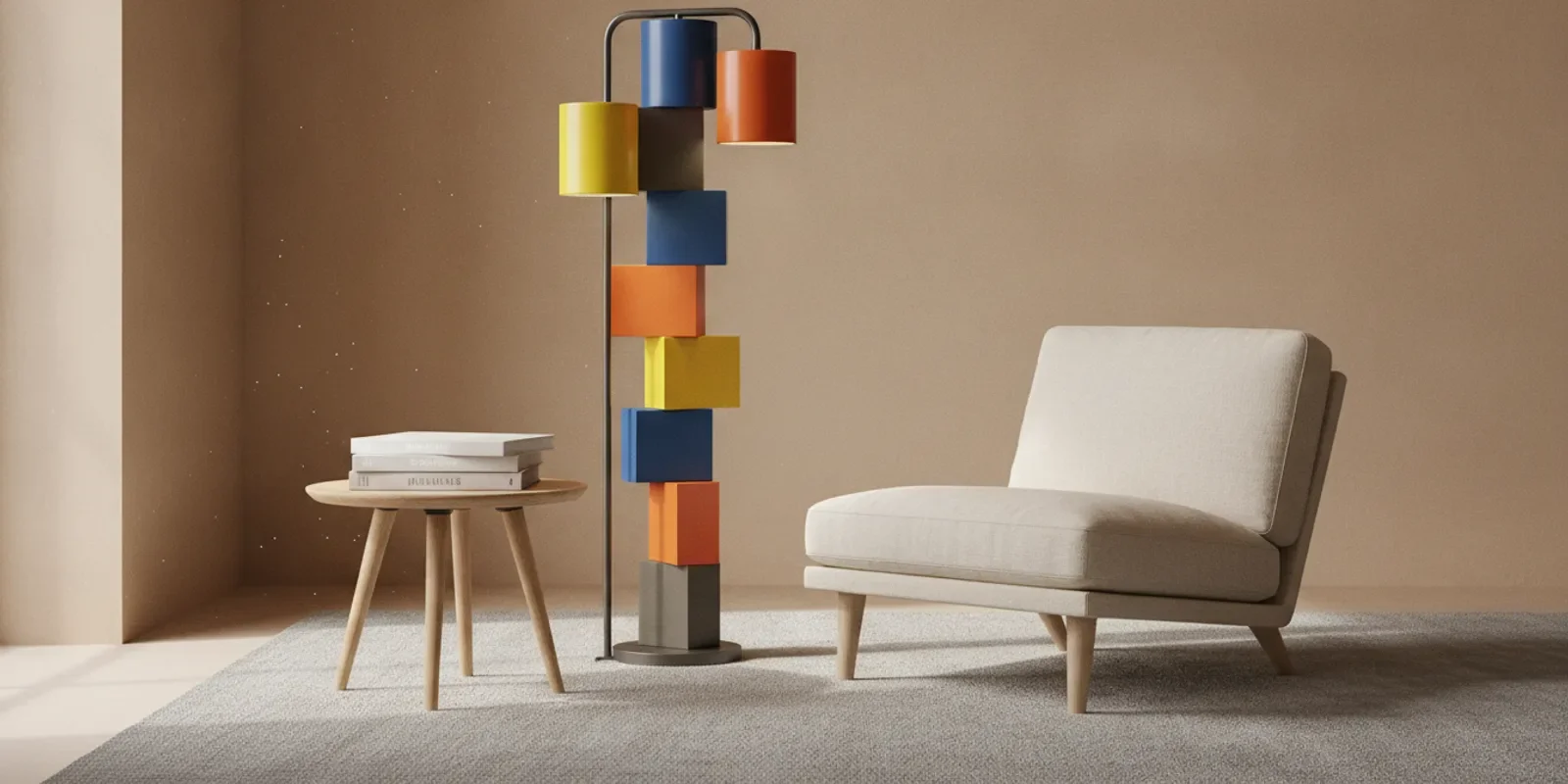
Color blocking makes the parts of a fixture easier to read. Contrasting sections draw attention to its structure and give the object a lively, graphic quality. A restrained room can make those contrasts stand out; a richly layered room can make them feel at home among other expressive elements. There is no need to match every color exactly. Aim for a relationship: shared warmth, similar intensity, or a deliberate contrast.
Material changes the impression as much as color does. Steel can make a body feel crisp and defined; ceramic shades offer a substantial, tactile counterpoint. Woaw Lighting combines steel bodies and ceramic shades in sculptural, toy-inspired forms. You can see the collectionâs approach in the Woaw Lighting Collection. When comparing any fixture, check the listed materials rather than relying on a photograph alone.
Also consider how the finish relates to nearby surfaces. A glossy finish catches more attention, while a muted finish may let the shape lead. Material choice should work with the roomâs existing mixâwood, metal, stone, fabricânot imitate every finish already there. Contrast can be part of the composition.
What kind of artistic fixture suits each room?
Choose by the relationship between the fixture, the activity, and the open space around it. The table below is a starting point, not a sizing rule. Check actual dimensions and product information before you make a decision.
Room or setting Fixture role to consider What to check
Living room corner
A sculptural floor lamp as a vertical anchor
Height, footprint, nearby seating, and whether other lights cover the room’s general needsSide table or console
A table lamp that adds a compact focal point
Table surface left usable, silhouette against the wall, and access to the switchReading area
A fixture paired with a dedicated task-light source
Light direction, glare, reading position, and whether a second light is neededOpen-plan space
A distinctive lamp that helps define one zone
How it looks from adjoining areas and whether its colors repeat elsewhereSmall apartment
One expressive table or floor fixture with a clear job
Walkway clearance, visual scale, and the amount of surface or floor space it occupies
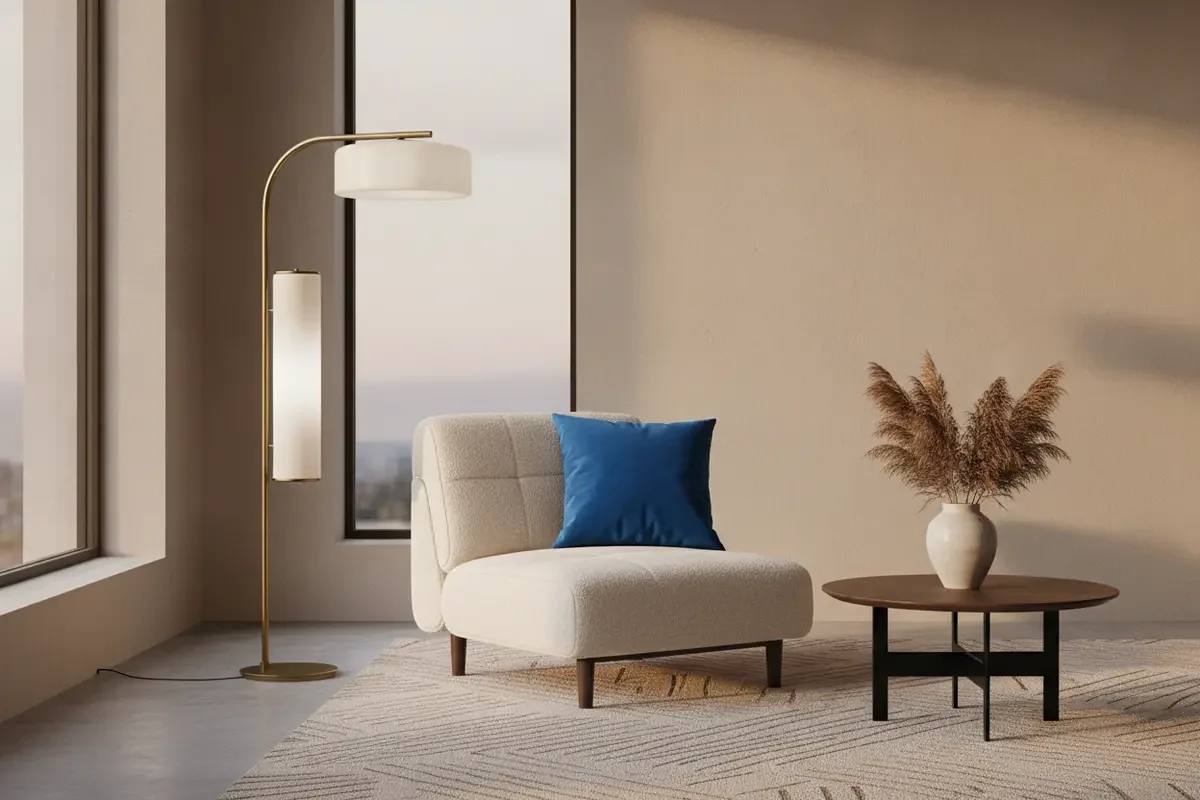
In a living room, a floor lamp can draw the eye into an underused corner or contribute a vertical line beside seating. It does not have to match the sofa or disappear into the background. Consider the view from the main entrance and the seated view; both matter. This floor lamp focal-point guide offers another way to think about a lampâs role in a living room.
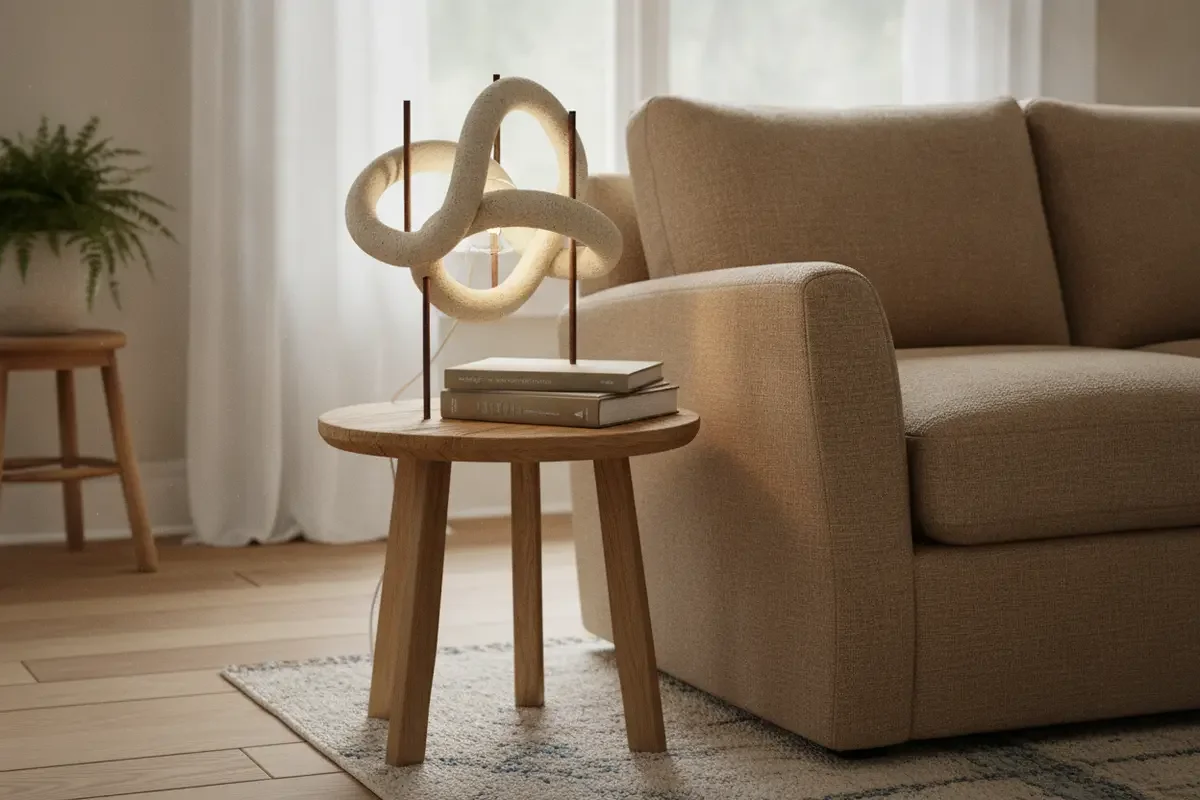
On a table, the lamp shares space with the things you actually use. Look at the surface area, the height of nearby objects, and how the fixtureâs outline appears against its background. A table lamp may be the strongest accent in a compact arrangement, so avoid crowding it with several similarly bold objects. Browse the table lamp options with the roomâs available space in mind.
In a reading spot, separate visual interest from task requirements. Check where the beam falls, whether the shade blocks the source from your eyes, and whether the fixture can be positioned for the way you read. A lamp can contribute atmosphere without replacing a more directed reading light. Pairing fixtures is often more comfortable than asking one sculptural piece to do everything. Think about the controls while you are there. Is the switch easy to reach from the chair or the side of the bed? Can a cord follow a sensible route without crossing a walkway? Will another object block the light? These practical questions are easy to overlook in a product photo, but they shape whether the fixture feels natural to use. If you are unsure, sketch the arrangement with the seat, table, lamp, and likely cord path before you settle on a spot.
What should you compare before choosing?
Once a fixture catches your eye, slow down and compare its practical details. Look beyond the hero photograph. Confirm dimensions, materials, light-source information, power compatibility, plug options, order terms, and delivery expectations on the product or ordering page. A striking design is a better purchase when you know what will arrive and how it fits your needs.
Silhouette: Does the form look engaging from the angles you will see most?
Scale: Does it have enough room around it, and does its height suit nearby furniture?
Purpose: Is it mainly ambient, decorative, or intended to support a task?
Materials: Are the body and shade materials clearly described?
Power: Does the stated voltage and plug option suit your location?
Timing: Is the item available to order now, and what is the stated production or shipping window?
Care: Can you follow the makerâs cleaning and maintenance guidance?
For international shoppers, verify power and plug details rather than assuming that a design sold online will suit every location. Woaw fixtures are described as compatible with 120Vâ240V power and offered with US, UK, and EU plugs. Check the exact product information and order page for the option applicable to your destination. Do not infer that a plug adapter changes the electrical rating of a device.
Ordering expectations matter too. Woaw products are made to order and ship within two months, so factor the stated timing into your plans. Review the current terms on the pre-order information page before placing an order. An artistic fixture is meant to live in your space for a while; taking a moment to understand the process is part of choosing well. It can also help to compare two or three possibilities side by side instead of judging each in isolation. Note the dimensions, materials, intended role, power information, and lead time in a short list. Then ask which one solves the roomâs actual need and which one you are drawn to for a reason that will last beyond a passing trend. The answer may be one fixture, or it may be to wait until you find a shape that fits both the room and your taste.
How can you make one bold lamp feel at home?
Start with one hero object and make the rest of the composition easier to read. If the lamp has a bold shape, keep nearby objects simpler or vary their height and texture. If the lamp is colorful, repeat one hue elsewhere instead of scattering competing colors around the whole room. If the room is already full of pattern, let the fixtureâs shapeânot another busy printâprovide contrast.
Try the arrangement before committing to it. Photograph the room from the main viewpoints, then notice whether the lamp feels balanced, blocked, or too dominant. You can shift a table, remove a small accessory, or change the nearby artwork. These small edits often make a more noticeable difference than adding another decorative object.
Finally, consider the fixture in both day and evening conditions. In daylight, its shape and materials carry the composition. At night, the light it produces changes the roomâs mood. Think about both versions: a fixture should bring visual energy when off and a useful, comfortable contribution when on. That is where âstatementâ becomes more than a photograph-friendly label.
Explore the Woaw Lighting Collection
Frequently Asked Questions
Are artistic lighting fixtures practical for everyday use?
They can be, if you choose a fixture whose light and placement suit the task. Check the product details, consider whether it is ambient or task-oriented, and add another light when one fixture cannot comfortably do both jobs.
Can a sculptural lamp work in a minimalist room?
Yes. A single expressive lamp can add personality to a pared-back room. Give it clear space, then keep nearby objects simple enough that the fixtureâs form remains easy to see.
Should the lamp match my furniture?
It does not need to match every finish or color. Look for a useful connectionâsuch as a repeated hue, related material, or a contrast that feels intentionalârather than an exact set.
What should I measure before ordering a lamp?
Check the fixtureâs listed height, width, and footprint, then compare them with the surface or floor area available. Consider walkways, nearby seating, and the visual space around the lamp, not just whether its base physically fits.
Let the fixture bring the room into focus
Choosing an artistic light is a balance of visual instinct and practical checks. Begin with the job, judge the shape and scale in context, and confirm the material, power, and ordering details. When a fixture looks considered in daylight and contributes the right kind of light after dark, it can make an ordinary corner feel like part of the design.
