How Tall Should a Floor Lamp Be? Room-by-Room Guide

How tall should a floor lamp be? Start with the activity and the furniture around it, not a number on a product page. For a living-room lamp beside a sofa, a useful starting range is about 58 to 70 inches overall, with the shade positioned so the light source is comfortable from a seated position. Then adjust for the chair, ceiling, shade shape, and the job the lamp needs to do.

Ask us about choosing a floor lamp

How tall should a floor lamp be for comfortable light?

There is no single correct height for every room. A tall arc lamp, a compact reading lamp, and a sculptural multi-light fixture can all serve different purposes. Use the lamp’s overall height as a first filter, then assess where the shade or bulb sits in relation to your eye line and the nearby furniture.

For many living rooms, floor lamps land around 58 to 70 inches tall. That range is a starting point, not a rule. A low lounge chair may need a shorter light position than a high-backed sofa. A lamp intended to illuminate a corner or add a vertical accent may stand taller. A reading lamp needs more attention to where its light falls than to its overall height.

Think in three measurements:

  • Overall height: floor to the highest point of the fixture.

  • Light-source height: floor to the bulb, LED, or opening that sends light into the room.

  • Seated sightline: the height of your eyes while sitting in the seat the lamp serves.

The second and third measurements often matter most for comfort. A lamp may be tall and dramatic, yet place its light source low enough to feel intimate. Another may be modest in height but put a bare bulb directly in your line of sight. If possible, compare the fixture’s dimensions with the seat before choosing.

How tall should a floor lamp be beside a sofa?

For a sofa-side lamp, begin with the seat height and the way people use that end of the sofa. A lamp that provides ambient light can sit higher than one used for reading. As a practical starting check, position the bottom of the shade around seated eye level or slightly above it, then sit down and look toward the lamp from your usual spot. The bulb or LED should not be glaring directly at you.

Many sofas have seat heights around 17 to 19 inches, but cushions compress and backs vary. Measure your own seat instead of treating a typical figure as a specification. Sit as you normally would, mark your eye level on the wall with removable tape, and compare it with the lamp’s shade opening and light source. The exact relationship depends on whether the shade directs light downward, upward, or in several directions.

Use this quick process:

  1. Measure from the floor to the top of the sofa arm and seat.

  2. Note the seated eye line where the lamp will stand.

  3. Check the product dimensions, including shade height and width.

  4. Place a temporary object or tape mark at the proposed shade height.

  5. View it from the sofa and from the room entrance. Adjust if it blocks a sightline or feels visually top-heavy.

One helpful distinction: the top of the fixture and the bottom edge of the shade do not have to line up with the sofa. A shade with a broad opaque body may feel visually lower than an open arm at the same height. If the shade directs light downward, test whether it illuminates the seat without making the lamp feel like it hangs over the sofa. If it directs light upward, assess the overall glow and how the fixture reads against the wall behind it.

A shade that ends just above the sofa back can help the lamp feel connected to the furniture. That is a visual guideline rather than a strict requirement. If the sofa back is unusually tall, or the lamp has an open sculptural form instead of a conventional shade, a higher fixture may look more balanced. For more ways to coordinate proportions and placement, see this room-by-room lamp styling guide.
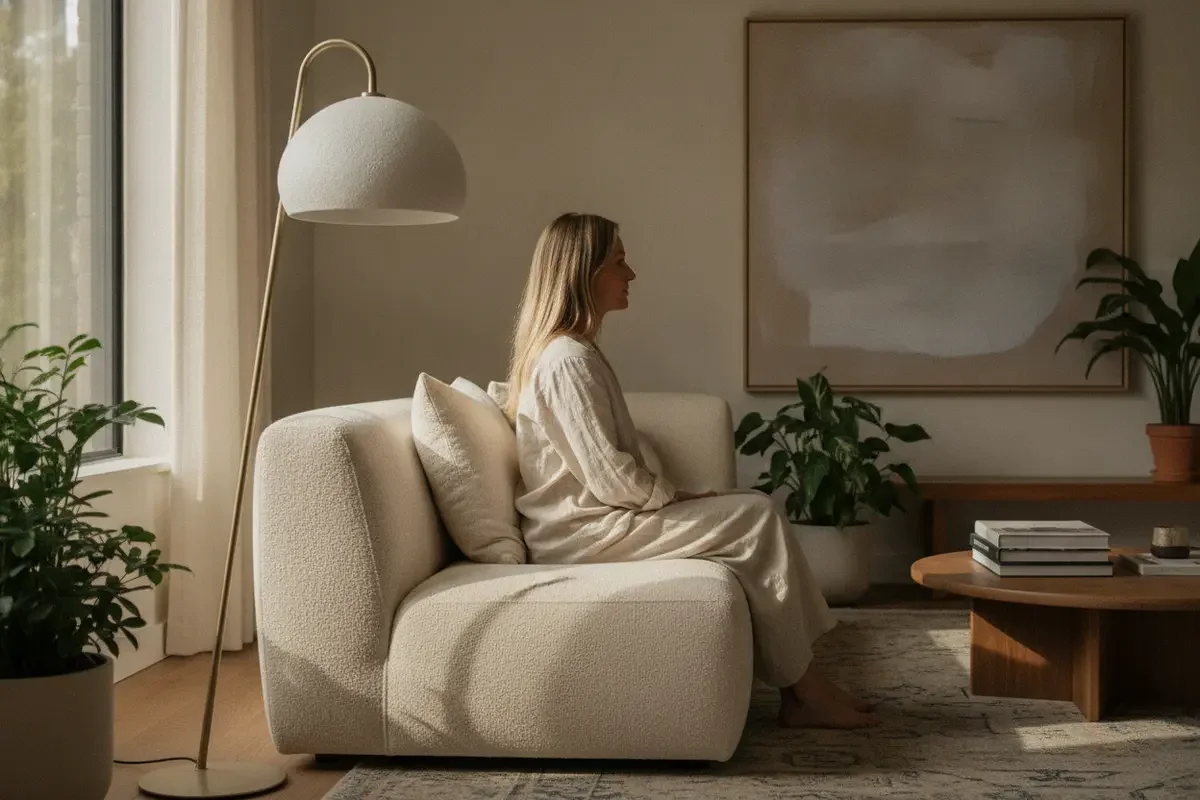
Floor lamp shade positioned beside a sofa for a seated eye-line check

Which floor lamp height works for a reading nook?

A reading nook calls for task light that reaches the page without shining into your eyes. Overall height alone cannot tell you whether a lamp will do that. Check the shade’s direction, the position of the light source, and how close the fixture can stand to the chair without interrupting movement.

For a chair with a low seat, a lamp around 55 to 65 inches may place its light at a useful level, but the best fit depends on the fixture and reader. A focused downlight often works differently from a shade that spreads light around the room. Choose a position that lights the book or craft in your lap, then test it in the chair. If you have to lean forward to get enough light, the lamp may be too far away or the light may be aimed poorly.

Before settling on a height, check these details:

  • Shade clearance: The shade should not collide with your head or shoulder when you sit or stand.

  • Reading angle: Light should reach the page without creating an uncomfortable bright spot in your direct view.

  • Chair movement: Leave room to get in and out, adjust a footrest, and move the chair if needed.

  • Other light sources: Consider whether a nearby table lamp or ceiling light already fills the space.

When the lamp has a long reach or adjustable arm, confirm the reach as well as the height. A high shade does not guarantee that light lands where you need it. For example, a light source directly over the chair’s rear corner may fall behind your shoulder rather than on the page. Test the angle while holding a book in your normal reading position, and account for the direction of your dominant hand so it does not cast a distracting shadow. If the shade is fixed, imagine its beam from the actual spot where the base will sit before you decide.

If you are comparing a floor lamp with a table lamp for a reading corner, start with the available surface and clearance, then compare the two types in this table lamp versus floor lamp guide.
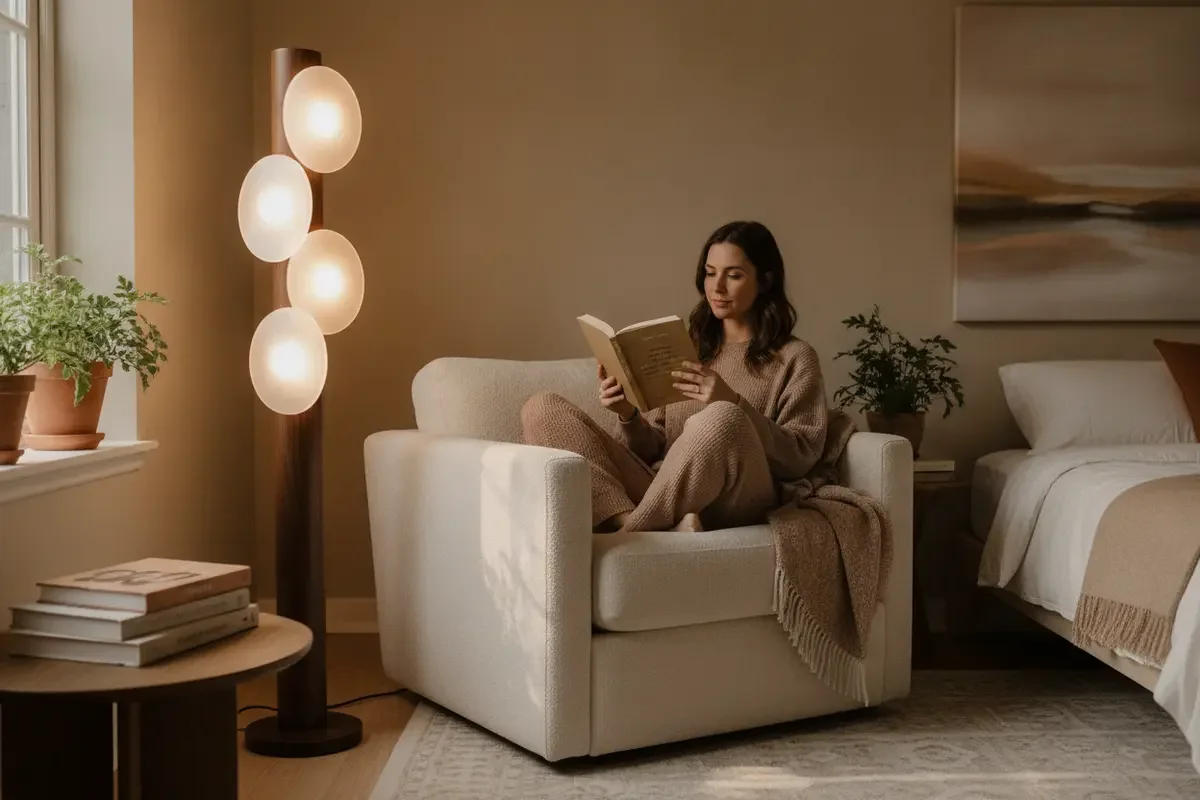

Reader seated in a chair beside a floor lamp with light directed toward a book

What height should a bedroom floor lamp be?

In a bedroom, decide whether the floor lamp is for general atmosphere, a chair, or bedside use. Those are different jobs. A floor lamp beside a reading chair can follow the same seated-eye-line test as a living-room lamp. A lamp near the bed should be evaluated from the mattress and walking path, not from a standing viewpoint alone.For bedside placement, lie down or sit up where you actually read. Check whether the shade is visible from the pillow and whether the light reaches the pages without becoming a glare point. A tall lamp may work well if its light is diffused or directed away from your eyes. A lower fixture may be easier to use beside a low bed, but it should not be so low that it feels disconnected from the rest of the room.Measure the mattress top, headboard, bedside surface, and the lamp’s intended position. Keep the fixture clear of curtains, bedding, and the route between the bed and the door. In a compact room, a sculptural base can occupy more visual space than its height suggests, so look at the full silhouette and not just the top measurement. The bedroom lighting ideas offer a useful comparison for lower-level light around a bed.

How should height change in an open-plan room?

In an open-plan living and dining area, a floor lamp often needs to do two things: provide useful light and help define a zone. Think about how the fixture reads from multiple directions. A lamp tucked beside a sofa may appear balanced from the seating area but look unusually tall or crowded from the dining side.Walk the sightlines before choosing. View the proposed spot from the entry, kitchen, dining table, and main seat. Check that the fixture does not cut across a view you want to keep, such as a window or artwork. Consider nearby ceiling lights and pendant fixtures too. A floor lamp does not need to match their height; it should create a deliberate lower layer without making the room feel visually lopsided.It can help to tape a vertical line on the wall at the proposed height and mark the fixture’s widest point as well. Then step back from the dining area and the living zone. This simple mock-up reveals whether a tall silhouette seems to belong to the seating group or competes with a pendant above the table. In rooms with a low ceiling, a lamp with a visually open top can feel less imposing than a solid shade at a similar height. In a room with high ceilings, a compact lamp may still be the right choice if it creates a focused pool of light beside a chair.In a larger room, a taller or more sculptural lamp can hold its own against open wall space. In a smaller zone, a slender profile or a fixture with a compact shade may feel lighter. These are visual judgments, not fixed formulas. You can compare how different lamp types contribute to a room in our guide to layering light in a living room.

Use the room and task to guide your first measurement

The ranges below are practical starting points for comparing fixtures, not universal standards. They refer to approximate overall heights. Always check a product’s actual dimensions and test the light position against your own furniture.Beside a sofa: About 58 to 70 inches overall. Check the seated eye line, sofa arm and back, and shade position. Go higher for a tall sofa or broad ambient effect, or lower the light source to reduce glare.Reading chair: About 55 to 65 inches overall. Check the page position, shade direction, and chair movement. Prioritize the light reach and angle over overall height.Bedroom chair or bed: About 55 to 68 inches overall. Check mattress height, pillow sightline, and walking clearance. Choose based on whether the lamp serves a chair, bedside reading, or background light.Open-plan seating zone: About 60 to 72 inches overall. Check room sightlines, ceiling height, and surrounding fixtures. Use a taller form where the room can support it visually, and keep smaller zones lighter.These ranges overlap because furniture and lamps vary. A 62-inch fixture might be a good sofa lamp in one home and feel too tall in another. The deciding factor is whether the light lands comfortably, the form relates to its surroundings, and the fixture leaves enough room to move.

What else should you consider besides height?

Height is one part of fit. Shade width, base footprint, material, and the silhouette can change how large a lamp feels. A wide shade can dominate a narrow end table even when the fixture is not especially tall. A narrow stem may read as lighter, while a sculptural body may need more breathing room.Before ordering, make a quick floor plan or use painter’s tape to mark the base width. Measure from the wall, sofa, and any doorway. Then mock up the lamp’s height with a cardboard tube or a stack of boxes; this will not reproduce the design, but it will help reveal scale and sightline issues. If the lamp will be the room’s statement piece, consider how its shape and color relate to the rest of the composition, not just whether it clears the sofa. Our guide to what makes a statement lamp explores that balance.Also check practical details that may affect where the lamp can stand. Locate the nearest outlet and think about cord routing. Confirm the fixture’s electrical compatibility and plug option for your region before purchase. Woaw lamps use integrated LEDs and are designed for 120V–240V power with US, UK, and EU plugs. Consult the product information for the specific fixture you are considering.

How do you choose the right floor lamp height?

Use this short checklist when comparing dimensions:Name the job. Is the lamp for reading, general ambient light, or a sculptural accent?Measure the real setting. Note the seat, arm, back, mattress, and ceiling dimensions around the planned location.Find the light source. Look beyond overall height to the shade opening, bulb, or LED position.Test the sightline. Sit, stand, and view the lamp from the main approaches to the room.Check the footprint. Make sure the base and cord do not obstruct a walkway or door.Revisit the proportions. Ask whether the lamp feels balanced beside the furniture and in the full room.For a product-specific comparison, browse the Woaw floor lamp collection. The collection pairs steel bodies with ceramic shades and integrated LEDs, with sculptural forms that can function as both a light source and a visual accent. Compare each fixture’s listed dimensions with your measurements rather than choosing by silhouette alone.

What safety details matter for a floor lamp?

Set a lamp on a stable, level surface and keep it clear of fabric, curtains, and places where it could be knocked over. Follow the manufacturer’s instructions for assembly, electrical use, and bulb or LED replacement. If you are using an older halogen torchiere rather than an integrated-LED fixture, its heat and guard requirements deserve particular attention. The U.S. Consumer Product Safety Commission’s guidance for halogen torchiere lamps describes a guard and a limit of 300 watts or less for the bulb; consult the CPSC notice on halogen torchiere safety for that specific context.Keep cords out of walking routes, do not pinch them under heavy furniture, and stop using a lamp with damaged wiring or an unstable base. These common-sense checks do not replace the fixture’s instructions. If you are unsure whether a lamp or plug is suitable for your location, check the product details or contact the seller before ordering.Explore the Woaw floor lamp collection

Frequently asked questions

Is a 60-inch floor lamp tall enough beside a sofa?

Often, yes. A 60-inch lamp can work well beside a sofa if the shade sits at a comfortable level from the seat and the light does not shine directly into your eyes. Compare the actual sofa back, seated eye line, and shade position before deciding.

Should a floor lamp shade be above the sofa back?

It often looks balanced when the shade sits at or somewhat above the sofa back, but this is not a strict rule. The best position depends on shade direction, the room’s proportions, and whether you want reading light or a broader ambient glow.

How tall should a floor lamp be for reading?

Start around 55 to 65 inches overall, then test the light at the chair. A useful reading lamp directs light onto the page without creating glare. Shade design, reach, and the reader’s seated position matter as much as the total height.

Can a floor lamp be taller than the sofa?

Yes. A taller lamp can work beside a high-backed sofa or in a room with generous vertical space. Check how it looks from across the room and make sure its light source is comfortable from the seat.

Let the light fit the way you live

The right floor lamp height is the one that suits the seat, task, and sightlines in your actual room. Measure first, check the shade and light-source position, then consider how the full fixture balances the space. A few minutes with a tape measure can make a bold lamp feel like it was always meant to be there.

Previous
Previous

Artistic Table Lamp Guide for Sculptural Accents

Next
Next

Artistic Lighting Fixtures With Real Visual Presence