

Torchiere Floor Lamps: Uplight, Scale, and Placement
Torchiere floor lamps send light upward, where the ceiling can reflect it back into a room as a broad, softer glow. That simple direction changes how the light feels: instead of a bright source aimed at a page or face, you get ambient illumination overhead. If you are comparing torchiere floor lamps with a reading or statement lamp, start with the job the room needs the light to do.
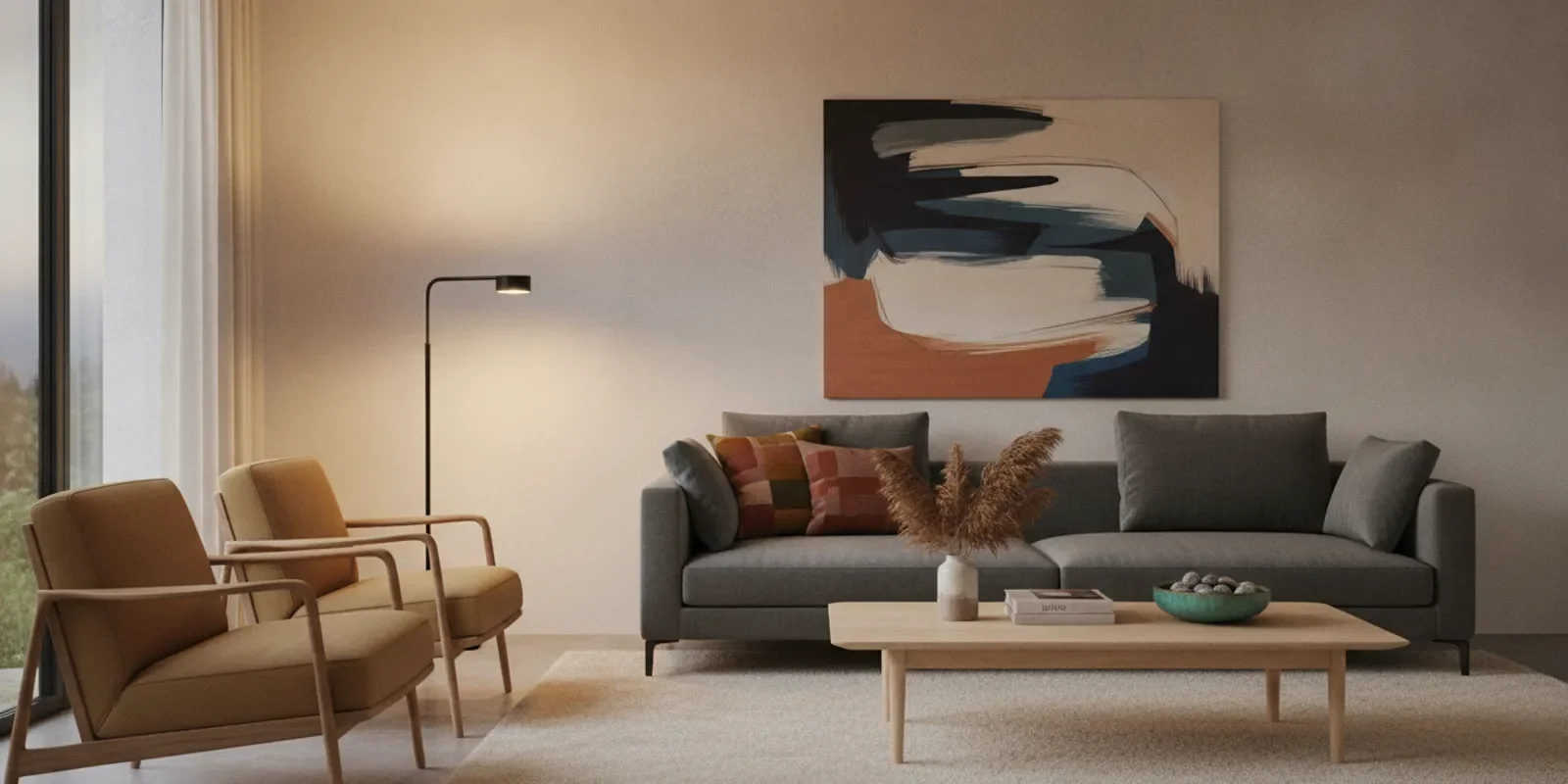
A sculptural floor lamp casting a soft wash of light onto a living room ceiling
What makes torchiere floor lamps different?
A torchiere is an uplight: its shade or light source directs most of its output toward the ceiling. The ceiling then reflects some of that light downward and outward. Rather than making one small pool of brightness, the fixture aims to lift the overall feeling of the room.
The name describes a lighting direction, not a single look. Torchieres can be traditional, spare, sculptural, or highly decorative. Their shared idea is upward light. A floor lamp with a shade aimed down or outward may look just as tall, but it performs a different task.
This distinction matters when you shop. A room can have a beautiful lamp and still feel dim if the lamp's light goes in the wrong direction. Before choosing a silhouette, decide whether you want to brighten the general atmosphere, illuminate a specific activity, or create a visual focal point. A torchiere is most useful when ambient light is the gap.
How do torchiere floor lamps use ceiling bounce?
Ceiling bounce is indirect lighting. Light travels upward, strikes the ceiling, and spreads back into the room. Because the ceiling becomes a large reflecting surface, the glow can feel less concentrated than a bare bulb in direct view. The effect depends on the fixture, its output, the ceiling and the room's surfaces; it is not a guarantee of even illumination.
Think about the ceiling as part of the lighting plan. A light-colored, relatively unobstructed ceiling can return more light into the space than a dark or heavily textured one. A very high ceiling may soften the effect further because light has farther to travel. A low ceiling can make the fixture feel more present, and may bring the bright source closer to a seated person's sightline.
Walls matter too. Light-colored walls help spread ambient light around the room, while dark finishes absorb more of it. If the room has a strong color palette, bounce light can subtly shift in appearance as it reflects from those surfaces. That can be lovely, but it is worth checking the lamp at the time of day and with the other lights you actually use.
For a useful first test, switch on the lamp after dusk and look at the ceiling, the upper walls, and the corners from several places in the room. Is there a visible bright spot that feels harsh? Does the room feel more open, or does the light disappear above your normal field of view? The answers help you judge placement and whether an uplight is the right tool.
Try the same check with the other room lights on and off. With every fixture switched on, an uplight may blend into the general illumination; by itself, it may reveal a distracting hotspot or a shadow behind a tall object. Neither view is the whole story. Most rooms are used under changing conditions, so consider the combination you will actually use rather than judging from one dramatic single-lamp test.
If the ceiling glow feels too concentrated, first consider whether the lamp is too close to a wall or low obstruction. A small move can change where the light lands. If the room still feels uneven, the answer may be another layer placed nearer the activity-not a more powerful uplight. Ceiling bounce is best treated as one ingredient in a lighting plan, not a shortcut to uniform light everywhere.
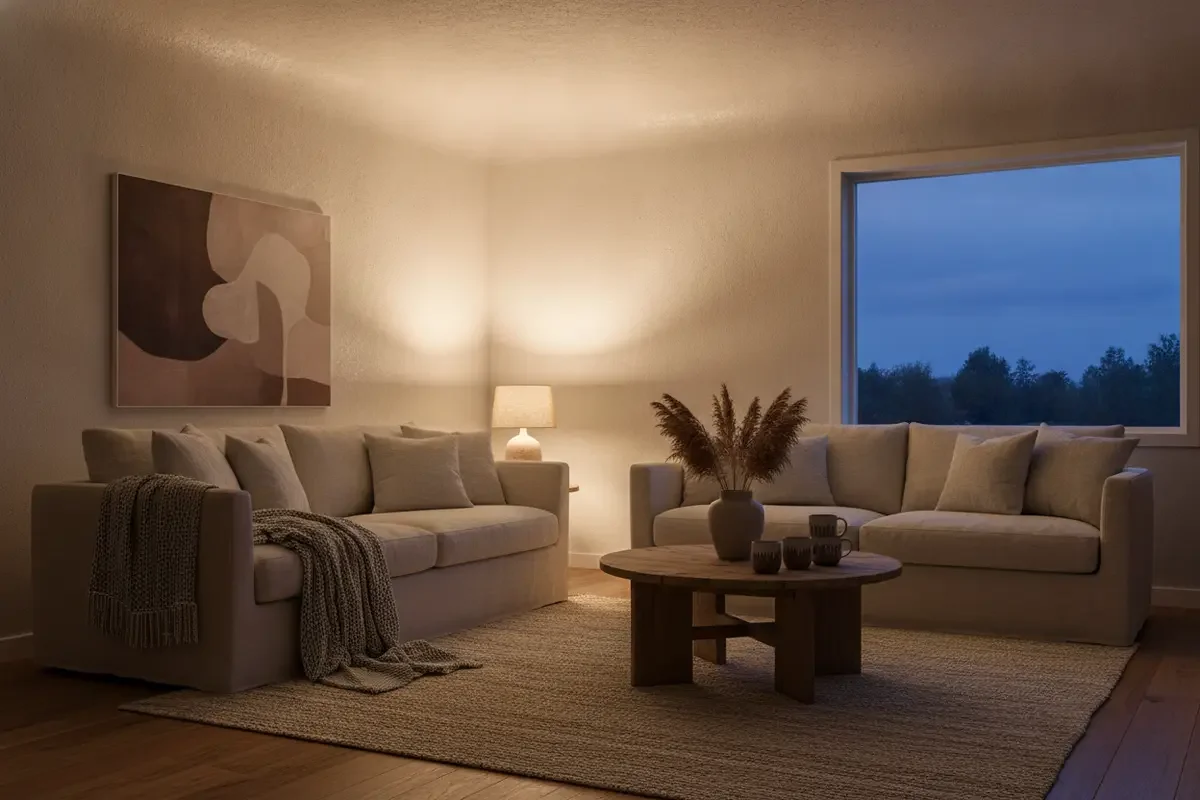
Soft uplight spreading from a floor lamp across a pale living room ceiling
Where do torchiere floor lamps work best?
An uplight can be helpful in a room that needs a gentle ambient layer but has limited ceiling fixtures. It can also add height to a lighting plan without putting a lamp on a table. Consider an open corner or a wall where the ceiling is visible from the main seating area. The goal is to let reflected light contribute to the room rather than hiding the lamp behind an obstacle.
Position is not only about the darkest corner. Stand or sit where you spend time, then notice which parts of the ceiling and upper walls you see. A lamp tucked behind a tall cabinet may throw light onto an area that does little for the room. A spot closer to an open wall can make the bounce more apparent. Keep circulation in mind, too: a floor lamp should not turn a natural walking route into an obstacle course.
In a living room, an uplight can provide background brightness while a table lamp or reading lamp handles close-up tasks. In a bedroom, it may create an ambient layer, but avoid placing a bright source where it shines directly into your eyes while you are lying down. In a home office, it can support the general room light, but it does not replace a task light that illuminates paperwork or a keyboard.
Think through the room's routine as well as its layout. Will the light be on while people watch a screen, host friends, or move between rooms? A lamp beside a television could create a bright reflection or pull attention away from the screen, depending on its angle and the room. Near a conversation area, an uplight can soften the overall atmosphere, while a separate lamp near a chair makes it easier to read. Planning around real activities helps avoid a room that looks considered in a photograph but feels inconvenient every day.
For more ideas about how a floor lamp can anchor a room without doing every lighting job at once, explore this guide to using a floor lamp as a living-room focal point. The useful principle is to give each light a role, then layer those roles rather than asking one fixture to solve everything.
How can you control glare and keep the light comfortable?
Indirect light often reduces the feeling of a bright bulb shining straight at you, but glare can still happen. It may come from seeing the lamp's exposed source, a shiny surface reflecting it, or a concentrated patch on the ceiling in your line of sight. Pay attention to where the source appears from a sofa, a desk, and the room entrance.
Check seated sightlines. Look toward the lamp from the places where you relax. If the source is visible and uncomfortable, try a different position or a fixture that shields it.
Look for reflective surfaces. Glass, polished metal, and glossy finishes can return a bright spot toward your eyes. A small shift in angle or placement may change the reflection.
Balance the room. A single bright uplight in an otherwise dark room can feel stark. Add another gentle light source at a different level rather than simply increasing brightness.
Use controls the fixture actually has. Do not assume a lamp dims or accepts a particular bulb. Confirm those specifications before buying or connecting a dimmer.
Recheck after dark. Daylight can mask glare and unevenness. Evaluate the room under the conditions when you expect to use the lamp.
Glare is personal as well as physical: two people can react differently to the same source. If possible, assess the lamp from the specific seats and angles that matter in your home. For broader layering ideas, see our living-room lighting layer guide.
What height and scale should you look for?
There is no one correct torchiere height for every ceiling. A taller lamp sends light from a higher point, while a shorter one may feel more grounded and put its light source closer to eye level. The right scale depends on the room, the fixture's proportions, ceiling height, nearby furniture, and how the lamp reads from the seats you use.
Start with a quick room check. Measure the ceiling height and note any soffits, beams, shelves, or tall furniture that might block the upward path. Then mark a possible footprint on the floor with a small object or painter's tape. View that spot from across the room and from a seated position. This simple mock-up can reveal whether the lamp will look lost, dominate the corner, or sit comfortably in the composition.
Scale is not just total height. A slender upright silhouette and a broad, sculptural base have different visual weight even if both reach a similar point. Compare the lamp to the large shapes around it, such as a sofa back, bookcase, or artwork. If the lamp is intended to be quiet background lighting, a visually light form may blend in more easily. If you want it to be a design accent, a more expressive form may earn its place even when switched off.
For a room-specific approach to proportions and placement, use this room-by-room lamp styling guide. Treat any measurement as a starting point, not a universal rule: a fixture that feels balanced in a spacious room may feel oversized in a compact one.
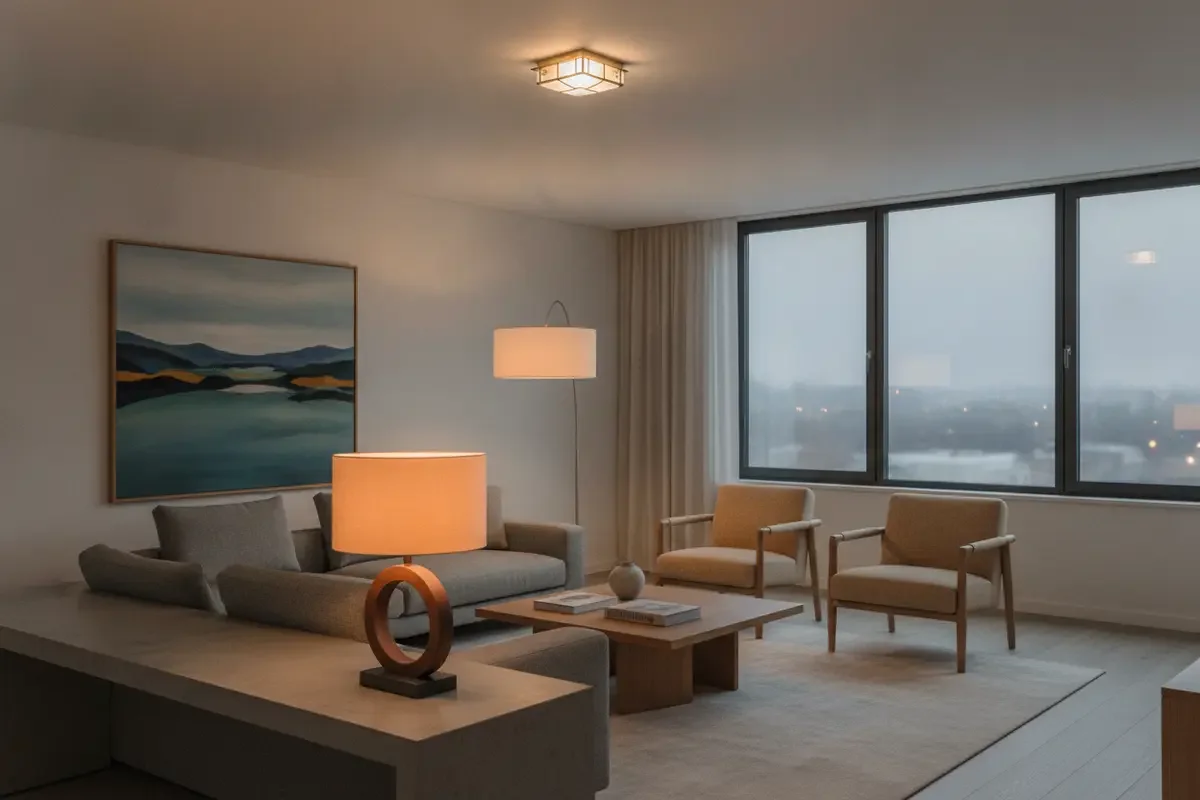
A floor lamp placed beside living-room seating to show its scale against the furniture
When is an uplight better than a reading or statement lamp?
Choose by function first, then by style. A torchiere is designed primarily to send light upward. A reading lamp is meant to direct useful light toward a book or another close task. A statement floor lamp may be selected mainly for its sculptural presence, though it can also provide useful illumination. These categories can overlap in appearance, but do not assume their light falls in the same place.
| Floor-lamp role | Where the light goes | Best fit when you need | What to check |
|---|---|---|---|
| Torchiere / uplight | Primarily upward, for ceiling bounce | A broad ambient layer and a softer sense of overhead brightness | Ceiling height and finish, direct view of the source, and whether the bounce reaches the room |
| Reading / task lamp | Toward a book, chair, or work surface | More focused illumination for a specific activity | Adjustability, shade direction, and whether the light reaches the task without shining in your eyes |
| Statement floor lamp | Varies by design | A sculptural focal point with a clear visual presence | Proportion, silhouette, materials, and its actual light direction |
| Layered combination | Several directions from separate fixtures | Ambient light plus task or accent light | How the fixtures work together, available space, and control of competing glare |
If you mainly read in one chair, prioritize a lamp that directs light to that activity. An uplight may make the room feel brighter, but it does not necessarily put enough light on the page. If the room feels flat overall, an uplight may fill a different need. And if your room needs a strong visual anchor, choose a form that contributes to the composition instead of expecting a purely functional fixture to carry the whole design.
Here is a simple way to choose between them. Imagine the room at the time you use it most. If the whole space feels dim, but your seating area already has a comfortable reading light, an uplight may address the missing ambient layer. If the room feels pleasant until you open a book, focused task lighting is the more direct answer. If both the light and the composition feel unfinished, think about a statement fixture, then check whether its actual light direction also helps. One fixture can contribute to more than one goal, but it is useful to know which goal matters most before you compare designs.
There is no need to force every room into one category. A thoughtful combination might pair general ceiling light with an uplight and a separate reading light; another room may need only a focused fixture and daylight. Choose the fewest fixtures that meet the room's actual needs, leave clear walking paths, and avoid overlapping bright sources that create glare. This functional-first approach lets a sculptural shape feel like a deliberate choice rather than a workaround for an unresolved lighting problem.
Want to compare different floor-lamp silhouettes? Browse the Woaw floor lamp collection. The Woaw range uses steel bodies, ceramic shades, and integrated LEDs; check the individual product information for the specific design and its details rather than assuming every sculptural floor lamp is a torchiere or reading light.
What should you check before choosing one?
A short checklist can prevent a style-led purchase from turning into a mismatch. Begin with how you want the room to feel and where the light needs to go. Then check the physical and electrical details on the product information.
Name the gap. Is the room too dim overall, is a reading spot poorly lit, or does the corner need a stronger visual shape? The answer points toward ambient, task, or statement lighting.
Study the ceiling. Note its height, color, texture, and obstructions. These affect how useful upward light may feel.
Map the sightlines. Check from the sofa, favorite chair, desk, and entry. A lamp that seems comfortable while standing may create glare from a seated position.
Check the footprint. Leave room for walking and make sure the base does not crowd a doorway or the edge of a seating area.
Read the specifications. Confirm the materials, light source, voltage, plug, and any controls. For international purchases, do not infer compatibility from a product's appearance; verify the stated electrical details.
Understand the order timeline. Woaw pieces are pre-ordered and ship within two months, rather than being represented as ready to ship. Review the current pre-order information before placing an order.
For electrical compatibility questions, our universal-voltage lamp guide explains what to look for in stated voltage and plug details. The Woaw collection is specified for universal 120V-240V compatibility and US, UK, and EU plugs, but always confirm the details for the particular item and destination before ordering.
Are there safety details to keep in mind?
Use any floor lamp according to its own instructions, keep it stable, and do not place it where it can be knocked over or obstruct an exit. Keep combustible materials away from hot light sources, and use only the compatible light source and electrical setup specified by the manufacturer. Do not assume that advice for one lamp technology applies to every modern fixture.
Older halogen torchiere floor lamps received particular attention because of fire risks. The U.S. Consumer Product Safety Commission described reported fires and deaths involving halogen torchiere lamps in its safety notice on halogen torchiere floor lamps. That is a specific warning about the lamps addressed in the notice, not a reason to assume every uplight uses halogen or has the same construction. Check the current fixture's instructions and specifications, and follow applicable local electrical guidance.
Do not modify a lamp or bypass a safety feature to change where its light falls. If a cord, plug, or fixture appears damaged, stop using it and seek qualified help rather than improvising a repair. For care or replacement-component questions about Woaw pieces, see the spare-parts information.
Explore sculptural floor lamps
Frequently Asked Questions
Do torchiere lamps make a room bright enough on their own?
Sometimes an uplight contributes useful ambient brightness, but the result depends on the fixture and room. Ceiling height and finish, wall colors, layout, and the lamp's output all affect the bounce. It may not provide enough focused light for reading, detailed work, or every corner, so consider adding task or accent lighting where needed.
Can I use a torchiere as a reading lamp?
Not necessarily. A torchiere directs light upward, while reading usually calls for light aimed at the page or task. You may enjoy the room's overall glow from an uplight, but choose a reading fixture based on where its light is directed and whether it can illuminate your reading position comfortably.
Will an uplight work with a dark ceiling?
It can still send light upward, but a dark surface may reflect less light back into the room than a lighter one. The exact effect varies with the ceiling and fixture. If possible, test the light in the actual space and judge the result from the seats where you spend time.
Are all sculptural floor lamps torchieres?
No. Sculptural describes visual form; torchiere describes an upward lighting direction. A sculptural lamp might send light up, down, outward, or in several directions. Check the product details and imagery to understand the light distribution instead of relying on appearance alone.
Explore sculptural floor lamps
Give the light a job
The best floor lamp is the one that answers a real need in your room. Choose an uplight when ceiling bounce and ambient glow are the priority; choose a task lamp for focused reading, or a sculptural design when the silhouette matters most. Check the scale, sightlines, materials, electrical specifications, and order details, then let the room-not the label-make the final call.
