

Lotus Lamp Guide: Organic Form, Light and Shadow
.
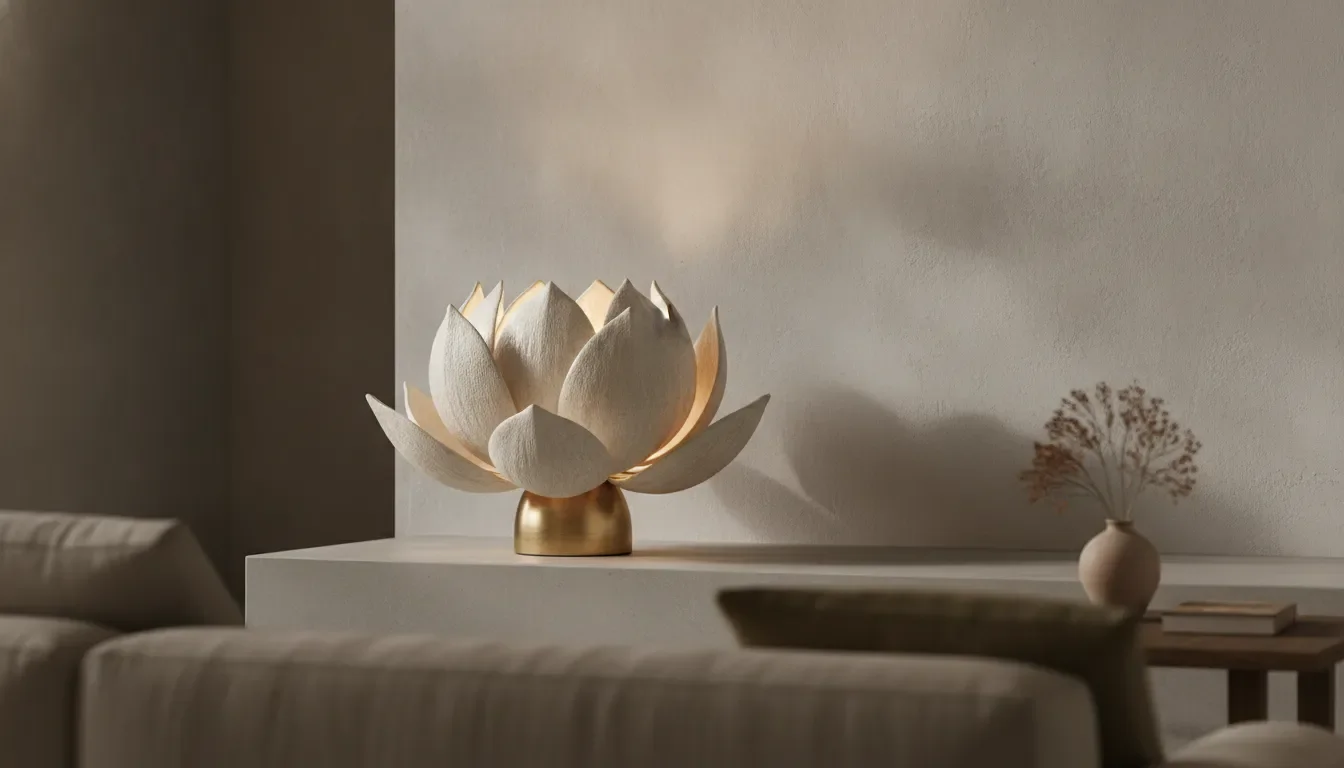
A lamp shaped like an opening flower can change more than the look of a table. Its layered form filters the bulb, sends light through gaps between petal-like surfaces, and creates shadows that move across nearby walls as you change the lamp's position. That makes lotus-inspired lighting feel both useful and quietly theatrical.
Pre-Order sculptural lighting for your space
A lotus lamp is a light fixture whose shade or frame echoes the layered petals of a lotus. It uses shape, material, and openings to create an organic focal point. The term can describe table lamps, floor lamps, hanging lanterns, and highly stylized art objects, so the details matter more than the label.
Explore sculptural lighting as functional art, then keep the rest of this guide practical. First, look closely at how the lotus silhouette is built. Notice why it reads as botanical rather than merely decorative.
What Is a Lotus Lamp, Exactly?
A lotus lamp is a light fixture whose shade, base, or overall silhouette borrows from the lotus flower. The reference can be literal, with layered petals and a stem-like structure, or more abstract, using a broad opening, radial geometry, and a gently blooming profile. That flexibility is why the term describes a family of designs rather than one fixed blueprint. Some pieces read like botanical sculpture in daylight; others reveal the flower most clearly once the light passes through their overlapping forms.
Historically, the best-known examples include Tiffany Studios designs from the early twentieth century. The Metropolitan Museum of Art records a Tiffany Studios Lotus, Pagoda lamp from approximately 1900-1915, made with leaded Favrile glass and patinated bronze. Its shade also reflects Japanese design sources, a detail worth treating as specific historical context rather than a universal explanation for every lotus-inspired fixture. The Saint Louis Art Museum describes another example as a unified floral form. Its faceted, parasol-like shade suggests lotus foliage, while the base evokes the plant's stem and roots.
More than one kind of fixture
A table lotus lamp is usually the most compact interpretation, with the flower resting on a sculptural base and casting a pool of ambient or accent light. A floor version stretches the botanical gesture upward, making the stem and bloom part of the room's vertical composition. A hanging lotus lamp reverses the emphasis: the blossom occupies the ceiling plane, often reading as a floating canopy or pendant sculpture. The Museum of Modern Art lists a Hanging Lotus Lamp from about 1905 by Tiffany Studios, made from glass and patinated bronze.
Lantern interpretations are often lighter and more visibly petal-based. They may use repeated layers that open around a central light source, creating a patterned object even when the material is paper or another thin sheet. In every version, the appeal comes from the tension between structure and softness: a lamp has to hold its shape, direct light, and function safely. Yet the silhouette suggests something grown rather than assembled. That is the small bit of botanical magic that makes the lotus lamp category so enduring.
How Does a Lotus Lamp Shape Light and Shadow?
A lotus lamp earns its atmosphere from the relationship between its light source and its layered form. Petal-like surfaces can overlap, open, or fold back, creating several paths for light instead of one uninterrupted glow. The result depends on the fixture's construction, bulb, surrounding surfaces, and placement, so no single shadow pattern applies to every lotus-inspired design.
Start with the openings between petals. Narrow gaps can interrupt direct light and cast defined shapes nearby, while broader openings allow more light to escape and soften the outline. A shade with several layers may create a near-field pattern with darker overlaps and brighter edges. As the light travels farther from the fixture, those shapes generally spread and lose definition. A nearby wall can reveal the petal structure clearly; a large room with distant surfaces may register the lamp more as a pool of ambient light.
Why does shade geometry matter?
Geometry determines where light is blocked, reflected, and redirected. The Saint Louis Art Museum describes a historical lotus lamp whose faceted, parasol-like shade depicts lotus foliage, while its base suggests the plant's stem and roots. That is more than botanical decoration: each facet changes the angle at which the shade meets the light. In another documented Tiffany Lotus Lamp, the flower form dictates the shade's shape, and jewel-toned cut glass presents different stages of a lotus in bloom. See the museum's account at the Toledo Museum of Art.
Layering also changes the character of the glow. A simple paper model documented by the University of Oregon used two sets of six petals, with metallic silver mylar placed behind one layer. A reflective backing can bounce light back through openings, while an opaque surface absorbs more of it and leaves stronger contrast. The practical lesson is to inspect the lamp from several angles, not only from the front.
How can placement change the effect?
Move the lamp closer to a wall when you want its silhouette and petal openings to participate in the room. Pull it forward when the priority is a wider, less graphic wash. Place it at eye level or slightly below when the shade itself is the focal point. And check that the brightest angle does not create glare in common seating positions. Nearby pale surfaces may make the light feel more expansive; dark or textured surfaces can absorb or break up the pattern.
Think of the fixture as a small lighting instrument. Its scale, shade depth, opening size, and distance from walls work together, so test the position after dark before committing to a final arrangement.
Which Materials Make a Lotus Lamp Feel Botanical?
Material does more than determine how a lotus lamp looks when switched off. It controls how the fixture catches light, how clearly its petal structure reads, and how much maintenance it asks of you. Glass can turn a shade into a glowing flower, while metal gives the stem and base visual weight. Ceramic, paper, and reflective finishes move the idea in different directions, from quiet and tactile to bright and theatrical.
How common lotus lamp materials affect appearance and use
MaterialVisual characterLight and diffusionUpkeep and room effectGlassColorful, jewel-like, and detailed; translucent petals can make the flower form feel alive.Transmits and filters light, with the final effect depending on transparency, color, and texture.Dust is visible on faceted surfaces, but the material creates a luminous focal point in living rooms and entries.Bronze or metalGrounded and architectural, especially when openwork suggests stems, veins, or a structured base.Usually shapes the fixture rather than diffusing light on its own; openings can create defined shadows.Provides visual stability and can suit traditional, industrial, or collected interiors. Finish care varies.CeramicSoftly tactile and substantial, with a calm surface that can be glossy, matte, or hand-finished.Often gives light a gentler, more contained presence than clear glass, depending on the shade design.Easy to read as an object even when unlit. For a deeper comparison, see how ceramic shades shape light.PaperLightweight, airy, and naturally suited to folded or layered petals.Can produce a broad, gentle glow, though thin material may show the bulb or feel less sculptural.Works well in relaxed bedrooms and reading corners; keep it away from moisture and follow the fixture's safety guidance.Reflective surfacesGlossy, dramatic, and slightly playful, with highlights that amplify the petal silhouette.Reflects points of light rather than simply diffusing them, so the effect can feel crisp and energetic.Fingerprints and dust show quickly. Use selectively where a room benefits from sparkle without visual clutter.
Historic examples show how compelling combinations can be. The Metropolitan Museum of Art records a Tiffany Studios lotus design in leaded Favrile glass and patinated bronze, while the Toledo Museum describes another Lotus Lamp using leaded glass, bronze, and mosaic glass. In that kind of construction, the materials divide the work beautifully: colored glass carries the botanical glow, and metal gives the flower a framework that feels rooted rather than flimsy.
For a more understated interpretation, ceramic or paper can keep the silhouette legible without turning every surface into a spectacle. Reflective details are best treated like seasoning: enough to catch the eye, not so much that the lamp competes with every other object in the room. The right choice depends on whether you want your lotus lamp to read as a glowing bloom, a crafted botanical sculpture, or a lighter decorative gesture.
How Should You Style a Lotus Lamp by Room?
A lotus lamp can behave like both a light source and a small piece of sculpture, so placement matters as much as the fixture itself. Start by considering what the shade will frame, how high it sits in the room, and which other lights will share the scene. The goal is an intentional focal point, not a botanical theme park.
Living room
Use a lotus lamp beside a sofa, lounge chair, or console where its silhouette can be seen from more than one angle. On a side table, keep the shade proportional to the tabletop and leave enough breathing room for books, a drink, or a small object. If the lamp has an open or petal-like shade, position it where nearby surfaces can catch its softer shadows without putting glare directly in the main seating sightline. Pair it with ceiling or wall lighting so the lamp contributes atmosphere rather than carrying the entire room.
Bedroom
Bedrooms benefit from a lower, calmer light level. A lotus lamp works well on a nightstand or a nearby dresser when its shade does not sit directly at eye level while you are in bed. Match two lamps only if the room calls for symmetry; one sculptural lamp can be more interesting in a deliberately offset arrangement. Keep a separate, practical reading light available if the lotus shade spreads light broadly or softly.
Entryway
In an entry, use the lamp to establish the room's visual language before guests reach the main living space. A console lamp should leave clear space for keys and daily essentials, while the fixture itself should not block a mirror, artwork, or the view through the doorway. Check the sightline from the front door and from the approach to the room. A distinctive silhouette earns its keep here because it can be appreciated quickly, even when the light is off.
Dining area
Keep the dining table usable. A lotus lamp on a sideboard or nearby cabinet can add a warm secondary glow without interrupting conversation across the table. If the lamp is part of a centerpiece, choose a scale that does not obscure faces or compete with overhead lighting. Multiple light levels help the room shift from everyday meals to a more atmospheric dinner without changing the decor.
Reading corner
Place the lamp slightly behind or beside the chair, with the light directed toward the reading surface rather than the reader's eyes. Add a focused task light when needed, then let the lotus form provide the surrounding mood. For more room-by-room lamp styling ideas, compare the fixture's scale with the chair, side table, and available floor area before committing.
What Should You Check Before Buying a Lotus Lamp?
A beautiful silhouette is only the beginning. Before you buy, check how the lamp will behave in your room, how much care its materials require, and whether the seller can explain what you are actually receiving.
Start with scale and shade openness
Measure the surface or floor area first, then compare it with the lamp's full height and widest point. A lotus-inspired shade can spread farther than its stem-like base suggests. Museum examples show why this matters: one documented lamp measures 26 inches in diameter, while another is 34 inches tall and 28 inches wide. Treat those dimensions as reference points, not universal standards. Leave enough surrounding space for the petals to read clearly and for people to pass without brushing against them.
Look at the shade from seated and standing sightlines. Are the openings generous enough to reveal the bulb, or is the light mostly filtered through layers? Open petals may create a more direct glow, while dense or opaque construction can produce a quieter accent. Ask for photographs with the light switched on, not only polished product shots.
Check the light source and controls
Before ordering, verify these details:
Bulb type, maximum wattage, socket, and whether the light source is replaceable.
Dimmer compatibility and whether an integrated LED has a stated service life or service policy.
Whether the switch is on the cord, on the fixture, or controlled separately.
Whether the lamp will be easy to operate in the room where you plan to use it.
Ask how it is made and maintained
Identify the materials in the petals, shade, frame, and base. Glass, metal, ceramic, paper, and reflective surfaces each respond differently to dust, heat, moisture, and impact. Ask whether cleaning requires a dry cloth, a soft brush, or specialist care. Do not assume a delicate-looking finish can tolerate household sprays. Also check how securely the shade joins the base and whether replacement parts are available.
For vintage or collectible work, request provenance and condition details. A credible seller should explain the maker, age, repairs, wiring status, and any restored or replaced components. For a new piece, ask where it is produced, what is included, and whether assembly is required. If it is made to order or sold on pre-order, confirm the estimated dispatch window, when the production clock starts, and what happens if production takes longer. These checks are part of choosing a sculptural statement lamp, not tedious paperwork after the fun has ended.
Lotus Lamp Ideas Without Making the Room Feel Themed
A lotus lamp can bring an organic silhouette into a room without turning the space into a botanical set. The key is to treat the fixture as one design decision among several, not as a command for every nearby object to match. Let the shade provide the reference to nature, then balance it with clean lines, useful light, and a few materials that keep the room feeling collected.
Keep the rest restrained
For a quiet approach, pair the lamp with a simple table, an unfussy sofa, or a plain bedside surface. Repeat one quality rather than the entire motif. A warm metal accent can echo a stem or base, while a curved vase or softly rounded chair can support the organic shape without adding another flower. Keep artwork abstract or geometric instead of filling the wall with leaves. This gives the lamp room to be noticed while preserving a calm visual rhythm.
Color can work the same way. If the shade is colorful, borrow one small tone in a cushion, book spine, or ceramic object. Do not build a whole palette around it. If the lamp is neutral, let its petal-like profile provide the personality and keep surrounding finishes quiet. The result feels intentional rather than themed, with the fixture acting as a sculptural accent and a practical light source.
Let maximalism have a point of view
A more expressive room can handle pattern, saturated color, and collected objects, but it still benefits from editing. Place the lotus lamp where it can interrupt a field of books, art, or textiles, then give it breathing space around its outline. Pair it with contrasting shapes, such as a rectilinear side table or angular frame, instead of surrounding it with more floral forms. That tension makes the organic silhouette feel designed, not repetitive.
Use a small number of deliberate echoes. A jewel-toned shade might connect to a nearby artwork, while a metallic base can relate to hardware across the room. The supporting pieces do not need to be flower-inspired. They only need to share a color, finish, or sense of play. For more ideas on treating lighting as a focal point, explore sculptural lighting as functional art.
Make a modern room feel softer
In a modern interior, place the lamp against negative space, pale walls, or a low, linear console. The contrast between a petal-like shade and architectural furniture creates interest without adding visual clutter. Choose surrounding objects with distinct silhouettes and leave enough empty surface to show the lamp's proportions. In a bedroom or reading corner, use it as part of a layered scheme alongside ambient or directional light rather than asking one decorative fixture to do every job.
Mr. John's Goods does not sell a documented lotus lamp. Its separate Woaw Lighting Collection is another sculptural-lighting option, defined by bold color and playful forms rather than a lotus shape.
Explore the Woaw Lighting Collection
Pre-Order your sculptural lighting piece
Frequently Asked Questions
What are lotus lamps?
Lotus lamps are lights shaped around the visual language of a lotus flower. Their shades may use overlapping petals, an open blossom, or a layered canopy to soften the light and create botanical shadows. The form can appear in table lamps, floor lamps, hanging fixtures, and lanterns. It describes a design approach rather than one fixed construction or material.
How much does a lotus lamp cost?
There is no single standard price. Cost depends on scale, materials, construction, age, maker, condition, and whether the piece is handmade, vintage, or newly produced. A simple paper or molded shade may sit in a very different category from a hand-crafted glass-and-metal fixture. Compare the materials, dimensions, light source, wiring, and provenance instead of judging by the flower-shaped silhouette alone.
Why are some lotus lamps so expensive?
Some examples involve unusually labor-intensive glasswork, metalwork, or layered shade construction. For context, the Toledo Museum of Art describes one Tiffany lamp made with leaded and mosaic glass. Bronze, and individually blown Favrile shades, with more than a dozen skilled contributors involved: Toledo Museum of Art details. Museum provenance, rarity, condition, and a documented maker can also affect value.
Where can I buy a lotus lantern?
Look at lighting showrooms, design retailers, artisan studios, vintage dealers, and auction platforms, depending on whether you want a new decorative lantern or an authentic older piece. Before buying, confirm the dimensions, bulb or LED specification, electrical compatibility, shade material, cleaning requirements, and return policy. For vintage lighting, ask for clear photos of the wiring, maker marks, repairs, and provenance.
Ready to Explore Sculptural Lighting?
A lotus lamp can bring botanical form and layered shadow into a room, while a different sculptural piece may suit your space better. For a documented option beyond the lotus-lamp guide, explore the Woaw Lighting Collection and review its product details before deciding whether to pre-order.
