

Kitchen Pendant Lighting: A Design-Led Planning Guide
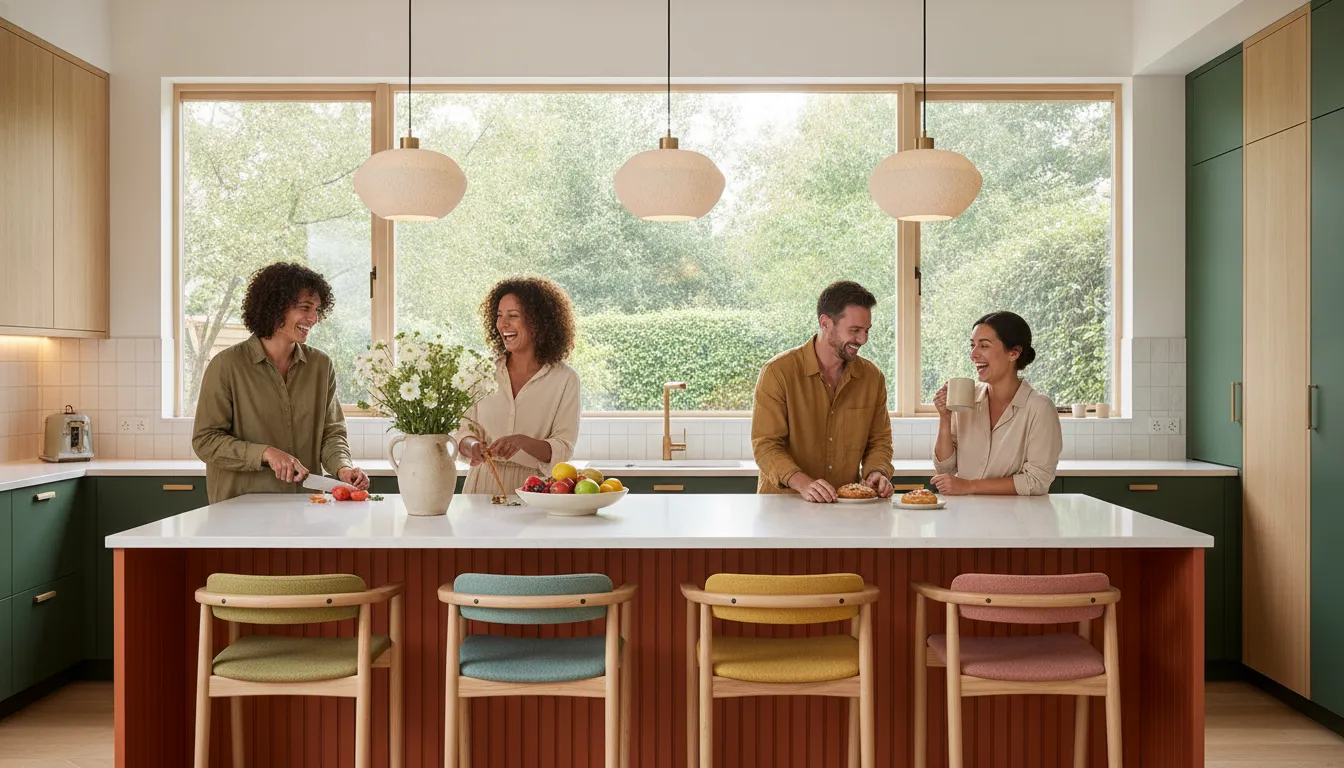
A kitchen island does a lot of work: chopping, serving, homework, midnight snacks, and the occasional dramatic coffee-making performance. The light above it has to keep up. A thoughtful plan balances clear illumination with proportion, comfort, and enough personality to make the kitchen feel finished rather than merely functional.
Explore sculptural lighting for the wider room
Good kitchen pendant lighting should focus light where people work, sit comfortably within the island's scale, and support the room's wider layers. Start with the island dimensions, sightlines, and ceiling height. Then refine hanging height, shade material, and color temperature so the result feels useful by day and welcoming at night.
The best starting point is not a fixture count or a trend report. It is the job you need the light to perform, and how that job fits into the rhythm of the kitchen.
What Job Should Your Kitchen Pendant Lighting Do?
Before choosing a shape, finish, or dramatic cluster, decide what you need the fixture to accomplish. Kitchen pendant lighting can brighten a work surface, establish a visual anchor over the island, or do a little of both. The best choice begins with the island's actual use: Is it where you chop vegetables, serve breakfast, answer emails, host friends, or perform the occasional ambitious baking project? The answer should guide the lighting plan more than a trend photo does.
Task light for work, visual anchor for atmosphere
If the island is a working surface, the pendant should provide focused light where hands, ingredients, and tools are moving. Its placement and shade should help reduce shadows and glare rather than putting the brightest point directly into your eyes. A more opaque shade may direct light downward, while a more open or translucent design can spread the glow. The right balance depends on the fixture, the ceiling, the countertop finish, and how the kitchen is used.
If the island is mainly a gathering place, the pendant may act more like a visual anchor. Here, silhouette, scale, color, and material carry more of the design work. The fixture can define the island as the room's social center, even when another source supplies most of the practical illumination. That is not decorative lighting as an afterthought. A pendant can be a useful object and a piece of room-defining character at the same time.
Why one pendant should not do every lighting job
A kitchen is asked to support too many moods for one fixture to handle everything gracefully. Ambient light provides broad visibility. Task lighting supports specific activities, such as preparing food or reading a recipe. Accent or decorative light draws attention to architectural details, objects, or the fixture itself. A pendant over the island can contribute to the task and decorative layers, but it should not be expected to replace ceiling illumination, under-cabinet light, or useful light near the sink and cooking zone.
This layered approach also gives you control. You can turn the work-focused sources up while cooking, then let the pendant create a softer focal point when dinner is served. For a fuller explanation of how ambient, task, and accent sources work together, read our three-layer lighting guide. The room may be a kitchen, but the principle travels well.
Start with the island, then confirm the installation
Map the island's length, seating, prep zones, and sightlines before deciding on a fixture arrangement. Leave comfortable clearance around the pendant and consider how its size will read from the doorway and adjoining rooms. Dimensions, output, glare, ceiling height, and local electrical requirements vary, so treat general guidance as a starting point and confirm final placement and installation with a qualified electrician.
One final note for clarity: this article discusses pendants as an educational design topic. Mr. John's Goods' documented Woaw range currently consists of sculptural floor and table lamps, not kitchen pendant fixtures. The design lesson still applies: choose lighting that performs its job, then give it enough personality to make the everyday feel considered.
How Many Pendants Fit Over a Kitchen Island?
There is no universal pendant count for an island. The right arrangement depends on the island's length, the diameter of each fixture, the ceiling height, and what you need to see from the surrounding room. The goal is not to fill every inch of ceiling. It is to create an even pool of useful light and a visual rhythm that feels intentional from every angle.
Start with the island, not the fixture
Measure the usable length of the island first, then note where the work surface begins and ends. A long island may comfortably carry several smaller pendants, while a shorter island can feel crowded with the same number. The pendant should illuminate the work zone without visually spilling past the island's edges. If the fixture is broad, fewer pendants may create better balance. If it is narrow and visually light, a closer grouping can feel more natural.
| Island situation | Starting composition | What to check |
|---|---|---|
| Short or narrow island. | One well-scaled pendant or a compact pair. | Clear sightlines and enough room around the fixture. |
| Long island. | A balanced pair or a group of smaller pendants. | Even coverage across the work surface. |
| Island with seating. | A centered arrangement with comfortable visual rhythm. | Conversation, glare, and views across the counter. |
Use this simple sequence before you commit:
- Measure the usable island length and mark its centerline.
- Test the proposed fixture centers with temporary paper circles or tape.
- View the arrangement from the entry, sink, seating, and main work zone.
- Adjust the composition, then confirm wiring and clearances with a qualified electrician.
As a practical design exercise, imagine a centerline running along the island. Place the proposed fixtures along that line and look at the negative space around them. A compact island might suit two modest pendants, while a larger island could support three smaller ones or a pair of more substantial forms. These are starting compositions, not rules. A single sculptural pendant can also work when the island is narrow or when the fixture is meant to act as a deliberate focal point.
Use diameter and spacing together
Pendant diameter and the gap between fixtures should be considered as one decision. Small shades placed too far apart can leave dark or visually empty areas. Large shades placed too close together can compete with one another and make the island feel top-heavy. Leave enough breathing room for each silhouette to read clearly, while keeping the light sources close enough to support the full length of the surface.
Include the island's cabinet edges in your test. The outside pendants should not appear to hang beyond the visual footprint of the cabinetry unless that overscaled look is intentional. Mark the center points with painter's tape, paper circles, or temporary cutouts before installation. Standing in the kitchen, view the arrangement from the entry, the sink, and the main seating position. Sightlines often reveal an imbalance that a floor plan misses.
Let visual balance guide the final count
Odd-number groupings can create a lively rhythm, while pairs often feel calmer and more architectural. Neither approach is automatically better. Consider the island shape, nearby cabinetry, windows, range hood, and dining fixtures. A symmetrical kitchen may reward a centered pair. A longer, more relaxed layout may benefit from three smaller pendants, provided the spacing remains comfortable.
Before finalizing any kitchen pendant lighting plan, check that the fixtures will not interrupt conversation or block a view across the island. Confirm the proposed placement, wiring, and clearances with a qualified electrician. Dimensions, ceiling conditions, fixture output, glare, and local requirements vary, so proportion should lead the design, but professional review should lead the installation.
How High Should Kitchen Pendant Lighting Hang?
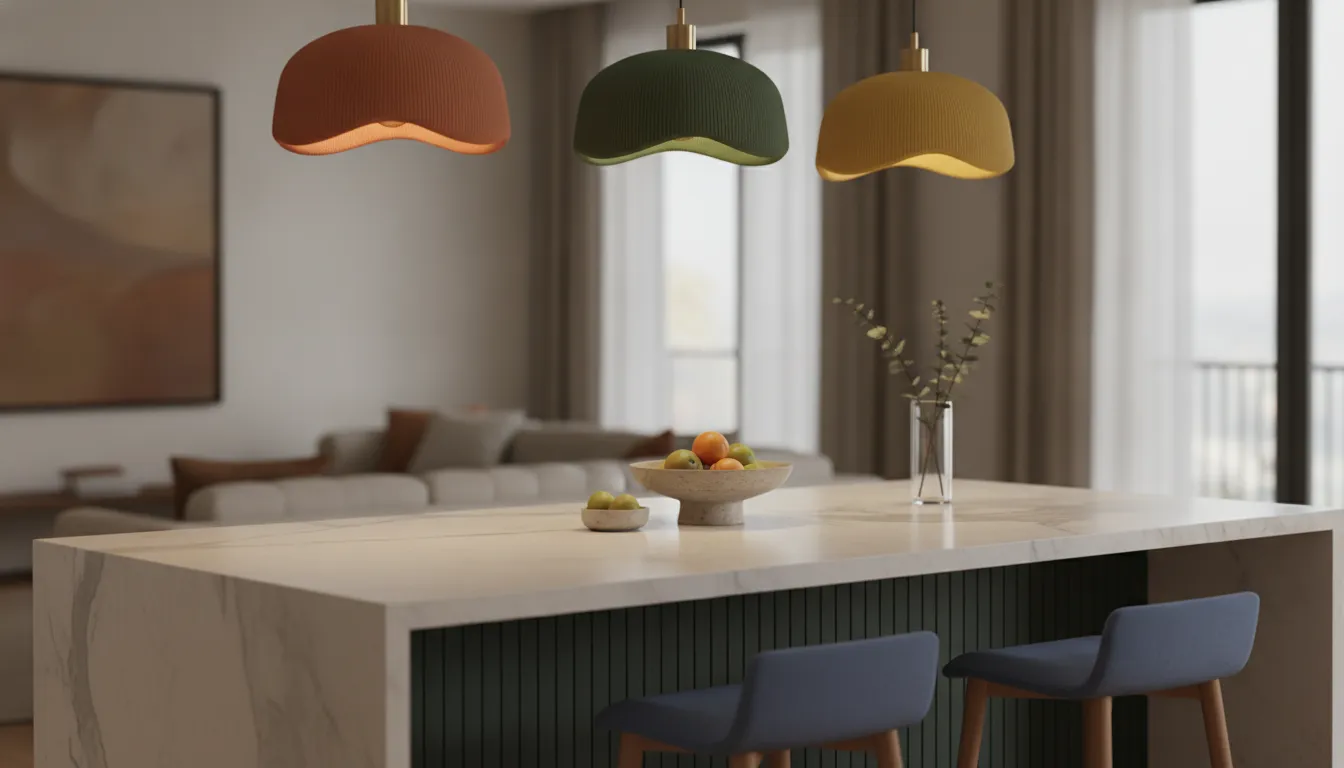
A common starting point is to hang the bottom of a pendant approximately 30 to 36 inches above the countertop. That range gives the fixture enough presence to illuminate the island while preserving a useful visual connection across the room. It is a starting point, not a universal rule or electrical code requirement.
Before fixing the final height, stand at the island from the places where people actually cook, eat, and talk. The right position should support the work surface without turning the fixture into a dangling obstacle or blocking the view into the next room.
Let the fixture and ceiling set the proportion
Fixture size changes how the 30 to 36 inch guideline feels. A compact shade may look lost when hung too high, while a broad or visually heavy pendant can feel crowded at the same measurement. Consider the fixture's overall height, canopy, cord or rod length, and shade profile rather than measuring only from the light source. A larger silhouette may need more breathing room, especially above a narrow island.
Ceiling height matters too. In a room with standard-height ceilings, keeping the lower edge within the usual starting range often creates a comfortable balance. Taller ceilings may allow a longer drop without making the island feel visually disconnected. The goal is proportionality: the pendants should relate to the island below and the room volume above, not simply obey a number.
Check sightlines, glare, and everyday use
Walk through the kitchen before installation and check the view from seated and standing positions. A shade that sits comfortably above the counter can still shine directly into someone's eyes from a nearby stool or living area. Shade opacity, bulb position, and the angle of the light all affect glare. Task lighting should be positioned to reduce shadows and glare on the work surface, rather than adding brightness that makes chopping, reading, or serving less comfortable.
Household use should shape the decision. If the island doubles as a homework desk, breakfast bar, or social hub, preserve clear sightlines at eye level. If tall family members regularly work there, test the proposed height from their viewpoint. Marking the lower edge with removable tape or a temporary string can reveal awkward proportions before any holes are drilled.
Finally, confirm the final placement and installation with a qualified electrician. Kitchen dimensions, ceiling height, fixture output, glare, and local electrical requirements vary, so the 30 to 36 inch range should guide the conversation rather than replace professional judgment. Good lighting design guidance treats the fixture as part of a complete plan, with task, ambient, and accent needs working together.
Choosing Color Temperature, Materials, and Shade Shape
Once proportion and placement feel right, the visual character of a pendant comes from three decisions. Consider how the light feels, what the shade is made of, and how the fixture occupies space. These choices should support the kitchen rather than compete with it. A bold pendant can be the room's little exclamation point, but it still needs to make chopping, serving, and late-night snack assembly comfortable.
Start with the mood of the light
Warm light generally gives a kitchen a softer, more welcoming atmosphere. It can make wood, painted cabinetry, and evening meals feel cozy, especially when the kitchen opens into a living or dining area. Cooler-feeling light can appear crisper and more energetic, which may suit a very contemporary kitchen or a space where visual clarity is the priority. In technical terms, color temperature is measured in Kelvin, with lower values appearing warmer and higher values appearing cooler. The choice also affects how materials and colors are perceived, so it is worth checking the light in the actual room rather than trusting a product photograph alone. Color temperature guidance from the Interior Design Institute offers useful background.
Consistency matters more than chasing a supposedly perfect setting. If the kitchen flows directly into a dining room, hallway, or family room, a dramatically different light quality can make the transition feel accidental. Look at the existing bulbs and fixed fixtures nearby, then choose a pendant that belongs to the same visual conversation. Exact bulb and fixture specifications vary, and integrated LED products may not offer the same choices as replaceable-bulb fixtures, so confirm the details before ordering.
Let the shade manage glare and atmosphere
Shade opacity changes both comfort and drama. An opaque shade directs light toward a selected area and can hide the brightest part of the source from normal sightlines. A translucent material spreads a gentler glow through the shade, while clear glass allows more of the light source to remain visible. None is automatically better. The right choice depends on whether the pendant's main job is focused illumination, soft atmosphere, or a balance of both.
Think about glare from the seats around the island, not only the view from the kitchen doorway. A shade that looks beautiful from across the room may feel harsh when someone sits beneath it or looks toward it while talking. Surface texture, interior color, and the position of the bulb all influence that experience. For a closer look at how two familiar shade materials change diffusion and character, compare ceramic and glass shades before making a final choice.
Match silhouette and finish to the room
Silhouette determines visual weight. A broad dome can give an island a grounded, architectural presence, while a narrow cylinder feels lighter and more vertical. A cluster of smaller forms creates rhythm; one sculptural form creates a clear focal point. Match that outline to the island, cabinetry, and ceiling height, and leave enough visual breathing room for the fixture to feel intentional rather than crowded.
Finish is the final personality cue. Black or deep tones can sharpen a pale kitchen, metallic finishes can echo hardware, and color can bring a playful note to an otherwise restrained scheme. Material character matters just as much as the hue: ceramic can feel tactile and substantial, while glass often reads as airy and luminous. Exact electrical, bulb, and fixture specifications vary by product. Confirm those details, along with final placement and installation requirements, with a qualified electrician.
How Do Pendants Fit Into a Layered Kitchen Lighting Plan?
A pendant can give a kitchen island a clear point of focus, but it should not be asked to illuminate every surface in the room. A more comfortable plan gives each source a job. Ambient light establishes general visibility. Task light supports chopping and reading recipes. Accent light adds depth or draws attention to a finish, artwork, plant, or sculptural fixture. The result feels intentional rather than aggressively bright.
That is the basic logic behind this three-layer lighting guide, adapted for a kitchen where work surfaces, circulation paths, and sightlines all compete for attention.
Let the pendants anchor the island
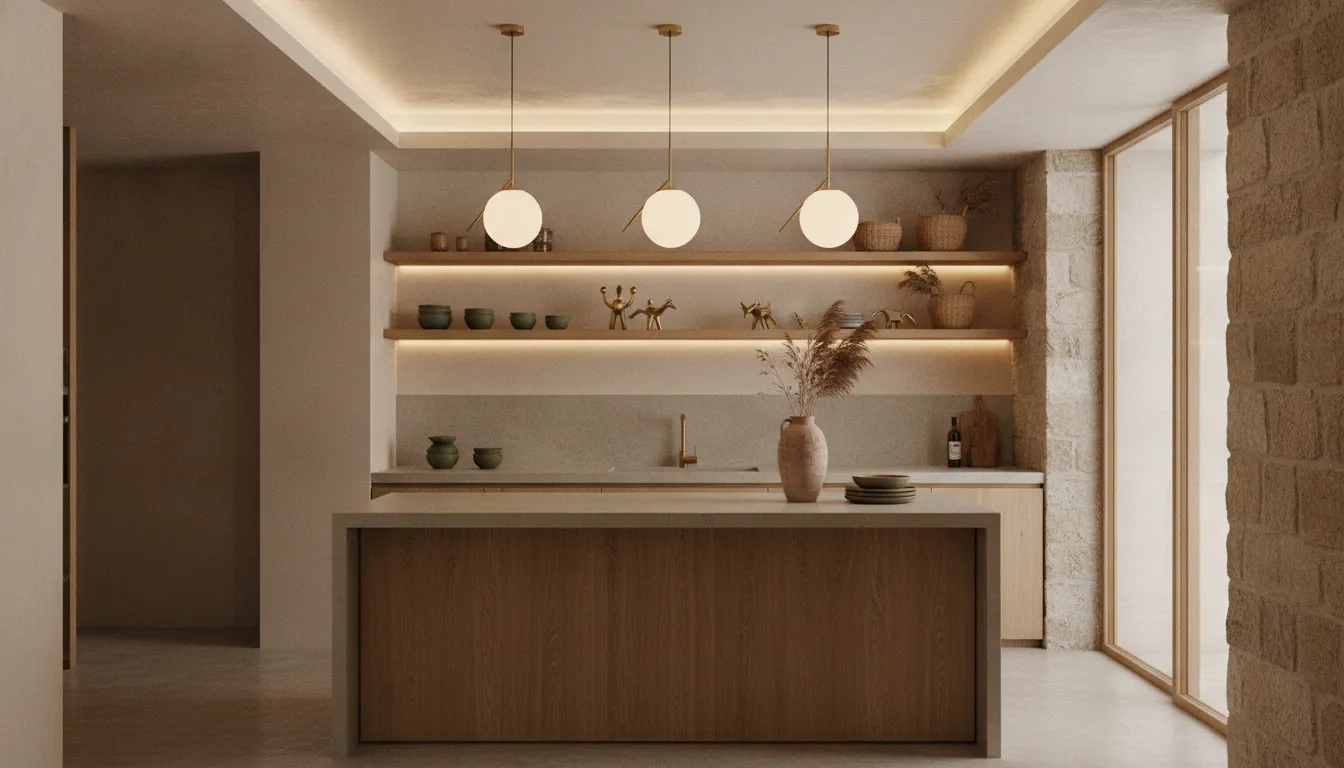
Over an island, pendants commonly sit in the task-lighting and decorative categories at once. Their focused glow can support food preparation or casual meals, while their shape and finish give the center of the kitchen visual weight. Choose the number, scale, and placement around the island's proportions rather than treating a standard fixture count as a rule. Fixture diameter, island length, ceiling height, cabinet edges, and the views through the room all affect the right arrangement.
Shade design matters here. An opaque shade can control the view of the light source and make the island feel grounded, while a more open or translucent shade can spread light more broadly. Either choice can work, but test the likely glare from seated and standing positions. The goal is useful brightness without a spotlight in your eyes every time you reach for the salt.
Use ceiling and under-cabinet sources for support
Ambient ceiling lighting fills the spaces the pendants cannot reach, including circulation routes and the area beyond the island. It also prevents the island from becoming a bright stage surrounded by shadow. Under-cabinet lighting provides a closer task source at counters and backsplashes, where overhead pendants may cast shadows from your body onto the worktop. Position task lighting to reduce both glare and shadows, then choose output and controls that suit how the kitchen is actually used.
Dimmers or separate switching make the layers more flexible. You might use ambient and under-cabinet light while preparing dinner, lower the task layer during a meal, and leave a restrained accent or pendant glow on when the kitchen becomes part of the evening's backdrop. Final electrical placement and installation should be confirmed with a qualified electrician, since local requirements and existing wiring vary.
Carry the composition into adjacent rooms
In an open-plan home, the kitchen should connect visually to the dining or living area without becoming a matching-fixture parade. Repeat one or two cues, such as a finish, color note, material, or general silhouette, while allowing each zone to have a different lighting role. The same principle appears in this guide to mix lamps in open-plan spaces: coordinate the visual language, then vary height and purpose.
A floor lamp near the dining area, a table lamp on a console, or a soft accent source near a far wall can extend the kitchen's layered rhythm beyond the island. The pendant remains the anchor, not the entire plot. That balance gives the room practical illumination, visual breathing room, and a little personality after the dishes are done.
Are Kitchen Pendant Lights Still in Style?
Yes. Kitchen pendant lights remain a useful and expressive choice because their appeal does not depend on one short-lived look. A well-chosen pendant can define an island, focus light where people prep and gather, and give the room a clear visual anchor. The lasting choice is not chasing the newest finish. It is selecting a fixture that fits the room's proportions, supports the way you use the space, and feels like an intentional part of the architecture.
Design for proportion before popularity
Scale is what makes a pendant feel considered rather than randomly added. Look at the island length, the fixture's diameter, the ceiling height, and the sightlines between the kitchen and adjoining rooms. A very small shade can disappear above a generous island, while an oversized form can crowd the room and interrupt conversation. Leave comfortable clearance between fixtures and from nearby cabinet edges, then adjust the arrangement to preserve an open view across the kitchen.
Finish matters, but it should support the room's larger story. Black, brass, glass, ceramic, woven fibers, and painted color can all work when they relate to existing hardware, cabinetry, worktops, or furniture. The shade's opacity and shape also affect glare and diffusion, not just appearance. A translucent or open shade may create a lighter presence, while a more solid shade gives the island stronger visual weight. In other words, style and function are having the same conversation.
Build a lighting plan that can outlast a trend cycle
Pendants are most convincing when they are one layer of a coherent plan. Ambient lighting provides broad visibility, task lighting supports work areas, and accent or decorative lighting adds focus and personality. A pendant should not be expected to do every job alone, especially if it creates glare or leaves counters and walkways unevenly lit. Consider how its light temperature and intensity relate to nearby rooms so the kitchen feels connected rather than like a separate stage set.
This design-led perspective is central to Mr. John's Goods. The brand's "Simple Things. Big Vibes." philosophy treats lighting as both practical equipment and a sculptural expression of personality, informed by Nader Gammas' lighting-design background. For more ideas on coordinating fixtures across a home, explore this room-by-room lamp styling guide.
So, are kitchen pendant lights still in style? The better question is whether the pendant earns its place. When the proportion, finish, shade character, and lighting role make sense together, it can feel personal and enduring long after a trend has moved on.
Explore sculptural lighting for the rest of your home
Frequently Asked Questions
How high should pendant lights hang over a kitchen island?
A useful starting point is about 30 to 36 inches above the countertop, measured to the bottom of the fixture. Adjust from there for pendant size, ceiling height, sightlines, and the people using the island. The range is a planning guideline, not a universal code requirement, so confirm the final placement and installation with a qualified electrician.
How many pendants should go over a kitchen island?
There is no single correct number. Let the island length, pendant diameter, ceiling height, and surrounding cabinetry guide the layout. Leave comfortable breathing room between fixtures and from the island edges, then check the view from nearby seating and standing work areas. A smaller island may suit one well-scaled pendant, while a longer island can support a balanced pair or group.
What color temperature is best for kitchen pendant lighting?
Warm light usually creates a softer, more welcoming mood, while neutral light can feel crisper and more functional. Color temperature is measured in Kelvin, and lower values look warmer than higher values. Choose a setting that works with adjacent rooms and your countertop materials, then verify the fixture or bulb specification before buying. Personal preference matters, but consistency matters too.
Can pendant lights provide all the lighting a kitchen needs?
Usually, they work best as one layer rather than the entire plan. Pendants can focus light over an island and add a strong visual anchor, while ambient lighting supports general visibility and under-cabinet or other task lighting helps reduce shadows on work surfaces. Accent or decorative sources can add depth and personality. Final output and placement should be checked for glare and safe installation.
Ready to Explore Sculptural Lighting?
Once your kitchen plan feels clear, bring the same attention to proportion, material, and mood to the rest of your home. Explore the Woaw Lighting Collection for sculptural floor and table lamps that can complement a thoughtfully layered space. To get started, browse the collection and consider where a distinctive silhouette could add personality without competing with your kitchen's working light.
