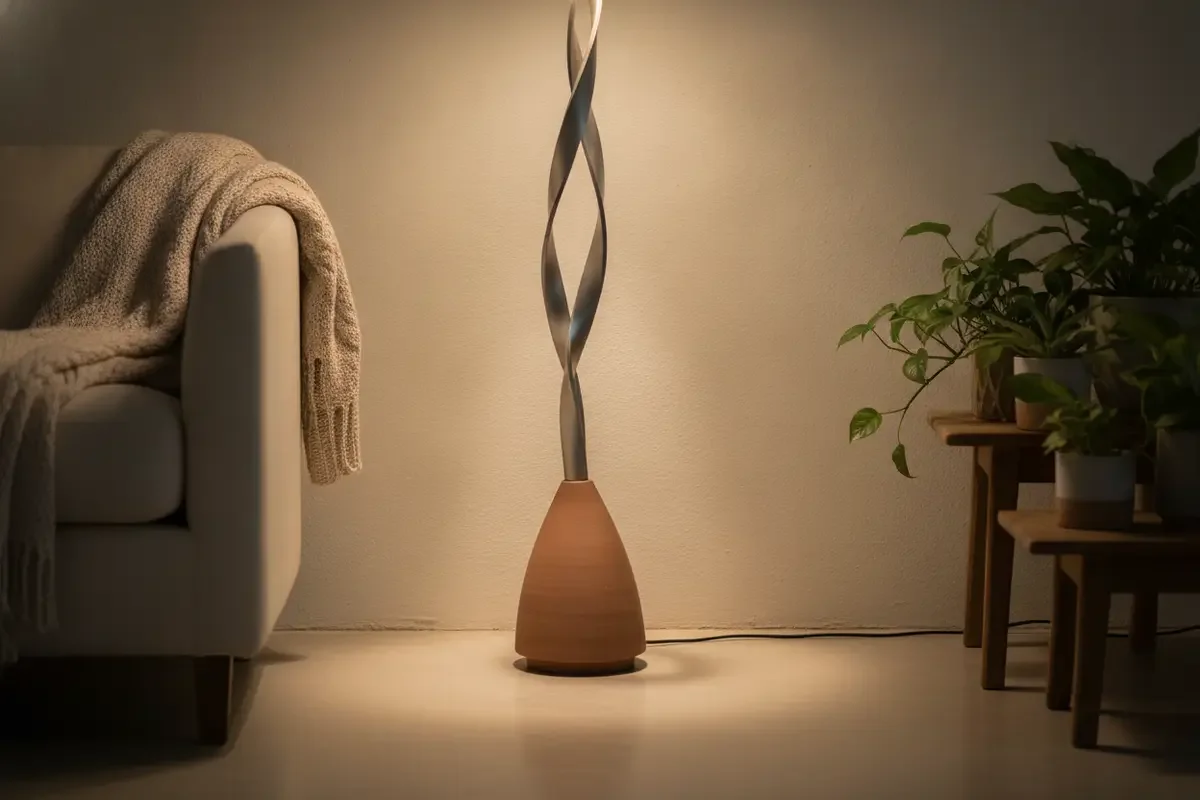
Integrated LED Floor Lamp Buying Guide: What to Know
An integrated LED floor lamp combines its light source with the fixture instead of using a standard replaceable bulb. That can make for a considered, unified design, but it also changes what you should check before you buy. Look beyond the silhouette: confirm the light quality, wattage information, voltage, care guidance, and what happens if the LED needs service. A few careful questions now can save guesswork later.
Contact us with your ordering questions
What does an integrated LED floor lamp mean?
With a conventional lamp, you select a bulb that fits the socket. An integrated LED fixture has LED components built into the lamp's design. The light source and the fixture are planned together, rather than treating the bulb as a separate, routinely replaceable part.
That design can allow the lamp to keep a clean outline and make its illumination part of the overall concept. It can also mean you cannot solve a lighting issue by simply unscrewing one bulb and putting in another. The exact construction and service options vary by product, so do not assume that all integrated LED lamps are sealed, repairable, dimmable, or alike in their expected lifespan. Check the product information and ask the maker about the specific model.
The main convenience is that you do not need to select a separate bulb for the intended light source. The design can also coordinate the source with the fixture's proportions. The trade-off is less freedom to change bulb type later, and possibly a different route to service if a component stops working. Think about which matters more in your home: a ready-designed lighting arrangement or the flexibility to choose and replace a conventional bulb yourself. There is no universal winner; the best choice depends on your priorities and on what the maker confirms about the particular lamp.
If you are comparing an integrated LED lamp with a fixture that accepts replaceable bulbs, compare the whole setup rather than one feature. Check what each product actually specifies for light output, color, controls, electrical fit, and maintenance. Consider the cost and availability of compatible bulbs for the replaceable-bulb option, but do not assume that bulb choice automatically gives you better light or lower upkeep. A fair comparison is based on real product details and the way you expect to use the lamp.
At Mr. John's Goods, the Woaw lighting collection uses integrated LEDs in sculptural fixtures with steel bodies and ceramic shades. The collection reimagines candelabra forms with bold color blocking. That answers what kind of light source the products use; it does not by itself tell you the fixture's wattage, color temperature, brightness, dimming behavior, or LED service options. Verify any details that matter to your room before ordering.
How should you choose an integrated LED floor lamp?
Start with the job the lamp needs to do. Is it meant to add a pool of light beside a chair, contribute to the room's general ambience, or act as a sculptural focal point? A single fixture may do more than one of these things, but its placement and light distribution will affect the result. Match the lamp to the intended use rather than buying on appearance alone.
Decide what the light needs to reach
For a reading corner, think about where the light will land while you are seated. For an open area, consider whether you want a local glow or light that reaches farther into the room. Notice the shade direction and the lamp's visible form in product photography, then ask for clarification if the page does not show how the light is directed. Do not treat a room photograph as a guarantee of a particular brightness or beam spread.
It helps to sketch a simple plan. Mark the chair, sofa, or other intended spot, and note nearby windows and existing lamps. Think through whether the fixture might be blocked by furniture or create glare from the usual viewing position. This small exercise makes your questions specific: instead of asking whether a lamp is “bright,” ask how its light is intended to be used and what verified output information is available.
Think about the hours when you will use the lamp most. Daylight can make a corner feel different in the afternoon than it does at night, while existing ceiling or wall lights can change the overall effect. Decide whether the floor lamp should stand out as a distinct pool of light or blend into a layered scheme. If possible, note the color of nearby walls and furnishings; pale surfaces and dark surfaces can make the same illumination feel different in a room. These observations do not replace product specifications, but they help you judge which specifications to request.
Keep the intended sightline in mind, too. A fixture may be seen from the entrance, from a sofa, or from a dining area across the room. Consider whether you want its sculptural structure to be the first thing noticed or whether you want a quieter presence. A quick phone photo of the planned spot can help you compare the room's shapes and colors with the lamp's product images. Use it as a visual planning aid, not as proof of exact scale or light output.
Consider the lamp as an object, too
A floor lamp is visible when switched off, so check its shape and color against the room. A sculptural, toy-inspired form can bring a lively note to an otherwise restrained scheme. If the room already has strong patterns or several statement objects, use the lamp's colors as a cue for what to simplify nearby. If the room is neutral, a bold fixture can become the deliberate point of focus.
Measure the intended area before ordering. Check the listed overall dimensions, base footprint, and cable details if provided; do not estimate from a cropped product image. Leave enough room to walk around the fixture and avoid placing it where it is likely to be knocked. The right visual scale depends on the room and surrounding furniture, so a measurement is more useful than a broad “small” or “large” label.
What do wattage and brightness tell you?
Wattage describes electrical power, not brightness by itself. With LEDs, two lamps using the same wattage can produce different amounts of light. When a product page lists a lumen value, that is a more direct measure of the light output than wattage alone. If you are choosing a lamp for a task, ask for the relevant output and, where available, information about how the light is distributed.
Do not guess a lamp's wattage from its size, number of visible elements, or the words “integrated LED.” Those clues do not establish the electrical rating. Check the current product listing, label, or manufacturer information for the exact fixture. If wattage is not shown and it matters for your use, ask before you place an order. The same goes for dimming: never assume that an integrated LED lamp works with a dimmer unless that capability is clearly confirmed.
Light color matters as much as quantity. Color temperature is commonly expressed in kelvins (K): lower values generally look warmer, while higher values tend to look cooler. Color rendering information, when supplied, can help explain how colors appear under the light. These specifications are model-specific. If you want a warm evening feel, accurate color for artwork, or comfortable reading light, ask for the stated specifications rather than relying only on a styled room photo.
Also consider the other light sources in the room. A floor lamp can complement ceiling lights, table lamps, or daylight; it does not have to carry every lighting job. For broader planning ideas, see our guide to layering light in a living room. The practical aim is a comfortable combination of sources, not one fixture expected to do everything.
What should you compare before choosing?
Use a short comparison to separate confirmed information from assumptions. Fill in the details from the live product page or a direct answer from the brand. If a specification is missing, mark it “not confirmed” rather than filling in a likely-sounding number.
Comparison checklist
Light output: Published lumen information and how light is directed. Why it matters: Helps assess whether the lamp suits ambience, a reading area, or another intended use.
Wattage: Exact rating for the particular model. Why it matters: Do not infer it from appearance or LED type.
Light color: Kelvin and color-rendering details, if supplied. Why it matters: Sets expectations for warmth and how colors look.
Controls: On/off method and confirmed dimming compatibility. Why it matters: Prevents assumptions about switches or dimmers.
Electrical fit: Voltage range and plug supplied for your destination. Why it matters: Important when buying for use across regions.
Care and service: Cleaning method, warranty terms, and LED service options. Why it matters: Clarifies upkeep and what to do if a fault occurs.
Ordering: Production and delivery timing, payment and return terms. Why it matters: Sets expectations before committing to a made-to-order purchase.
For a quick product comparison, review the current Woaw floor lamp collection and its model details. The exact listed specifications are the ones to rely on. Prices and product information can change, so refer to the current page rather than a saved screenshot or an older mention elsewhere.
A useful way to compare is to separate must-haves from preferences. A confirmed voltage and plug option may be essential for an international order; a particular silhouette or color may be a style preference. Write down both groups before browsing. Then compare the same details across the models you are considering instead of letting one attractive feature distract from a missing practical answer.
For example, if you want a reading light, put light direction, output information, controls, and placement near the top of your list. If you mainly want a sculptural accent, proportions, finish, and how the fixture relates to existing colors may lead. In either case, record unknown details as questions. A comparison is only useful when each entry is based on a current listing or a clear answer, not an assumption carried over from another lamp.
How do you check voltage and plug compatibility?
Voltage is an essential check when a lamp will be used in a different country from where it was purchased. A plug shape and an electrical voltage rating are separate details: a plug adapter changes the shape of the connection, not the supply voltage. Before ordering internationally, confirm the voltage range for the specific product and which regional plug is supplied. Do not assume that a familiar plug means the lamp is suitable for every electrical system.
The Woaw collection is described as compatible with 120V–240V and available with US, UK, and EU plug options. Confirm the option shown for the item and destination at the point of ordering. If you are unsure about your local supply or connection, seek advice from a qualified electrical professional. For more context on this topic, read our universal-voltage lamp guide. Although that guide discusses table lamps, use the product-specific floor-lamp listing for the final rating and plug confirmation.integrated-led-floor-lamp-inline-1.webp
What should you ask before ordering?
Electrical safety guidance depends on the product and where it is used. Follow the supplied instructions and product labeling, and consult the relevant authority for general consumer safety information. The U.S. Consumer Product Safety Commission provides consumer product safety resources; it is not a substitute for the specific lamp's instructions or local electrical advice.
What maintenance does an integrated LED floor lamp need?
Routine care is usually about keeping the fixture clean and following its instructions, not changing a bulb on a schedule. Dust can dull the appearance of a lamp and shade, so use only a cleaning method permitted by the maker. Before cleaning, switch off and unplug the lamp if its instructions direct you to do so, and let it cool if it has been operating. Avoid getting moisture into electrical parts and do not use abrasive products unless the care guidance expressly allows them.
Steel and ceramic have different surfaces and may need different handling. Use a soft, suitable cloth and follow the care directions for the actual finish and shade. Avoid assuming that a ceramic shade can be soaked or that a painted or finished metal body can take a strong cleaner. The product's care instructions take priority over general tips. If you cannot find them, ask before using a cleaning product.
Because the LEDs are integrated, first check the warranty and service information rather than planning to replace a standard bulb. Ask whether LED components can be serviced, who should inspect a fault, and what support is available after delivery. Do not open the fixture or attempt electrical repairs unless the instructions and your qualifications make that appropriate. If a lamp flickers, stops working, or has damaged wiring, discontinue use and contact the seller or a qualified professional for guidance.
For owners looking for a specific replacement component, the spare parts page is a useful starting point. A spare-parts listing does not establish that an LED module is user-replaceable; ask about the exact part and model. Keeping your order details and product information makes support conversations easier.
What should you ask before ordering?
Make sure you can answer the following before you commit:
Which model and dimensions am I ordering? Confirm the exact design and check its height and footprint against your planned location.
What are the verified electrical details? Ask for wattage, voltage range, supplied plug, and any other rating you need for your destination.
What light will it provide? Ask for lumen output, color temperature, and dimming information if those details matter to your use.
What happens if the LED needs attention? Confirm warranty coverage, service steps, and whether any components are replaceable by the customer or must be handled by a professional.
When should I expect it? Check production and shipping estimates, the payment arrangement, and the return policy before ordering.
Woaw lights are made to order, with a production window of about 60 days and full payment upfront before manufacturing begins. They are not ready-to-ship products. Read the current details on the pre-order information page, including timing and terms, before placing an order. If a particular deadline matters, ask whether the estimated schedule suits it rather than assuming a delivery date.
For questions about how the collection is designed, you can also learn more about the brand and its design approach. Keep the practical questions in view alongside the aesthetics: a beautiful lamp should also make sense for the room, the local electrical setup, and the way you plan to use it.
Is an integrated LED floor lamp right for your home?
It can be a good fit if you value a fixture whose form and light source are designed as one, and if the listed light characteristics suit your intended use. It may be less straightforward if you expect to swap bulbs yourself or require a specific brightness, color, or dimming setup that the product information does not confirm. The distinction is not a verdict on one type of lamp; it is a reminder to compare the features that matter to you.
Before you decide, check the model's dimensions, verified electrical specifications, care and service information, and order timing. If one of those details is missing, get an answer before checkout. Thoughtful questions help a sculptural lamp earn its place in a room, on the merits of both its design and its practical fit.
Explore the Woaw floor lamp collection
Frequently asked questions
Can you replace the LED in an integrated LED floor lamp?
It depends on the design. Integrated describes how the LED is incorporated into the fixture, but it does not tell you whether a component is user-replaceable or serviceable. Check the model's care, warranty, and service information, and ask the maker before attempting any repair.
Does wattage tell me how bright a floor lamp will be?
Not on its own. Wattage indicates electrical power, while lumens describe light output. Compare published lumen information and light distribution where available, and ask for the exact product details if they are not listed.
Are all integrated LED floor lamps dimmable?
No assumption is safe here. Dimming depends on the particular fixture and compatible controls. Use only dimming information confirmed for the specific model and follow its instructions.
Can I use a universal-voltage lamp when I travel?
A stated voltage range may cover more than one electrical system, but you still need the correct plug connection and must follow the product instructions. Confirm the product's rating and the plug option for your destination; an adapter does not change voltage.
Choose with the full picture in hand: a lamp's look matters, and so do the specifications, service expectations, and delivery details that make it work for your home.