

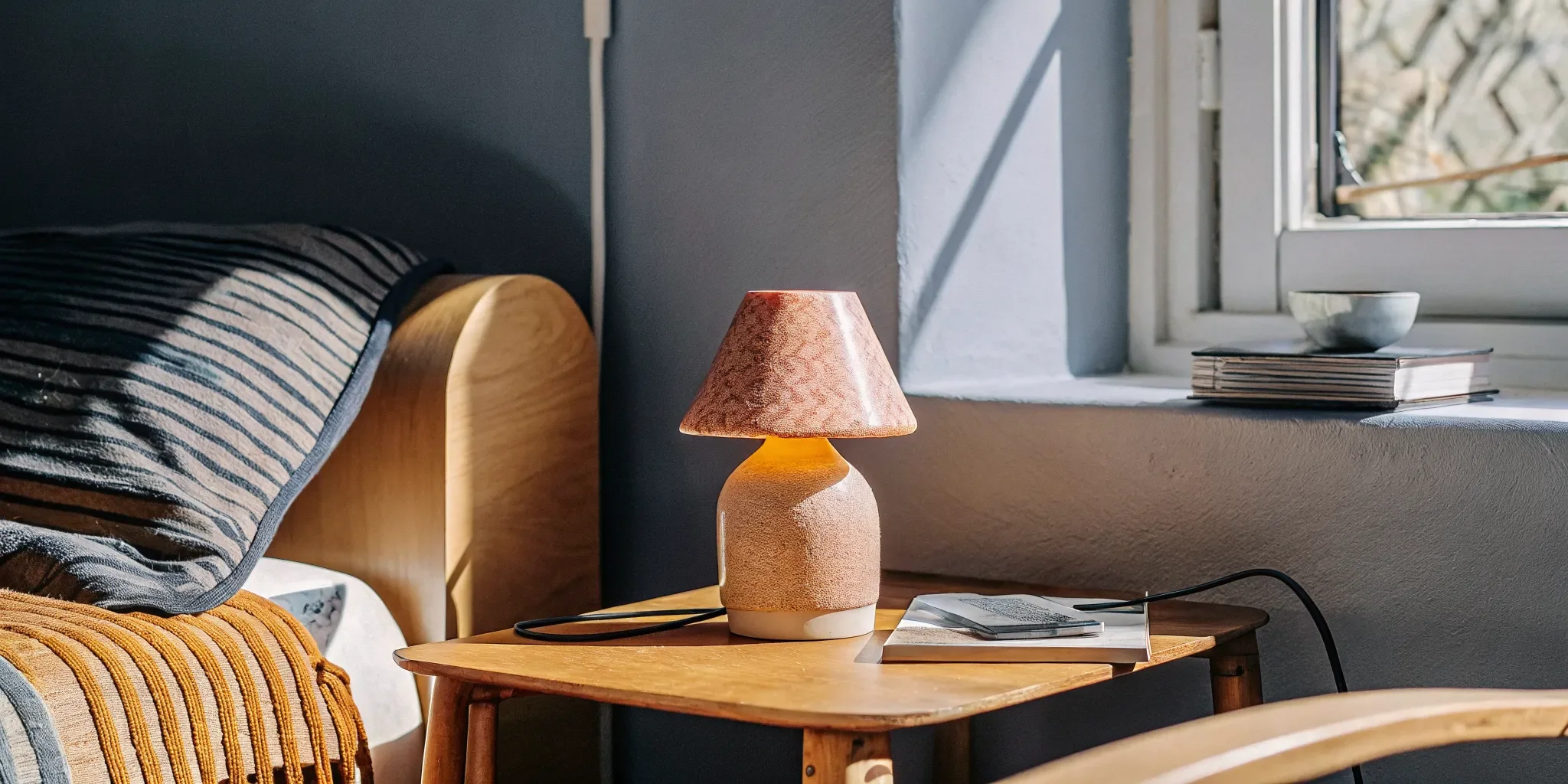
For years, the safest home looked calm, pale, and carefully edited. Gen Z is loosening that grip. A room can be practical without feeling anonymous, and a lamp can do more than help you find your keys. It can set the mood, add a little mischief, and make a rental or first home feel unmistakably yours.
The best gen z home decor trends are not about filling every corner. They combine joyful color, nostalgic shapes, tactile materials, and expressive lighting with the pieces you already love, so the result feels personal rather than staged.
That is why dopamine decor works when it is treated as a point of view, not a shopping list. Start with one detail that changes the energy of the room, then build around it with intention. The shift is less about rejecting simplicity altogether and more about choosing what deserves to be seen, felt, and remembered.
Gen Z Home Decor Trends: What Gen Z Actually Wants From Home Decor (It Is Not What You Think)
The minimalist era promised calm through fewer things, flatter finishes, and furniture that could disappear into the background.
Gen Z is asking a different question: does this room feel like someone lives here? That shift is visible in the rise of curated, personal spaces rather than uniform, mass-produced rooms. Research on maximalist interiors describes the appeal clearly: distinctive color and sculptural form let homeowners express an identity that standard retail styling cannot. Dopamine decor works for the same reason. It makes the room feel chosen, not simply assembled.
The home is becoming a place for real life again
As of 2023, an estimated 18 million Gen Z homeowners in the United States were already shaping the market. They are not necessarily rejecting good design. They are rejecting the idea that good design has to look untouched. A flat-pack coffee table may solve a practical problem, but a substantial piece with visible grain, weight, and a story can become part of a home's memory. The preference is moving from temporary-looking convenience toward furniture and objects that can stay, age, and gather associations.
That is why unlacquered brass feels newly relevant. Its surface changes with use, developing a patina instead of preserving a factory-perfect finish. Dark woods are returning for a similar reason. Walnut, oak, and stained timber add visual warmth and a sense of permanence that pale, bleached interiors often lack. These materials do not need to be precious or formal. Mixed with playful color, vintage finds, or a slightly odd lamp, they feel relaxed rather than traditional.
Texture matters in an algorithmic world
Gen Z grew up inside recommendation feeds, filtered images, and endlessly repeatable aesthetics. The home is one of the few places where texture, change, and memory can accumulate without needing to perform for an audience. A worn wood surface, a secondhand vase. Or a fixture with a tactile ceramic shade gives the eye something that a screen cannot: evidence of material, time, and touch.
This is the emotional logic behind cluttercore, which uses a deliberate collection of personal objects to create comfort and individuality. It is not an argument for filling every surface. It is permission to keep the things that make a room yours. For renters, that might mean a vintage side table, removable color, layered textiles, plug-in lighting, or art that travels with you. A meaningful room does not require structural changes or a large budget. It requires a few choices that resist looking interchangeable.
The result is less about following one perfect look and more about building a space that can evolve. Gen Z home decor trends are moving toward rooms with personality, material honesty, and enough visual history to feel lived in.
Dopamine Decor, Maximalism, and the Return of Color
After years of beige walls, pale oak, and rooms so restrained they could qualify as meditation apps, color is making a comeback. Dopamine decor is not about buying every bright object in sight. It is about choosing home pieces that spark joy, reveal personality, and make an ordinary Tuesday feel a little less ordinary. For more ideas, explore our guide to dopamine decor.
That shift helps explain why maximalism is returning with bold color, layered texture. And combinations that would have been rejected by the old rules of "good taste." A saturated lamp beside a patterned chair. A glossy vase against a tactile wall, or a jewel-toned cushion on a vintage sofa can make a room feel collected instead of copied. The point is not visual noise. The point is choosing details that feel unmistakably yours.
Why warm colors feel so energizing
There is more behind the color revival than a social-media cycle. In a study of emotional responses to interior colors, warm tones were associated with stronger ratings for excitement. Stimulation, and arousal, while cool tones were more closely linked with tranquility and spaciousness. The effect is not a universal decorating formula, but it does explain why red, orange, yellow, coral, and warm pink can make a room feel more alive. The same research found that the characteristics of an imagined space influenced ratings of happiness and vividness. Read the color psychology research.
Use that energy strategically. A warm accent wall may be perfect in a social space. While a smaller colorful object can bring the same lift to a neutral bedroom without turning it into a sunrise simulator. Color-blocking is especially useful here because it gives strong hues structure. Pair a cobalt base with a tomato-red shade, or place a sunny yellow object against a deep plum backdrop. The blocks create relationships, not randomness.
Maximalism gets a little more polished
The new maximalism is playful, but it is not necessarily chaotic. Layered textures, repeated color notes, and a few sculptural silhouettes keep an expressive room feeling intentional. Bronze accents and naturally aged patina are also entering the conversation, adding warmth and visual depth without returning to the sterile, showroom-perfect look. These finishes work particularly well beside bright color because their softness gives high-energy shades somewhere to land.
Even ornate references are being reinterpreted for contemporary homes. According to ELLE Decor, the Pinterest search term "rococo party" rose by 140 percent between September 2022 and August 2024. You do not need a gilded ceiling to borrow the mood. Try one curving frame, a patterned textile, or a lamp with a theatrical silhouette, then let the rest of the room provide breathing space.
That balance is the real lesson in these gen z home decor trends: color can be expressive and considered at the same time. A single, well-designed piece can deliver the big vibe without demanding a complete room makeover.
Playful Objects as Decor: Toys, Shapes, and Nostalgia in Grown-Up Rooms
For Gen Z, a home does not have to look serious to look considered. A lamp with a cheerful silhouette, a mirror that seems to wiggle, or a chair with an exaggerated curve can do more than fill an empty corner. These pieces act as personality markers. They tell visitors what you notice, what you find funny, and which memories you are happy to bring into the room.
Why are rounded shapes having a moment?
Curved furniture has become a useful antidote to the straight lines of streamlined mid-century rooms. Bulbous sofas, blob-shaped tables, rounded seating, and squiggly mirrors make a space feel softer and a little less showroom-perfect. House Beautiful identified "Everything Curved" and "Playful Design" among the trends influencing Gen Z interiors. Noting that the generation represents about 18 million U.S. homeowners as of 2023 (House Beautiful).
The appeal is not only visual. Chunky silhouettes create a more relaxed atmosphere, especially when paired with practical pieces in wood, metal, or linen. A room can still have clear circulation and useful storage without making every object behave like an office filing system.
How do nostalgia and pattern stay fresh?
Nostalgia works best when it is treated as a design language rather than a time capsule. Y2K references might appear through glossy color, playful hardware, or a translucent accent, while "nestalgia" brings back familiar domestic details with a more personal twist. Chintz, bows, scalloped edges, and ruffled forms are returning too. Pairing one of these softer, old-fashioned details with a crisp modern table or a simple contemporary backdrop keeps the result intentional instead of costume-like.
The same principle applies to objects that look almost toy-like. Their scale, color, or silhouette can be whimsical, but the surrounding composition gives them grown-up context. Choose one memorable form, repeat one color elsewhere, and leave enough visual breathing room for the piece to be noticed.
Can cluttercore still feel curated?
Cluttercore is not random accumulation. It is curated maximalism: a deliberate collection of books, art, souvenirs, textiles, and small objects that makes a room feel lived-in and meaningful. Research describing the trend connects it with comfort and individuality rather than sterile minimalism (research on cluttercore and home well-being). That distinction matters. Display the objects that carry a story, not every object you happen to own.
Gen Z shoppers increasingly want pieces that feel curated rather than merely purchased, with a distinct aesthetic story behind them (Mr. John's Goods). A sculptural light can help create that focus without adding a shelf full of accessories. The Woaw Lighting Collection, for example, reimagines candelabra forms as bright, toy-inspired fixtures. It brings color, shape, and a little mischief to the room while keeping the object functional. That balance is the sweet spot: decor that makes you smile, then earns its place every evening.
How Lighting Became a Gen Z Statement Piece
For Gen Z, lighting is no longer the thing you switch on after the furniture is arranged. It is often the first design decision, and the first detail visitors notice when they enter a room. A small studio can have a chandelier as its visual anchor. While a table lamp can receive the same consideration, and sometimes the same budget, as a chair or side table. That shift says a lot about where home decor is heading: the fixture is part of the identity of the room, not a technical afterthought.
From task management to mood curation
Traditional lighting plans tend to divide a home into practical jobs. The ceiling light illuminates the room, the desk lamp helps you work, and the bedside lamp makes reading possible. Those functions still matter, but they no longer tell the whole story. A warm pool of light can make a rental feel intimate. A brightly colored shade can turn an otherwise quiet corner into a visual exclamation point. Several low light sources can make an evening at home feel slower and more intentional.
That approach fits the broader appeal of dopamine decor, where home elements are chosen to spark joy and express personality. Research on residential environments also connects interior properties with restorative potential, which helps explain why mood is not a frivolous consideration. A room should support how you want to feel in it, not merely allow you to see the coffee table.
One expressive piece can do more than a pile of accessories
A room lit entirely by table and floor lamps can feel deliberately chosen. Each pool of light creates a zone, and each fixture contributes shape, color, or material even when it is switched off. This is especially useful for smaller homes, where adding more decorative objects can quickly become visual clutter. One sculptural lamp may provide the personality that a dozen small accessories were trying to manufacture.
Lighting role Statement piece, first design decision Functional, recessed, invisible
Color preference Bold, warm, color-blocked Neutral, warm white, dimmable
Object styling Visible, sculptural, toy-inspired Hidden, integrated, flush-mount
Mood goal Curated zones, layered pools of light Uniform ambient illumination
Purchase trigger Joy, personality, "that's SO me" Quality, durability, resale value
That is the appeal of colorful statement lighting: it changes the atmosphere while also giving the eye a clear place to land. It is a different instinct from the millennial preference for making every light source disappear into the ceiling or cabinetry. Invisible lighting can be elegant, but Gen Z is more interested in letting the object participate in the room's story.
Woaw takes that idea in a playful direction. Its sculptural, toy-inspired fixtures reimagine familiar candelabra forms through bold color blocking, creating a focal point without requiring a room full of stuff. The collection's steel bodies, ceramic shades, and integrated LEDs give the pieces design credibility, while universal 120V-240V compatibility keeps the idea practical for homes in different markets. Explore the sculptural statement lighting when you want a room to feel chosen, not simply filled.
The Woaw Collection and the Dopamine Design Movement
For anyone tracking gen z home decor trends, the Woaw Lighting Collection makes a strong case for choosing one expressive object. Instead of filling a room with forgettable accessories, its playful. Sculptural silhouettes reinterpret the traditional candelabra through bold color blocking, giving a familiar form a decidedly more joyful personality. The result is lighting that can define a room without turning it into a storage unit for decorative clutter.
Why color blocking makes the familiar feel fresh
Color blocking is not just a bright finish applied at the end. It uses distinct fields of color to clarify a form, create rhythm, and make each part of an object feel intentional. On a candelabra-inspired lamp, that contrast brings attention to the branching silhouette and turns the fixture into a visual composition. It is a smart way to add energy to an otherwise understated space, especially when the rest of the room has a restrained palette.
That balance is where Woaw fits the dopamine design movement. The collection feels colorful and toy-inspired, but it is not novelty decor. Steel bodies and ceramic shades give the pieces a material presence that reads as considered rather than disposable. Integrated LEDs and universal 120V-240V compatibility also make the fixtures practical for design-conscious homes in different markets. Explore the Woaw Collection to see how the forms work as standalone statement pieces.
Accessible luxury with a real point of view
Woaw lamps range from $282 to $491, putting sculptural lighting within reach for shoppers who want a designed focal point without commissioning an entire room. That price positioning supports Mr. John's Goods' "Simple Things. Big Vibes." philosophy: take an everyday category, give it a strong point of view, and make the result feel special without making it precious.
The design credibility is personal, too. Nader Gammas brings a background that includes an MFA from Parsons and gallery representation, while the fixtures are produced in the UAE in small batches by hand. That combination matters to shoppers who want a piece with a design story, not another anonymous object optimized for mass production. You can learn more about the designer and the brand's approach on the designer lighting brand's About page.
Woaw pieces are available for pre-order and ship within two months, so plan around the production window rather than expecting an off-the-shelf delivery. For a Gen Z-inspired room, one bold lamp can do the work of several smaller accents: it adds color. Character, and a little theatricality while leaving the rest of the space room to breathe.
Budget-Smart Ways to Build a Gen Z-Inspired Space
You do not need a complete renovation, or a shopping cart full of algorithm-approved accessories, to make a room feel personal. In fact, a thoughtful edit usually works harder than a total makeover. Gen Z's design instincts are especially useful here: make temporary changes where you need to. Hunt for pieces with a story, and spend strategically on the object that changes the room most.
Make renter-friendly changes first
Renters can still create a highly individual space without risking a security deposit. Try peel-and-stick tiles behind a desk or kitchen counter, removable wallpaper on one accent wall, and temporary hooks or picture rails for art. A carefully chosen textile can soften a plain room, while a colorful lampshade or freestanding lamp adds personality without touching the walls. When it is time to move, these changes can come with you.
Let thrifted finds do the storytelling
Build the room around estate-sale discoveries, vintage markets, and secondhand shops rather than buying every item from the same collection. Unique pieces give a space visual history, and they help avoid the mass-produced look that many design-conscious shoppers are moving away from. Look for one unusual mirror, a ceramic vessel, a side table with an excellent silhouette, or art that makes you laugh. The goal is not to fill every surface. It is to curate a few things that feel unmistakably yours.
Spend on one bold piece
One statement object can carry more visual weight than a dozen small accessories. Lighting is a particularly efficient place to start because it works as both function and focal point. A sculptural lamp can define a reading corner, add color to an otherwise quiet room, and create a different mood after sunset. That is the logic behind F023: high-quality statement lighting can make a room feel bold without relying on clutter.
Millennials spend an average of $1,771 per year on home decor, so a single considered purchase can make more sense than constant small upgrades. The Woaw Collection's $282-$491 range puts a steel-and-ceramic statement lamp within reach as an intentional investment piece, rather than another disposable accent. Each fixture is available by pre-order and ships within two months. Explore the pre-order options, then balance the splurge with thrifted finds and reversible updates. For more ways to layer color and personality, browse these dopamine decor ideas.
Frequently Asked Questions
What are the top Gen Z home decor trends?
The strongest ideas include dopamine decor, expressive color, vintage and thrifted pieces, curved or sculptural shapes, and lighting treated as a focal point rather than an afterthought. The common thread is personality: a room should feel collected, comfortable, and unmistakably yours.
Why is dopamine decor popular with Gen Z?
Dopamine decor makes the home feel more energizing and personal through color, pattern, playful objects, and nostalgic references. It is not a requirement to fill every surface. One joyful lamp, an unexpected color pairing, or a treasured vintage find can create the effect without visual overload.
Are retro and vintage aesthetics still trending for Gen Z?
Yes. Retro details give newer spaces warmth and character, especially when mixed with contemporary furniture and clean-lined basics. Try a secondhand mirror, an old ceramic vessel, or a vintage textile alongside one modern statement piece so the room feels layered instead of themed.
How can you achieve a Gen Z aesthetic on a budget?
Start with what you already own, then make one high-impact change. Rearrange furniture, add color with paint or textiles, shop thrift stores, and use lighting to shift the mood. A single sculptural table lamp can change a small room more dramatically than a cart full of disposable accessories.
What should I know before ordering Woaw lighting?
Woaw lamps are available by pre-order rather than ready to ship, with delivery within two months. The collection uses steel bodies, ceramic shades, integrated LEDs, universal 120V-240V compatibility, and US, UK, or EU plug options. Current table and wall lamp pricing ranges from $282 to $491, so verify the individual product page before ordering.
Ready to Add a Little More Personality?
If your space is ready for one playful detail with real design presence, the Woaw Collection offers a simple way to make lighting part of the room's personality. Contact us to learn more or visit the Woaw Collection to pre-order your sculptural statement lighting. It is a small shift with big-vibe potential, whether you are styling a first apartment or refreshing a favorite corner.