

Whimsical pendant lights can make a room feel more personal, but a playful silhouette still needs to work with the space around it. The best choice balances shape, scale, color and useful light, so the fixture feels intentional rather than like a joke with a cord. Use this guide to clarify what you want the pendant to do, what to check before buying, and when a sculptural table or floor lamp may be a better fit.
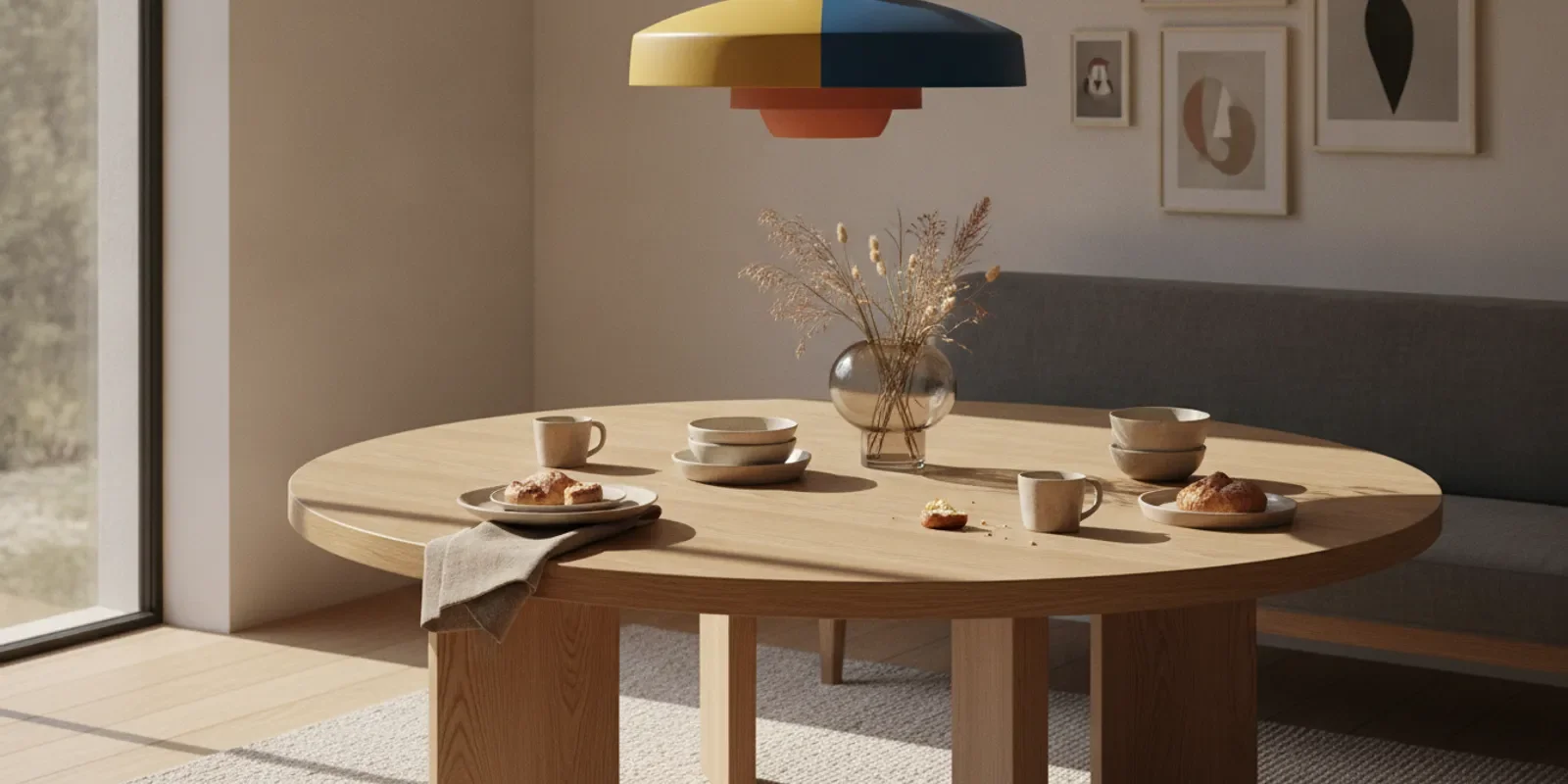
What makes a pendant light feel whimsical?
Whimsy in lighting comes from a departure from the expected. It might be an exaggerated curve, a silhouette that recalls a familiar object, an unexpected arrangement of arms, or a lively contrast between colors. The fixture can feel playful without being childish. The difference is often in the quality of the design: a clear shape, thoughtful proportions and materials that look considered up close.
A whimsical pendant also has a practical job. It hangs from above, so its shape is visible from across the room and can influence how the space feels. It may become a focal point over a dining table or add personality to a seating area. Before falling for a photograph, decide whether the light needs to define a zone, contribute ambient light, or mainly provide a sculptural accent. One fixture can contribute to more than one goal, but naming the priority helps you choose.
For a little context on the brand’s design approach, explore the story behind Mr. John's Goods. The Woaw collection takes sculptural, toy-inspired forms and bold color blocking as its design language. Not every fixture in the collection is a pendant, so think of it as a reference for playful lighting character rather than a claim about pendant availability.
How do you choose whimsical pendant lights for your room?
Start with the room rather than the trend. Note the ceiling height, the area the fixture should serve, nearby furniture, and the visual weight of other objects. A dramatic form can be a delightful counterpoint in a simple room. In a space that already has patterned wallpaper, colorful art and sculptural furniture, a quieter pendant may be the better companion.
Decide what the fixture should do
Write one sentence describing the intended role. For example: “This pendant should bring a focal point above the dining table,” or “This fixture should add a colorful note without dominating the room.” That sentence becomes a useful filter when product images compete for attention.
Focal point: Choose a distinctive outline or color that can hold attention from the room’s main viewpoints.
Supporting accent: Look for a playful detail that echoes another color or material already in the space.
Zone marker: Consider how the hanging form helps visually distinguish a dining or sitting area in a larger room.
Then view the room from its everyday angles: the doorway, the seat where you relax, and the path through the space. A fixture that looks charming straight on may appear crowded from the side. If you are still defining the overall mood, browse the lighting design ideas and guides for other ways to approach a room.
Measure before you shortlist
Record the ceiling height and the dimensions of the furniture or zone below the pendant. Measure the full hanging arrangement shown on the product page, not just the shade or central body. Include the canopy, stem or cord where dimensions are provided. Sketch the fixture’s footprint on paper or use painter’s tape to mark an approximate outline in the room. This quick exercise helps reveal whether an expansive silhouette will feel balanced or crowded.
For dining areas, consider the table’s length and width as well as the walking routes around it. For a living area, check whether the pendant competes with a ceiling fan, shelving, art or another ceiling feature. Do not rely on one universal size formula: different silhouettes occupy space differently. A narrow, branching design can feel visually larger than a compact rounded shade with similar measurements.
Which shapes and colors feel playful but considered?
Shape gives a whimsical fixture its first impression. Rounded forms tend to feel soft and approachable. Angular geometry can make a playful color feel more architectural. Repeated arms or stacked elements create rhythm, while an asymmetrical form brings movement. Think about the room’s existing lines. A rounded fixture can soften a room full of straight edges; a more structured silhouette can bring order to a collection of organic shapes.
Color works best when it has a reason to be there. It can repeat a small accent in a rug, artwork or accessories, or deliberately introduce a new note against a calm background. Repeating a color does not require an exact match. A related shade or a similar level of brightness can create connection without making the room feel like a coordinated set.
For a quieter room: Let the fixture provide the strongest color moment, then keep nearby objects relatively restrained.
For a layered room: Choose a pendant with one color already present, or use a clear contrast to give the composition a focal point.
For a small visual footprint: Compare the silhouette and finish from a distance. A bright shade may attract the eye even when its physical dimensions are modest.
Before ordering, view product images at different scales and, where available, from multiple angles. A close-up shows finish and detail; a room image helps you judge visual weight. If you want to see how sculptural lighting reads in different settings, the lighting gallery can offer inspiration. Treat staged rooms as visual references, not as proof that a fixture will suit every ceiling or layout.
How do material and light quality affect the choice?
A whimsical outline should not distract from construction and the light itself. Check which parts are made from which materials, how the fixture is finished, and how the product is intended to illuminate a room. Materials affect both the visual character and the way a fixture feels as an object. A glossy surface may read as lively and graphic; a muted finish may make a bold shape feel calmer. Ceramic can contribute a tactile, crafted look, while metal can give a form a crisp, defined edge.
Mr. John's Goods’ Woaw Lighting Collection is described as having steel bodies, ceramic shades and integrated LEDs. Those facts apply to that collection, not to all whimsical pendants on the market. Always check the specific product details for the fixture you are considering. In particular, look for the light source type, any stated color or finish details, and instructions for installation and care.
Integrated LED means the light source is built into the fixture rather than supplied as a separate replaceable bulb. That can affect future maintenance, so understand the product information and available support before you buy. For general information on lighting and energy choices, consult the U.S. Department of Energy at energy.gov. The page is a starting point for official guidance; product-specific electrical and installation questions should be answered by the manufacturer or a qualified professional.
Where should a whimsical pendant go?
Placement depends on the task, sightlines and room layout. A pendant over a dining table has a clear relationship to the furniture below it. In other rooms, the intended zone may be less defined, so map the fixture in relation to seating, circulation and existing light sources before you commit.
Dining areas
First consider the table as the visual anchor. A pendant should relate to its footprint and leave the table usable. Think through how the fixture will look when people are seated and when they stand up. Confirm the proposed hanging height against the product instructions, ceiling conditions and the needs of the household; do not assume that a single height suits every room.
Living spaces
In a living room, the pendant can mark a seating zone or add a sculptural gesture overhead. Check sightlines from sofas and chairs, and consider whether the light will compete with art or a strong ceiling feature. If a ceiling-mounted option is not practical, a floor lamp may offer a more flexible source of personality. Compare room-scale options in this guide to table lamps and floor lamps.
Bedrooms and smaller rooms
A playful pendant can add character in a bedroom or compact room, but a busy silhouette can feel close when viewed from the bed or doorway. Check dimensions carefully and consider how the fixture works with bedside lighting. If the goal is a smaller pool of light near a surface, a table lamp may be more suitable. The bedroom table lamp ideas guide offers a different route to a distinctive bedside look.
Whatever the room, confirm ceiling support, wiring, installation requirements and local electrical rules before purchase. A licensed electrician can assess the existing electrical point and installation conditions. Never treat a product photo or a general styling suggestion as installation advice.
What should you check before ordering?
Buying a statement fixture is easier when you separate design preference from practical checks. Keep a short checklist beside the product page and resolve any unknowns before placing an order.
Dimensions: Confirm the overall size, suspension length and any adjustment limits stated by the seller.
Electrical details: Check voltage, plug or hardwiring requirements, and whether the fixture suits the electrical system at the destination.
Light source: Review whether the fixture uses an integrated LED or a replaceable bulb, plus any stated specifications.
Material and finish: Verify the actual materials and care information, rather than inferring them from appearance.
Delivery timing: Confirm whether the item is stocked or made to order, and read the current terms before paying.
Returns and support: Review the seller’s published policies and ask about unresolved product questions before checkout.
For Woaw products, the brand’s current model is pre-order production, with a stated production window of about two months. Check the pre-order information for the current process and terms before purchasing. The page is the canonical destination for ordering details. You can also review the published returns information so expectations are clear before checkout.
When is another sculptural lamp a better choice?
A pendant is not automatically the right answer just because the room needs personality. Ceiling height, wiring, rental restrictions or a preference for movable lighting may point toward another form. A table lamp can bring a playful silhouette closer to eye level and is straightforward to reposition. A floor lamp can create a vertical focal point without adding another ceiling installation.
Compare the job each form can do:
Pendant: A ceiling-hung visual anchor that can define a zone. Check the installation conditions and hanging dimensions carefully.
Table lamp: A portable accent for a suitable surface, with its own footprint and power-cord considerations.
Floor lamp: A freestanding vertical element that can contribute light and shape without occupying a tabletop.
For a product-led look at the brand’s available designs, explore the Woaw Lighting Collection. Its pieces are sculptural lighting forms, but do not assume they are pendants; compare each product’s actual format and details. If a particular floor or table design interests you, see the table lamp range or floor lamp range for the appropriate category.
How can you make a playful fixture feel at home?
Give the light some breathing room. A whimsical fixture often needs a clear view of its outline, so avoid surrounding it with many objects of similar visual weight. Instead, let one or two details echo its color or geometry. A simple arrangement nearby can help a more expressive shape look deliberate.
Consider contrast as a design tool. A lively fixture can stand out against restrained walls and furnishings. In a more colorful room, connect it to the wider palette through a repeated hue or a shared material. Repetition creates coherence; contrast creates emphasis. Neither is automatically better. The right balance depends on whether you want the pendant to blend into the composition or lead it.
Finally, think about the fixture in daylight and after dark. In daylight, its silhouette and finish are the focus. At night, the emitted light and shadows become part of the room’s atmosphere. Use product information to understand intended light output, and plan other light sources for tasks that one decorative fixture may not cover. A layered room can include a statement piece without expecting it to do every lighting job alone.
Explore the Woaw Lighting Collection
Frequently Asked Questions
Are whimsical pendant lights only for maximalist rooms?
No. A playful fixture can be a single expressive element in a restrained room. Keep other forms simple if you want the pendant to stand out, or repeat a color or shape elsewhere if you want it to feel integrated.
How do I know if a pendant is too large?
Compare the full fixture dimensions with the room, furniture and main sightlines. Mark an approximate footprint with tape or a paper outline, then view it from different positions. Also check the hanging length and any installation constraints rather than judging from a product photograph alone.
Can I use a whimsical pendant as the only light in a room?
That depends on the fixture’s specifications and the room’s needs. A decorative pendant may not provide the right kind or spread of light for every activity. Review the stated light details and consider supplementary lighting for tasks or areas the pendant does not adequately serve.
What should I know about pre-order timing for Woaw lighting?
Woaw products are made to order, with a production window of about two months. Review the current ordering page for applicable terms and timing before you place an order.
What if a ceiling pendant is not practical?
Consider a sculptural table or floor lamp instead. These forms can add shape and color without requiring a ceiling installation. Compare the fixture’s dimensions, light purpose and placement needs with the room before choosing.
A whimsical light works best when its personality and practical role support each other. Measure the space, verify the product details and choose the form that makes the room feel more like yours.
